Indonesian Rupiah strengthens as foreign inflows surge into domestic assets
- Foreign investors poured IDR 195 trillion into government bonds and securities in July, snapping months of sustained selling.
- Indonesia’s July FX reserves dipped slightly to USD 145.3 billion due to debt repayments, remaining well above global benchmarks.
- The US Dollar gains strength due to renewed safe-haven demand amid escalating Middle East tensions.

USD/IDR has pared its recent gains from the previous day, trading around 17,940 during the Asian hours on Friday. The currency pair depreciates as the Indonesian Rupiah (IDR) remains firm, buoyed by renewed foreign inflows into government bonds and domestic equities in July, which effectively ended several months of sustained selling. Highlighting this momentum, Acting Bank Indonesia Governor Destry Damayanti noted last week that foreign investors had channeled 195 trillion Rupiah (approximately USD 10.7 billion) into government bonds and Bank Indonesia Rupiah Securities (SRBI) as of last week.
Despite these positive inflows, Indonesia's foreign exchange reserves saw a slight decline to USD 145.3 billion in July, down from USD 145.6 billion in June. This dip was primarily driven by government foreign debt repayments and central bank market interventions aimed at supporting the Rupiah amidst renewed volatility in global financial markets, which offset the gains from tax and service revenues as well as global bond issuances.
However, Indonesia's reserve levels remain robust, covering 5.5 months of imports, or 5.3 months of imports and external debt service, putting them comfortably above the international adequacy benchmark of three months.
IDR support underpinned by returning foreign demand for local bonds
Economists at ING highlight that improving sentiment toward Indonesian assets had been reflected in renewed overseas interest in the domestic debt market. They note that “foreign participation in Indonesia's local bond market had begun to recover following recent rate decisions alongside targeted measures to stabilise the rupiah,” underscoring the role of recent policy moves in shoring up demand for IDR-denominated bonds.
The USD/IDR pair may rebound as the US Dollar (USD) may receive support from renewed safe-haven demand amid escalating Middle East tensions. Market stability has been rattled by growing skepticism regarding the reopening of the strategic Strait of Hormuz.
Adding to the geopolitical strain, The Guardian reported that Saudi Arabia intends to extend military operations against Iran-aligned Houthis, in support of the internationally recognized Yemeni government, following attacks on its southern Najran province. Meanwhile, Iran's parliament is evaluating a draft proposal to prohibit US and Israeli vessels, impose a 20% cargo penalty on hostile nations, and restrict the corridor until the US blockade is lifted.
Musalem flags upside inflation risks while backing incremental Fed tightening
Fed’s Musalem delivers a moderately more hawkish tone, with a 7.4/10 FXS Speechtracker score relative to the historical average of 7/10, emphasizing that inflation expectations risk losing their anchor even as they currently remain aligned with the 2% target. The focus on core inflation amid energy volatility, a preference for incremental rate hikes, and an assessment that core inflation is likely in the 2.5%–3% range, alongside a greater likelihood of inflation staying above target and a recent preference to raise rates, collectively underscore upside inflation risks despite Musalem’s confidence in the strong labor market and the enduring role of the Dollar as the main reserve currency.
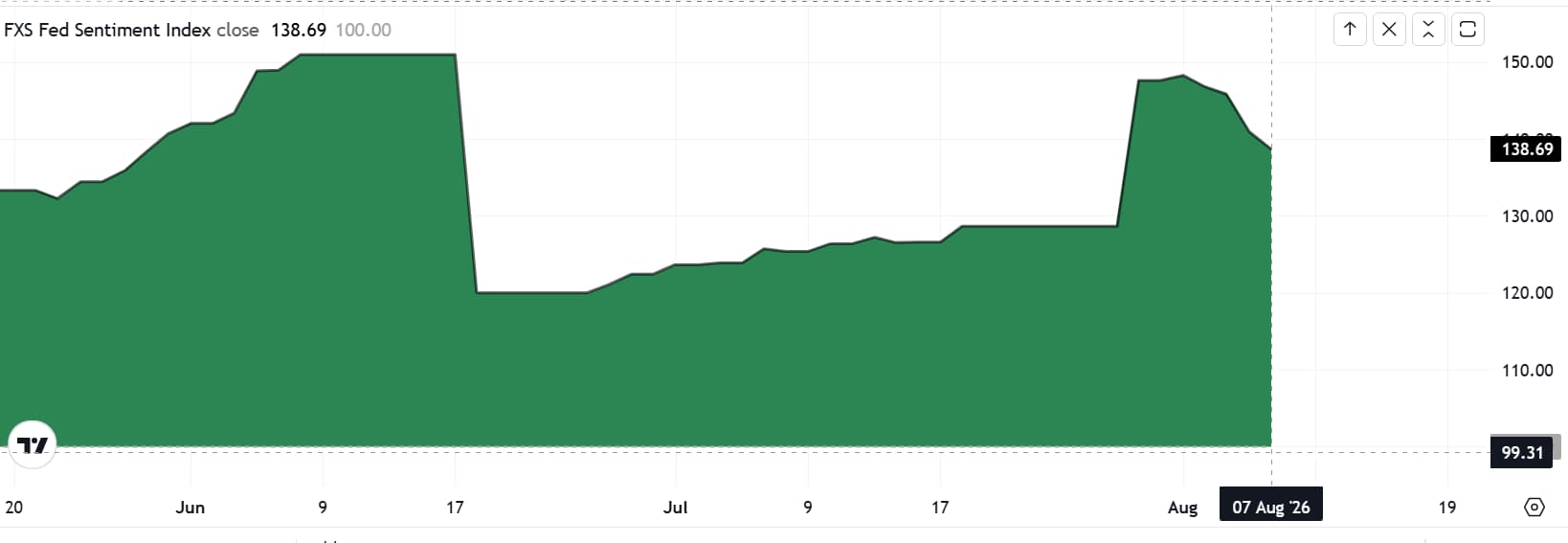
The FXS Fed Sentiment Index was unchanged, moving 0.00 points to a still-elevated level of 138.69, signaling that the broader Fed communication backdrop remains firmly in hawkish territory. The lack of index movement suggests Musalem’s remarks are broadly consistent with the current hawkish baseline, reinforcing rather than shifting prevailing expectations around the Fed’s reaction function.
Author

Akhtar Faruqui
FXStreet
Akhtar Faruqui is a Forex Analyst based in New Delhi, India. With a keen eye for market trends and a passion for dissecting complex financial dynamics, he is dedicated to delivering accurate and insightful Forex news and analysis.