Indian Rupee: RBI liquidity withdrawal tempers risks – Commerzbank
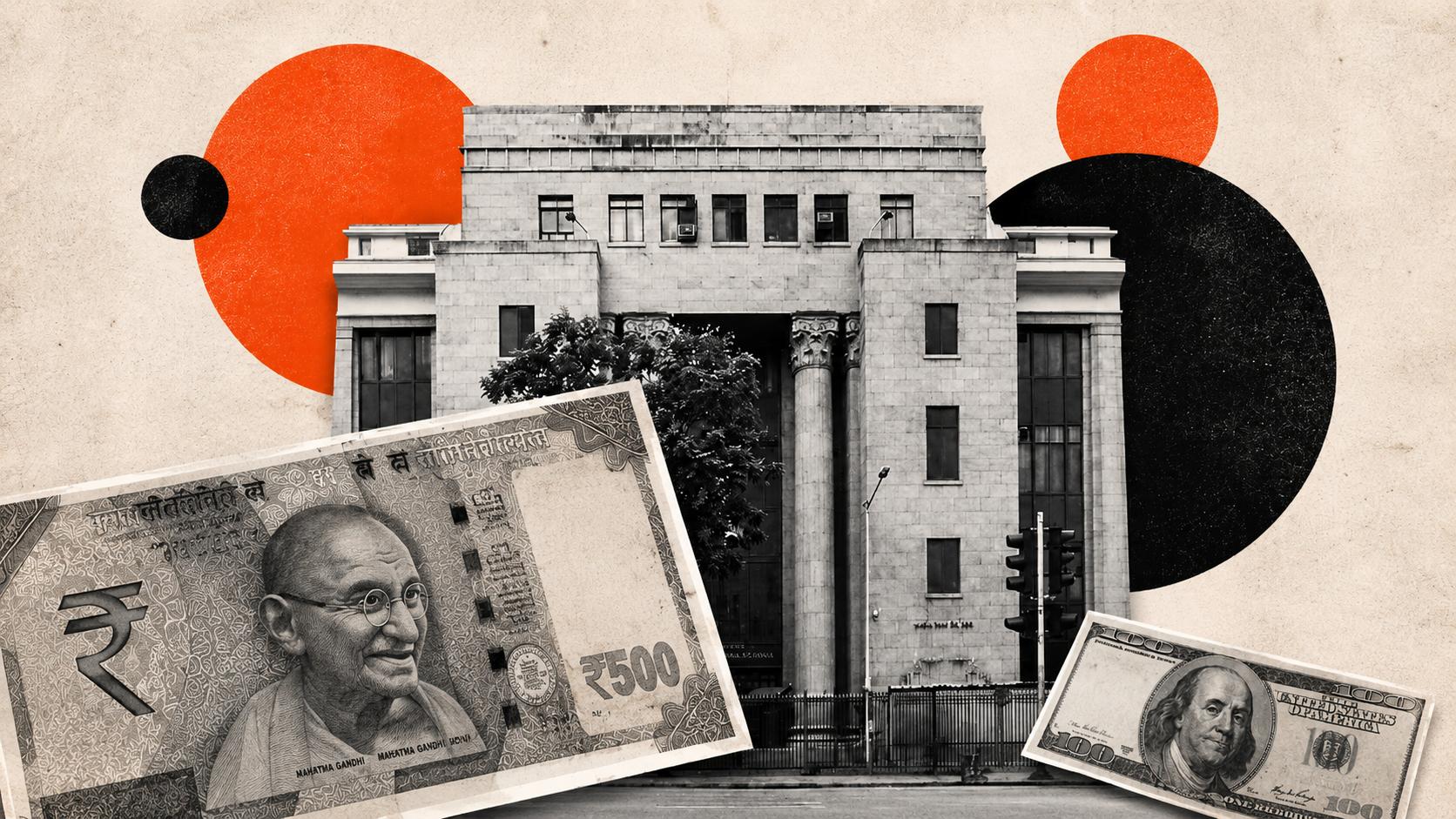
Commerzbank’s India analysis shows the Reserve Bank of India stepping up liquidity absorption via INR1trn of government bond sales and continued VRRR operations, FX swaps and open-market actions. The measures aim to align money-market rates with the 5.25% policy rate. Despite higher short- and intermediate-term yields, USD/INR stayed near 95.96 as RBI intervened to curb volatility.
Bond sales and FX intervention
"Foreign investors net sold USD201.7mn of government bonds yesterday, following USD503.1mn last Friday, the largest single-day outflow in five months. The sell-off followed the Reserve Bank of India’s (RBI) announcement on Friday that it would sell INR1trn of government securities from its portfolio to absorb surplus banking-system liquidity."
"The liquidity surplus is estimated at around INR10trn, the highest since late 2021, boosted partly by around USD127bn mobilised through the RBI's special foreign-currency schemes. These include the FCNR(B) deposits, external commercial borrowings (ECB), and overseas foreign currency borrowings (OFCB)."
"RBI is set to issue INR500bn of government securities today, followed by INR250bn on both 21 and 28 September. The first auction includes securities concentrated in the shorter and intermediate segments of the curve. It will also provide banks with assets of similar maturity to their FCNR(B) deposit liabilities. The bond sales provide a more durable means of withdrawing liquidity than the short-term variable rate reverse repo (VRRR) operations, where participation has been weak. Yesterday’s INR1tn VRRR auction attracted just INR403bn of bids."
"Nevertheless, RBI is likely to continue using a combination of VRRRs, open-market bond sales, and FX swaps to manage liquidity, depending on market conditions. Governor Sanjay Malhotra has emphasised that the RBI has several instruments available and will use them flexibly to align money-market rates more closely with the policy rate."
"Looking ahead, the INR1tn bond sales will absorb only around one-tenth of the current liquidity surplus, suggesting that RBI is taking a measured approach initially. Further bond sales or other liquidity-absorption measures are possible if the surplus persists. With RBI expected to leave the policy rate unchanged at 5.25% at its next meeting on 7 October, near-term policy attention is likely to remain on liquidity sterilisation. The liquidity withdrawal should put greater upward pressure on the shorter and intermediate portions of the curve than the long end. The 5Y government bond yield has risen 24bp to 6.76%."
"In FX, USD/INR was steady at around 95.96 yesterday, despite pressure from elevated global crude oil prices. Reports suggested that RBI sold USD to curb volatility. The central bank has stepped up its intervention in recent weeks, supported by higher FX reserves following measures to attract foreign capital. RBI’s liquidity-absorption measures should have a limited direct impact on the INR."
(This article was created with the help of an Artificial Intelligence tool and reviewed by an editor. Know more.)
Author

FXStreet Insights Team
FXStreet
The FXStreet Insights Team is a group of journalists that handpicks selected market observations published by renowned experts. The content includes notes by commercial as well as additional insights by internal and external analysts.