Gold surges higher, as Stock rally takes a breather

There haven’t been many opportunities in recent weeks where the geopolitical and the macro backdrop have been supportive of risk sentiment, but today is one of those days. The oil price remains low; Brent crude oil is below $79 per barrel as the US and Iran hash out the details for reopening the Strait of Hormuz. Today is the one of the first days that it has felt like a traditional August trading day.
SpaceX boosts Nvidia
Global stock indices are drifting higher, and US indices are extending gains after closing at record highs earlier this week. SpaceX is the one exception, it is the weakest performer on the Nasdaq 100, and is lower by more than 7% after investors reacted to its earnings report. However, even SpaceX is helping to boost the broader US index, after its announcement that it will use Nvidia chips to power all its AI data centres, has boosted Nvidia’s share price by 4.5% today. Although overall market sentiment is strong, investors are also buying into individual narratives, and Nvidia is rallying while other semiconductor chip stocks are struggling because it bagged another high-spending customer.
Tech stocks may take a breather
The gains in US stocks have been astonishing in the past week. Although the Nasdaq did not record a new high, it did post a 1% plus gain for the fourth straight day on Tuesday, something it has only done 17 times before in its history. Thus, a pullback at this stage would be normal.
Gold glitters once more
Although the tech sector is dominating the market narrative this week, gold and silver are also leading the pack, which is boosting the FTSE 100’s miners, Endeavour Mining and Fresnillo are higher by 5% and 4% respectively on Wednesday.
Precious metals are surging today due to two factors: 1, the prospect of a US/ Iran deal to reopen the Strait of Hormuz and deescalate the situation in the Middle East, and 2, the weaker than expected ADP private sector payrolls reading in the US.
Precious metals prices have not acted as a safe haven since war broke out in the Middle East and instead they have tended to rally when the situation improves. Thus, a breakthrough could extend the recent pick up in the gold price.
The weaker ADP report has reduced the chance of a rate hike from the Fed in September. The probability of a rate hike in September now stands at 56%, that’s down from 59% last week. If we get a weak NFP payrolls report on Friday, then US rate hike expectations could fall further.
Falling Treasury yields help the gold price to recover
The weaker tone to the ADP report, along with a falling oil price that could keep inflation in check, is pushing down Treasury yields. In the past week, the 2-year Treasury yield is lower by 6bps, the 10-year yield is lower by 5bps. Since gold has no yield, when Treasury yields are falling it can boost the attractiveness of holding gold as an asset. The recent decline in the dollar is also boosting the gold price. Multilateral intervention to push up the yen weighed on the dollar index this week and pushed it down 1.7%.
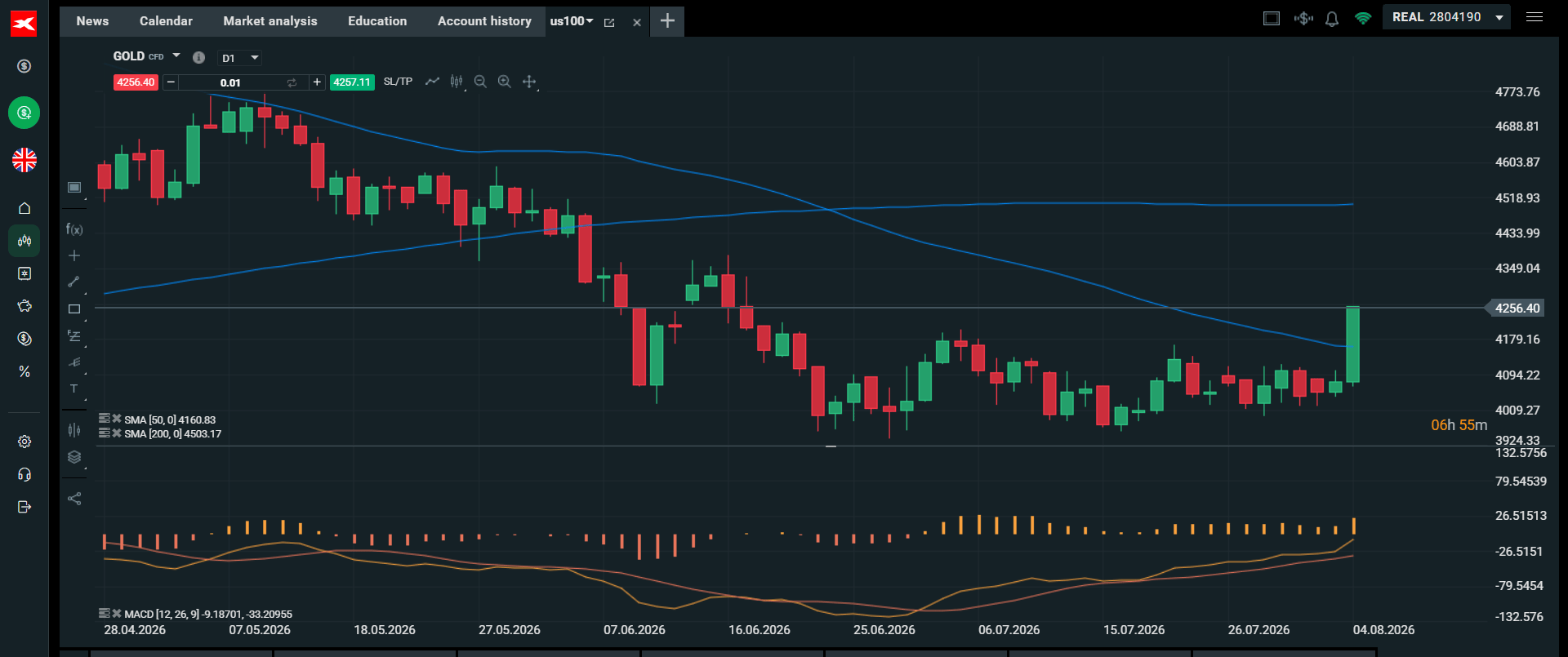
The technical picture is also supportive for gold, after it broke through its 50-day sma at $4160 per ounce, which is a bullish development in the short term, as you can see in the chart below. The next key resistance level to watch includes $4,500, the 200-day sma.
Looking ahead, the gold price could be at risk if there is a stronger than expected payrolls report later this week.
Overall, the stock market rally could take a pause here, especially in the US. However, we think that if this happens it will be temporary, as there are multiple factors that could drive stocks higher from here, including a lower oil price, and a strong Q2 earnings season.
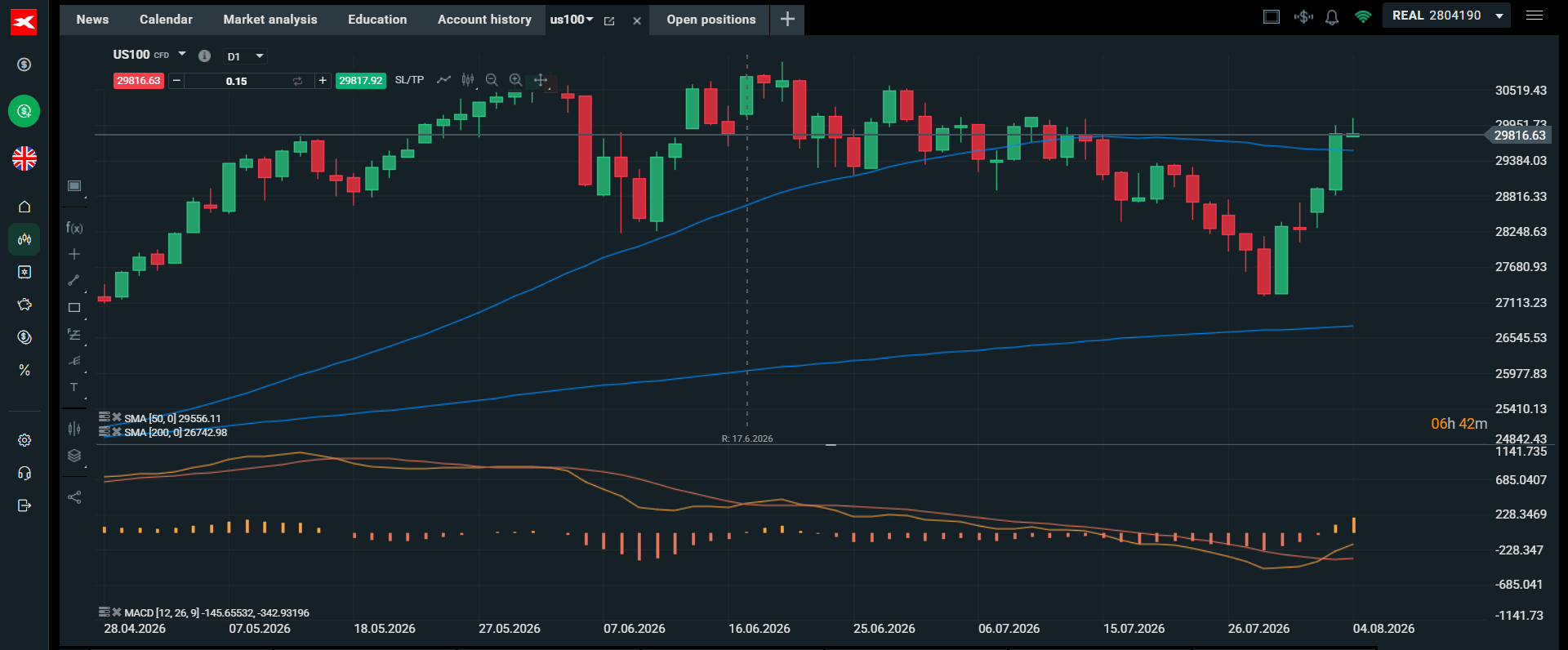
There is also a strong technical bias for further upside in US stocks. The Nasdaq 100 broke above its 200-day sma this week, which suggests momentum is firmly to the upside for now.
Chart 1: Gold, the technical picture looks supportive
Source: XTB
Chart 2: A pullback in the US 100 could be temporary
Source: XTB
Author

Kathleen Brooks
XTB UK
Kathleen has nearly 15 years’ experience working with some of the leading retail trading and investment companies in the City of London.















