Gold extends rally as Japan intervention hammers US Dollar
- Gold posted back-to-back gains as Japan’s intervention pressured the US Dollar.
- Iran’s proposal weighed on Oil prices and improved broader risk sentiment.
- Fed hawkishness and higher-for-longer rate bets limit bullion’s upside momentum.

Gold (XAU/USD) prints back-to-back days of gains, up over 0.50% as the US Dollar extends its losses amid Japan’s intervention in the market and amid news that Iran submitted a new proposal drove Oil prices lower. At the time of writing, the XAU/USD pair trades at $4,643 after bouncing off daily lows of $4,560.
Bullion gains as Iran proposal cools oil, but Fed hawks cap upside
Wall Street trades in positive territory amid news that Iran sent a proposal to the US via Pakistan, which weighed on Oil prices, with WTI seen trading at $101.91 per barrel, down over 3% on the day.
The central bank’s weekly festival, led by the Federal Reserve, revealed that policymakers might keep interest rates “higher for longer,” due to inflationary pressures triggered by the Middle East conflict.
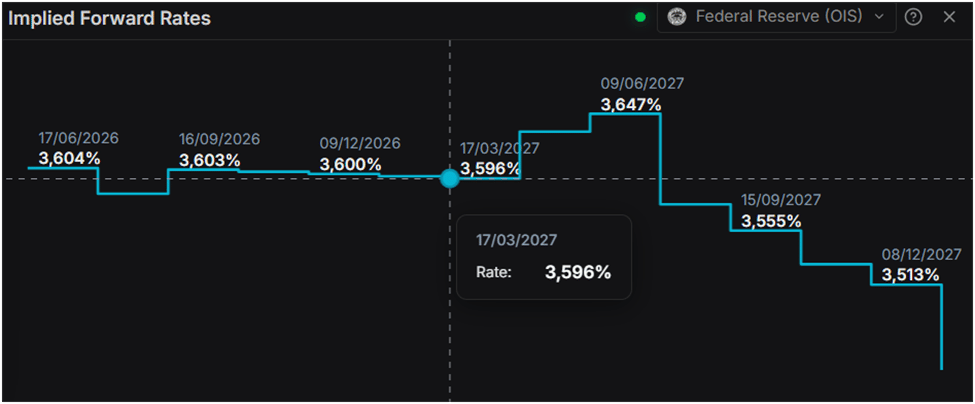
Money markets expect the Federal Reserve to keep interest rates unchanged throughout the year, according to Prime Terminal data.
On Thursday, Japanese authorities intervened in the FX markets, spending up to $35 billion USD — just under the $36.8 billion used in July 2024, according to Bank of Japan data. This drove the Greenback lower, towards two-week lows, as depicted by the US Dollar Index (DXY). As of writing, the DXY, which measures the performance of the American currency against a basket of six other currencies, has recovered somewhat and is down 0.03% at 98.07.
Alexander Kuptsikevich, senior Market Analyst at FxPro, commented that Bullion is struggling to capitalize on US Dollar weaknesses. “The fundamental drivers remain the reassessment of monetary policy prospects towards a tighter stance, which boosts the appeal of government bonds,” he said.
On the data front, the US ISM Manufacturing PMI in April came in at 52.7, unchanged from March, showing that manufacturing activity remains solid. Nevertheless, a measure of input prices within the survey rose from 78.3 to 84.6, the highest reading since April 2022.
On Wednesday, the Federal Reserve kept rates unchanged, though the decision was not unanimous. Three of the four dissenters at the FOMC meeting on Wednesday released a statement, assessing their reasons for dissenting.
Beth Hammack (Cleveland Fed) observed that higher Oil prices are broadening inflationary pressures and said an easing bias is now unwarranted. Neel Kashkari (Minneapolis Fed) cautioned that disruptions in the Strait of Hormuz or energy facilities could trigger a price shock, possibly leading the Fed to tighten policy. Lorie Logan of the Dallas Fed noted that the next Fed move may be a rate cut or a rate hike.
Next week, key US economic events include Factory Orders, Fed speeches, ISM Services PMI, and the April Nonfarm Payrolls report.
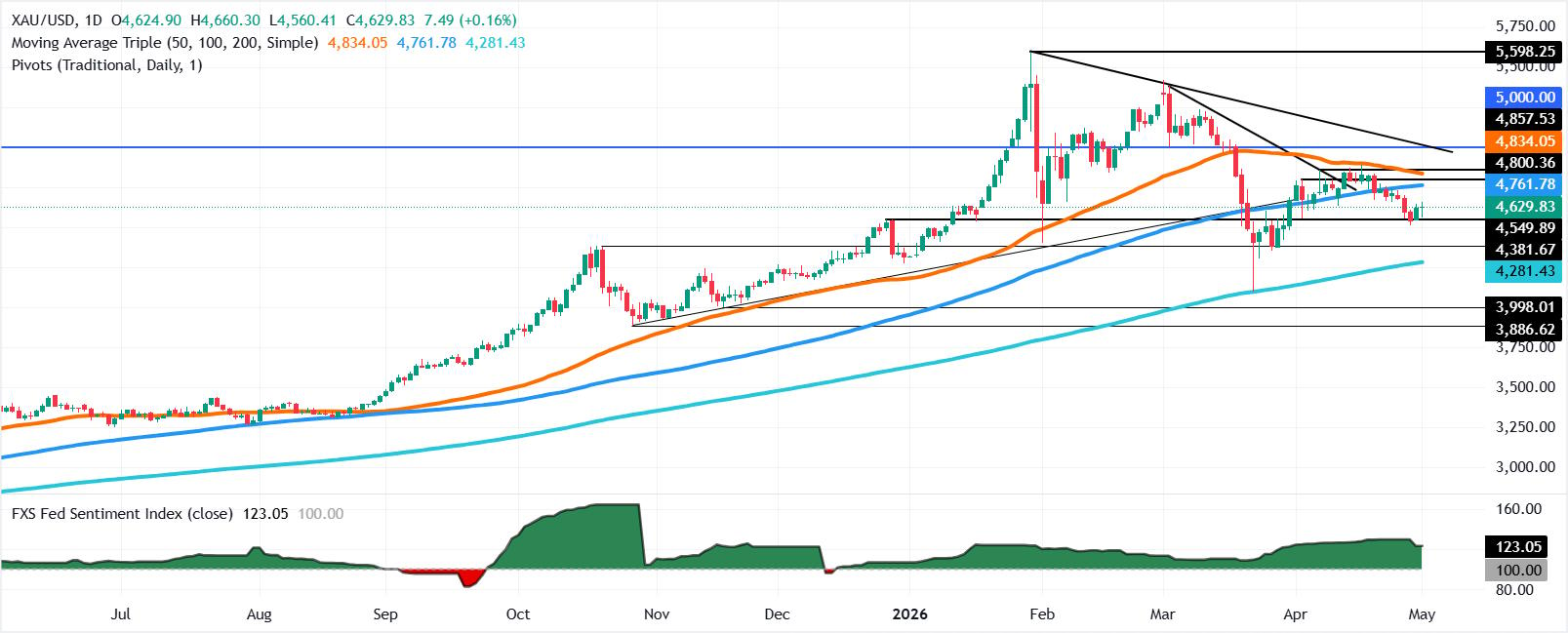
XAU/USD technical outlook: Gold trapped within a $150 range awaiting catalysts
Gold is poised to trade sideways, yet it seems to have found its footing at around $4,550. The Relative Strength Index (RSI) remains bearish, indicating sellers are in control, leaning on key resistance levels above the $4,700 mark.
In the short term, buyers are pushing the yellow metal upwards. If Gold surpasses $4,700, it opens the door to challenge the confluence of the 20-day and 100-day Simple Moving Averages (SMAs), which are around the $4,718-$4,749 area. If breached, the next area of interest would be the 50-day SMA at $4,834.
On the downside, the first support is seen at $4,600. A breach of the latter will expose the April 29 low at $4,510, ahead of the March 26 swing low at $4,351.
Gold FAQs
Gold has played a key role in human’s history as it has been widely used as a store of value and medium of exchange. Currently, apart from its shine and usage for jewelry, the precious metal is widely seen as a safe-haven asset, meaning that it is considered a good investment during turbulent times. Gold is also widely seen as a hedge against inflation and against depreciating currencies as it doesn’t rely on any specific issuer or government.
Central banks are the biggest Gold holders. In their aim to support their currencies in turbulent times, central banks tend to diversify their reserves and buy Gold to improve the perceived strength of the economy and the currency. High Gold reserves can be a source of trust for a country’s solvency. Central banks added 1,136 tonnes of Gold worth around $70 billion to their reserves in 2022, according to data from the World Gold Council. This is the highest yearly purchase since records began. Central banks from emerging economies such as China, India and Turkey are quickly increasing their Gold reserves.
Gold has an inverse correlation with the US Dollar and US Treasuries, which are both major reserve and safe-haven assets. When the Dollar depreciates, Gold tends to rise, enabling investors and central banks to diversify their assets in turbulent times. Gold is also inversely correlated with risk assets. A rally in the stock market tends to weaken Gold price, while sell-offs in riskier markets tend to favor the precious metal.
The price can move due to a wide range of factors. Geopolitical instability or fears of a deep recession can quickly make Gold price escalate due to its safe-haven status. As a yield-less asset, Gold tends to rise with lower interest rates, while higher cost of money usually weighs down on the yellow metal. Still, most moves depend on how the US Dollar (USD) behaves as the asset is priced in dollars (XAU/USD). A strong Dollar tends to keep the price of Gold controlled, whereas a weaker Dollar is likely to push Gold prices up.
Author

Christian Borjon Valencia
FXStreet
Markets analyst, news editor, and trading instructor with over 14 years of experience across FX, commodities, US equity indices, and global macro markets.

















