Forex Today: No signs of Dollar strength on US midterm election day

Here is what you need to know on Tuesday, November 3:
Financial markets cling to a cautious stance early Tuesday as focus remains on the midterm elections in the United States (US). In the second half of the day, the economic calendar will feature September Factory Orders and JOLTS Job Openings data from the US.
The US Dollar (USD) started the week under modest bearish pressure and the USD Index touched its lowest level in a month near 101.40 during the European trading hours on Monday. Later in the day, the Institute for Supply Management's (ISM) better-than-expected Manufacturing Purchasing Managers' Index (PMI) data helped the USD limit its losses. Moreover, the bearish action seen in Wall Street's main indexes further supported the USD Index, which managed to erase a large portion of its daily losses to close marginally lower. Early Tuesday, the USD Index moves sideways in a tight range above 101.70, while US stock index futures lose between 0.1% and 0.5%.
US Dollar Price This week
The table below shows the percentage change of US Dollar (USD) against listed major currencies this week. US Dollar was the weakest against the Swiss Franc.
| USD | EUR | GBP | JPY | CAD | AUD | NZD | CHF | |
|---|---|---|---|---|---|---|---|---|
| USD | -0.27% | -0.14% | 0.24% | 0.02% | 0.72% | 0.11% | -0.67% | |
| EUR | 0.27% | 0.11% | 0.46% | 0.27% | 0.91% | 0.35% | -0.42% | |
| GBP | 0.14% | -0.11% | 0.19% | 0.18% | 0.81% | 0.23% | -0.53% | |
| JPY | -0.24% | -0.46% | -0.19% | -0.17% | 0.49% | -0.19% | -0.98% | |
| CAD | -0.02% | -0.27% | -0.18% | 0.17% | 0.68% | -0.02% | -0.70% | |
| AUD | -0.72% | -0.91% | -0.81% | -0.49% | -0.68% | -0.55% | -1.32% | |
| NZD | -0.11% | -0.35% | -0.23% | 0.19% | 0.02% | 0.55% | -0.83% | |
| CHF | 0.67% | 0.42% | 0.53% | 0.98% | 0.70% | 1.32% | 0.83% |
The heat map shows percentage changes of major currencies against each other. The base currency is picked from the left column, while the quote currency is picked from the top row. For example, if you pick the US Dollar from the left column and move along the horizontal line to the Japanese Yen, the percentage change displayed in the box will represent USD (base)/JPY (quote).
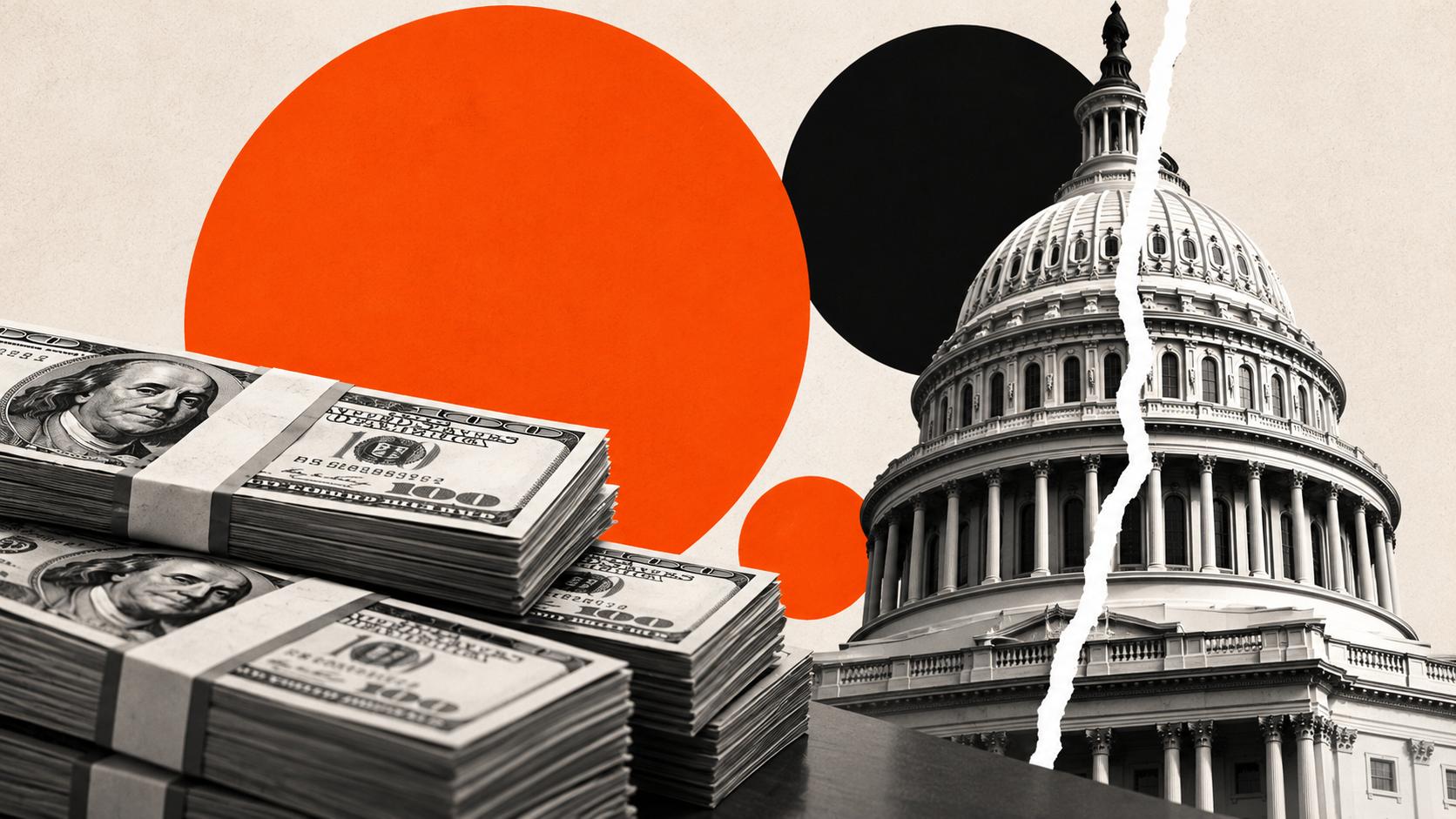
US midterms loom as Dollar faces shifting political headwinds
Commerzbank’s Norman Liebke notes that the US midterm elections “are taking place today,” with the first results “likely to start coming in shortly after midnight CET,” while outcomes in “particularly closely contested states may not become clear until several days after the election.” He points out that, based on the latest polling, “the Republicans appear headed for a significant defeat and could lose not only their majority in the House of Representatives but also control of the Senate.”
In terms of market implications, Liebke argues that the Dollar’s reaction will hinge on how Congress ultimately shapes up. “If only the House of Representatives changes hands, the Dollar would likely face some headwinds as well, albeit to a lesser extent,” he writes, whereas “if the Republicans retain control of both chambers, this should instead provide support for the Dollar.”
During the Asian trading hours, the Reserve Bank of Australia (RBA) announced that it raised the policy rate by 25 basis points (bps) to 4.85% from 4.6%. "With revised inflation outlook and ongoing upside risks, board decides further tightening of financial conditions is necessary to support inflation return to target," the RBA noted in its policy statement. In the post-meeting press conference, RBA Governor Michele Bullock argued that the best course of action now would probably be to pause and assess incoming data. After losing nearly 0.5% on Monday, AUD/USD stays on the back foot early Tuesday and trades at a two-week low below 0.7000.
Crude Oil prices declined sharply on Monday on growing optimism about the US and Iran finding a diplomatic solution after US Vice President JD Vance says Washington has made “progress” in indirect peace talks. However, the news of US military strikes against Iranian targets in the Strait of Hormuz, following surface-to-air missile threats against US assets, pointed to a potential escalation of the conflict and sent oil prices higher early Tuesday.
EUR/USD gathered bullish momentum during the European trading hours on Monday and climbed toward 1.1250 before retracing a large portion of its daily rally in the American session. Early Tuesday, the pair moves sideways below 1.1200. Later in the day, several European Central Bank (ECB) policymakers are scheduled to deliver speeches.
GBP/USD closed the fourth consecutive trading day in positive territory on Monday before entering a consolidation phase near 1.3400.
USD/JPY moves up and down in a narrow channel below 158.00 after rising about 0.2% on Monday.
NZD/USD failed to benefit from the broad USD weakness on Monday and ended the day in the red. Early Tuesday, the pair corrects higher and trades at around 0.5630. In the early trading hours of the Asian session on Wednesday, third-quarter employment data from New Zealand will be watched closely by market participants.
Following the sharp decline see toward the end of last week, Gold (XAU/USD) staged a rebound and gained nearly 2% on Monday. Early Tuesday, XAU/USD struggles to extend its recovery and declines toward $3,900, already down about 1% on the day.
US midterm elections FAQs
The US midterm elections are the federal elections held halfway through a president's four-year term. Voters choose all 435 members of the House of Representatives, about one-third of the Senate, and, in many states, governors and other state and local officials.
Election Day is Tuesday, November 3, 2026. Federal law sets it as the Tuesday after the first Monday in November. Early voting and mail voting are already under way in many states.
They decide which party controls each chamber of Congress for the last two years of President Donald Trump's term. The majority party sets the legislative agenda, chooses committee leaders and, in the Senate, controls confirmations of judges and senior officials.
No. The president is elected every four years; the next presidential election is in November 2028. Midterms are often seen as a referendum on the sitting president's party, which historically tends to lose House seats.
Most analysts expect a modest, short-lived reaction in the US Dollar rather than a lasting trend. A divided Congress is widely seen as the base case and is partly priced in. Treasury yields may react more noticeably to the results. Outcomes that raise expectations of fiscal stimulus tend to lift yields and the US Dollar, while gridlock that limits new spending can pull both lower. Political friction, such as funding or debt-ceiling standoffs, can also briefly lift the Dollar as a safe haven. Over six to twelve months, growth and Federal Reserve policy matter more than the vote.
US stocks have historically been weak before midterms and strong after them. Since 1950, the S&P 500 has been higher 12 months after every midterm election, 19 out of 19, with an average gain of about 15%. Analysts link the pattern to uncertainty fading once results are known. Past performance does not guarantee future returns, and some strategists note that high valuations in 2026 could test the streak.
Markets have often welcomed a divided government because gridlock makes sweeping changes to taxes, spending and regulation less likely. Under a Republican president, the S&P 500 has historically done well in years following midterms that split control of Congress. The risks are funding deadlines, debt-ceiling fights and congressional investigations, which can add short-term volatility.
Author

Eren Sengezer
FXStreet
As an economist at heart, Eren Sengezer specializes in the assessment of the short-term and long-term impacts of macroeconomic data, central bank policies and political developments on financial assets.