Euro extends losses against British Pound amid high Oil prices and risk-off markets
- EUR/GBP dips to nearly two-week lows at 0.8560 from Friday's highs above 0.8600.
- The Euro struggles as higher Oil prices pose a serious headwind for the Eurozone's economic growth
- In the UK, all eyes will be on the BoE monetary policy decision this week.
The Euro (EUR) opened the week in the same weak tone it closed the last one, as the British Pound (GBP) got a boost from strong UK Gross Domestic Product (GDP) and Industrial Production data. On Monday, high Oil prices and dismal market sentiment are putting additional pressure on the EUR/GBP pair, which has extended losses to nearly two-week lows at 0.8560, from Friday's highs near 0.8600.
Data released by National Statistics on Friday revealed that the UK's GDP accelerated to 0.4% growth in July, beating the market consensus of a flat performance, with Industrial Production growing against expectations and services activity improving beyond forecasts. The Pound rallied against most peers following the data.
The common currency is struggling across the board on Monday as high Oil prices pose a serious weight on the Eurozone’s economic growth and add pressure on the ECB to tighten its monetary policy further. Brent Oil is trading near $104.00 per barrel, after rallying more than 20% over the last two weeks, as the Middle East conflict threatens to slip into a full-blown regional war.
News reports advances by the Iran-backed Houthi militias on the Red Sea coast, which would allow them to close the Strait of Bab el–Mandeb. This would force Gulf countries to redirect Crude Shipments through the Suez Canal, increasing freight costs significantly. Meanwhile, the Strait of Hormuz remains practically closed, and a meeting by Gulf countries to reopen it has been postponed.
BoE monetary policy meeting in focus this week
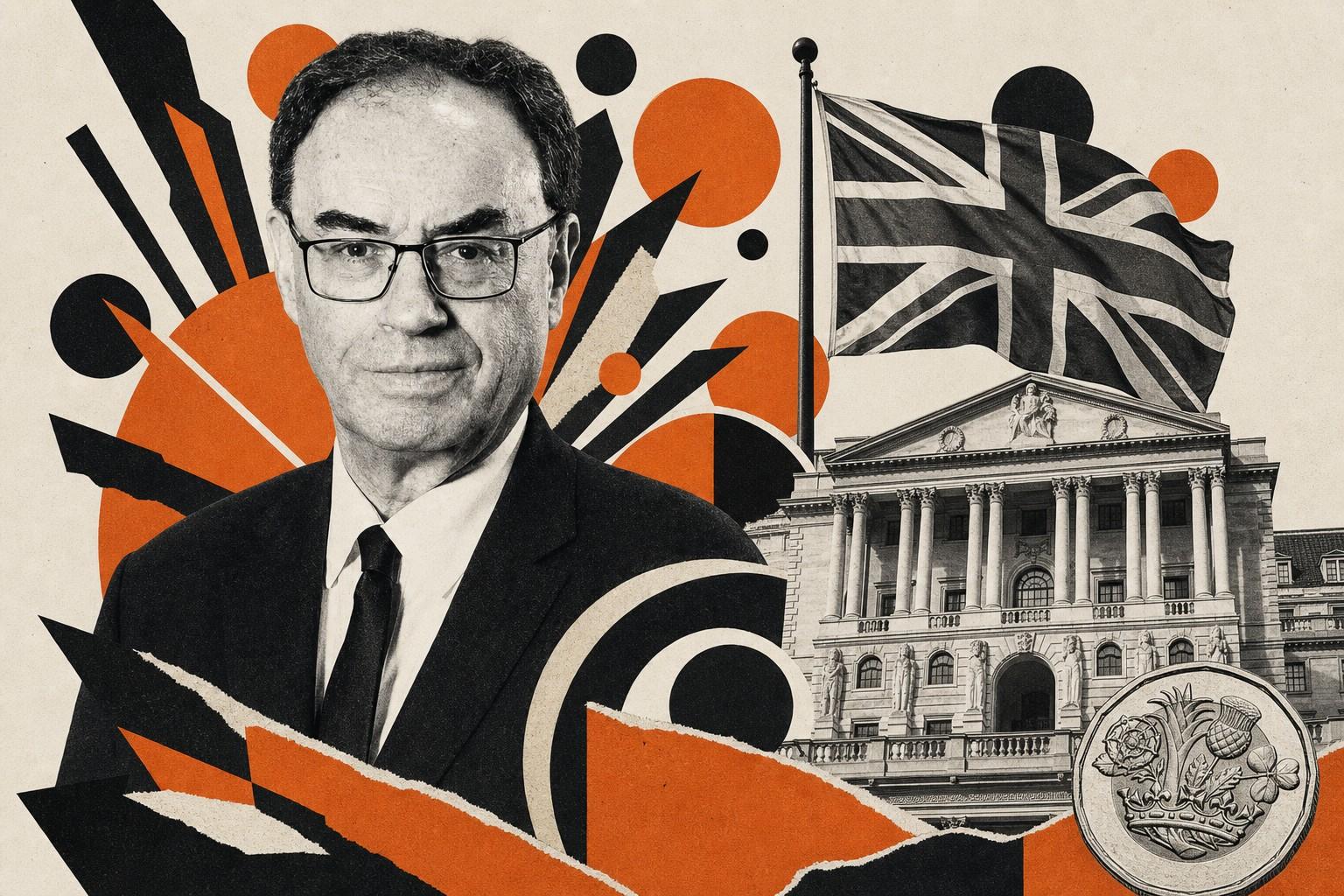
In the UK, the highlight this week will be the BoE's monetary policy decision, due on Thursday. The bank is widely expected to leave interest rates unchanged amid a split committee, and investors will be looking at the number of hawkish dissenters to assess the chances of a rate hike in the coming months.
Economists at Commerzbank argue that the Bank of England’s cautious stance is likely to persist in the near term, despite markets' recent bets on rising interest rates. They note that “if growth seen in July continues into the coming months, this will likely prompt the Bank of England to consider interest rate rises (...) until then, however, uncertainty about the underlying growth momentum is likely to further reinforce the Bank of England's cautious stance on interest rates.”
Against that backdrop, Commerzbank warns that there is “corresponding potential for disappointment and thus downside risks for the Pound” should the BoE fail to validate the market’s more aggressive tightening expectations.
BoE FAQs
The Bank of England (BoE) decides monetary policy for the United Kingdom. Its primary goal is to achieve ‘price stability’, or a steady inflation rate of 2%. Its tool for achieving this is via the adjustment of base lending rates. The BoE sets the rate at which it lends to commercial banks and banks lend to each other, determining the level of interest rates in the economy overall. This also impacts the value of the Pound Sterling (GBP).
When inflation is above the Bank of England’s target it responds by raising interest rates, making it more expensive for people and businesses to access credit. This is positive for the Pound Sterling because higher interest rates make the UK a more attractive place for global investors to park their money. When inflation falls below target, it is a sign economic growth is slowing, and the BoE will consider lowering interest rates to cheapen credit in the hope businesses will borrow to invest in growth-generating projects – a negative for the Pound Sterling.
In extreme situations, the Bank of England can enact a policy called Quantitative Easing (QE). QE is the process by which the BoE substantially increases the flow of credit in a stuck financial system. QE is a last resort policy when lowering interest rates will not achieve the necessary result. The process of QE involves the BoE printing money to buy assets – usually government or AAA-rated corporate bonds – from banks and other financial institutions. QE usually results in a weaker Pound Sterling.
Quantitative tightening (QT) is the reverse of QE, enacted when the economy is strengthening and inflation starts rising. Whilst in QE the Bank of England (BoE) purchases government and corporate bonds from financial institutions to encourage them to lend; in QT, the BoE stops buying more bonds, and stops reinvesting the principal maturing on the bonds it already holds. It is usually positive for the Pound Sterling.
Author

Guillermo Alcala
FXStreet
Graduated in Communication Sciences at the Universidad del Pais Vasco and Universiteit van Amsterdam, Guillermo has been working as financial news editor and copywriter in diverse Forex-related firms, like FXStreet and Kantox.