ECB: Draghi confirms PPP - ING
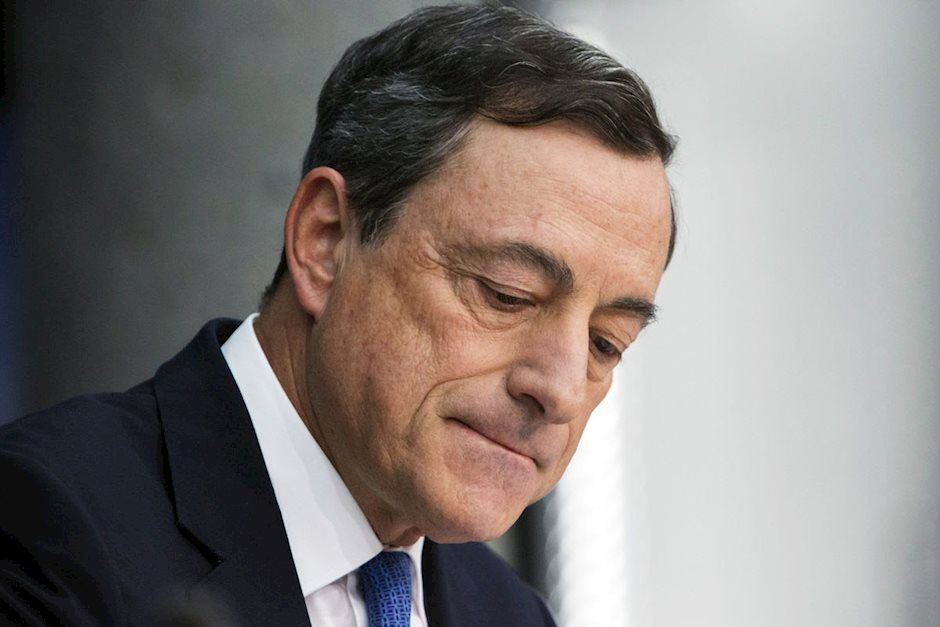

Carsten Brzeski, Chief Economist at ING, explains that the ECB President Mario Draghi offered interesting insights into the bank's current inflation assessment and whether this time is really different.
Key Quotes
“Experts know PPP as purchasing power parity, an economic theory used to explain exchange rate movements. ECB watchers have learned to apply a different PPP theory when assessing the bank's next steps; patience, persistence and prudence. These three key principles were confirmed this morning in one of the rare speeches by ECB President Mario Draghi outside of his regular appearances at ECB press conferences or hearings at the European Parliament.”
“Draghi’s speech gave a good illustration of the bank's current considerations and assessments of inflation developments. It also showed how undecided the ECB still is when judging whether inflation in the Eurozone is really likely to accelerate sustainably.”
“Here are the most interesting parts of Draghi's speech
- Watch core inflation. According to Draghi, measures of underlying inflation “have yet to show convincing signs of a sustained upward trend”. The reason for low underlying inflationary pressure is mainly slack in the labour market and the economy. In this regard, Draghi touched upon an interesting issue: the output gap. While the output gap is closing and about to turn positive in the Eurozone, there is still hardly any sign of inflationary pressure. Even though past experience tells policymakers that there should be. This leads to the interesting question of whether a positive output gap, mainly due to weaker potential growth, yields much weaker inflationary pressure than a positive output gap on the back of constant potential growth and a strong cyclical recovery.
- Some food for thought. In our view, given that potential growth in many Eurozone countries has dropped during the crisis, the current closing of the output gap could lead to much less inflationary pressure than many think. In fact, it could even be possible that the cyclical recovery eventually increases potential growth, thereby remaining inflation neutral. In this regard, Draghi made an interesting remark, i.e. “strong growth may be leading to higher potential output, as crisis-induced hysteresis may be reversed in conditions of stronger demand.” The concept of reversed hysteresis is something to monitor closely in the coming months, at least from a research angle.
- Optimism. Still, the ECB remains cautiously optimistic on the Phillips curve and a more general pick-up in inflation. According to Draghi, the unexplained residuals in the model are diminishing, backward-looking factors appear to be becoming less important and the forward-looking anchor in wage formations, inflation expectations, is strengthening. At the same time, Draghi pointed to several factors (temporarily) limiting the pass-through from wages to prices.
- New risks. Compared with last week’s press conference, Draghi was more outspoken on potential downside risks to the inflation outlook, stemming from protectionism and the euro appreciation. Regarding the new trade measures announced by the US administration, we share Draghi’s view that first-round effects should be small but the risk of retaliation and an escalation of a trade conflict could clearly dent sentiment. On the euro appreciation, Draghi remarked that the “purchases of euro cannot be explained solely by economic expansion” anymore.”
“Could this time be different?
On the surface, today’s speech was mainly intended to maintain the status quo: the ECB will remain patient, persistent and prudent. The three Ps. The ECB will not rush to the exit but will try to very gradually end QE and then, very cautiously, try to move towards re-establishing policy rates as the main monetary policy tool. At the same time, however, today’s speech also gave a good impression of how hard it currently is for central bankers to assess whether economies are in the middle of a structural break, in which economic textbooks can simply be thrown away, or whether this time is really no different. Only time will tell. Patience, persistence and prudence will clearly help.”
Author
Sandeep Kanihama
FXStreet Contributor
Sandeep Kanihama is an FX Editor and Analyst with FXstreet having principally focus area on Asia and European markets with commodity, currency and equities coverage. He is stationed in the Indian capital city of Delhi.