Catch-down mode: Analysts slash S&P targets as Trump tariffs torch the tape

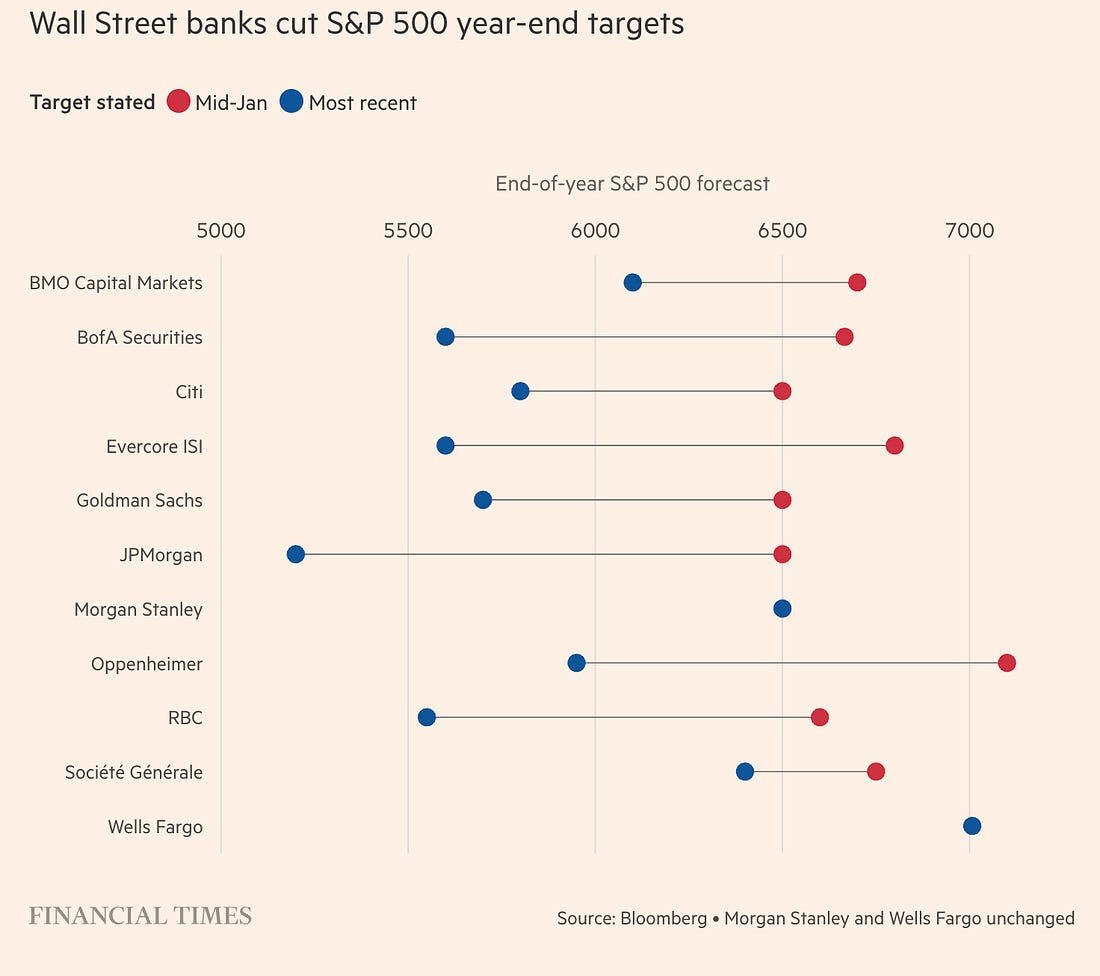
Wall Street’s playing catch-up, or should I say catch-down — and for once, the suits aren’t pretending to have a handle on it. Over the past two weeks, a wave of S&P 500 downgrades has rolled in, with the usual suspects — JPMorgan, BofA, Evercore — slashing their targets like it’s risk-off season in full swing. What sparked the panic? Trump’s tariff blitzkrieg.
The moment the 10% baseline duty and threat of broad-based "reciprocal tariffs" hit the tape, it was lights out for the complacency trade. The S&P’s dropped over 7% since Liberation Day (April 2), and is now down 14% from its Feb 19 high. Volatility’s back with a vengeance — and it’s not just algos playing ping-pong. The market’s digesting a world where U.S. policy is a headline-driven minefield, not a growth engine.
Yes, Trump’s hit pause on the harsher tariffs and carved out exemptions for phones and gadgets — but the damage is already in the system. Investors aren’t just reacting to what’s taxed. They’re pricing in the whiplash — the daily policy U-turns that are gutting confidence and muddying earnings visibility.
The Street's tone has flipped from "this’ll be fine" to “let’s hope we land the plane.” The average S&P 500 year-end target has now cratered to 6,012 — down from 6,539 at the end of 2024. The index just limped into the weekend at 5,283. So yes, strategists still see a 14% pop into year-end, but 2025 as a whole? A measly 2% gain. That’s a cold slap after two years of 20%+ upside.
The about-face is striking. These same desks were pounding the table back in January on tax cuts, deregulation, and “pro-business policy.” Now, the same firms are penciling in recession risk and lowering EPS projections. Citi just chopped its 2025 S&P target to 5,800 from 6,500 and shaved EPS down to $255 from $270. That’s a full reset — and they’re still above some of the darker corners of the forecast pack.
Let’s call it groupthink. The same banks that declared U.S. exceptionalism bulletproof are now backpedaling as positioning unwinds and narrow leadership cracks. Their logic is that we might see the first bear market triggered not by earnings, rates, or geopolitics but by the Oval Office.
Welcome to 2025, where analysts 'calls” follow trade war tape bombs.
I’m still holding the line on my 4,800 buy strike( and nibbling on dips) — that’s my big re-entry zone, and I’ve got dry powder parked on the sidelines ready to deploy. Add to that a vault full of physical gold, and I’m well-positioned to weather any downside storm and step in when the tape gets ugly.
Let the analysts scream doom — they’ve been wrong more times than I can count, especially the apocalyptic crowd that’s been calling for a collapse every year since 2009. I’ve seen this show before. Sentiment gets stretched, price cracks, and suddenly the same desks that were pounding the table at 6,500 are pivoting to 4,000 like it was their base case all along. That’s not analysis — that’s rearview risk management dressed up as foresight.
Sure, this time could be different. I’m not naive. The macro’s messy, the earnings outlook is murky, and policy risk is as twitchy as I’ve ever seen. But if I’m laying down chips, I’m still skewed toward the year-end 6,000 camp.
Why? Because a weaker dollar is fuel for the tape — period. You get inflated foreign earnings on repatriation, better export reflexivity, and a mechanical uplift across multinationals. And on top of that, you’ve got the old safety net — the Fed put. It’s not official, but let’s be honest: old habits die hard. If things wobble hard enough, they’ll be there. And that’s the bid I’m still willing to lean on.
Bottom line: 4,800 is still the strike zone. If the market gives me that level, I’m a buyer — not with blind optimism, but with a disciplined plan and the firepower to back it.
Groupthink chart
Wall Street has moved from consensus optimism to consensus doubt — and the Street’s tone has shifted almost overnight. It’s not conviction-driven bearishness. It’s herd-driven risk aversion. Strategists aren’t leading the narrative; they’re trailing the tape, cutting targets after price has already cracked. EPS estimates are being revised down post-vol blowout, not in anticipation of it.
The view
But what I can say with conviction is this — no one, and I mean no one — not central banks, not policymakers, not political allies or adversaries — has a clue where this trade war is really heading. The path is murky, the headlines are weaponized, and the market is stuck trading in the dark.
That’s why I keep coming back to one core principle: in trading, the more obvious the conclusion, the more likely it’s already priced — and the more likely the trade built around that narrative will bleed you dry. The market doesn’t reward the consensus. It punishes it. Especially when everyone’s reading from the same playbook, bracing for the same outcome.
So while the talking heads debate who blinks first in this tariff standoff, I’ll stick to my levels, trust my prep, and remember that the edge isn’t in predicting the next headline — it’s in positioning where others can’t.
Author

Stephen Innes
SPI Asset Management
With more than 25 years of experience, Stephen has a deep-seated knowledge of G10 and Asian currency markets as well as precious metal and oil markets.