Can the KOSPI index sustain its record-breaking performance in 2026? (Part one)

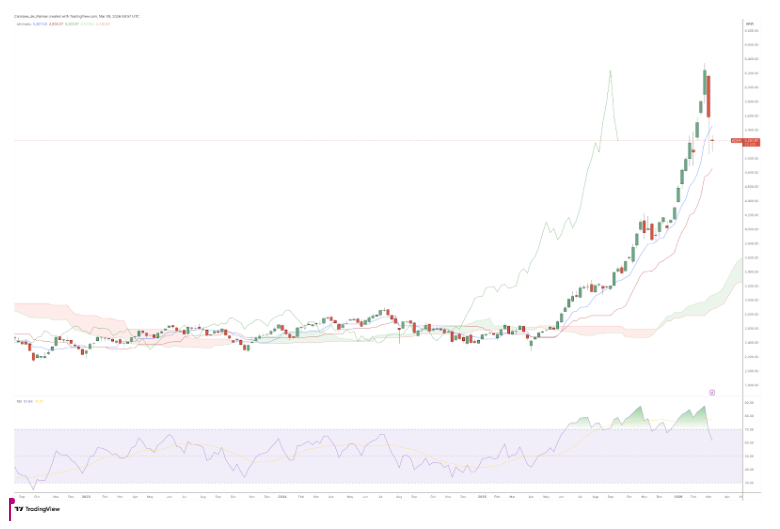
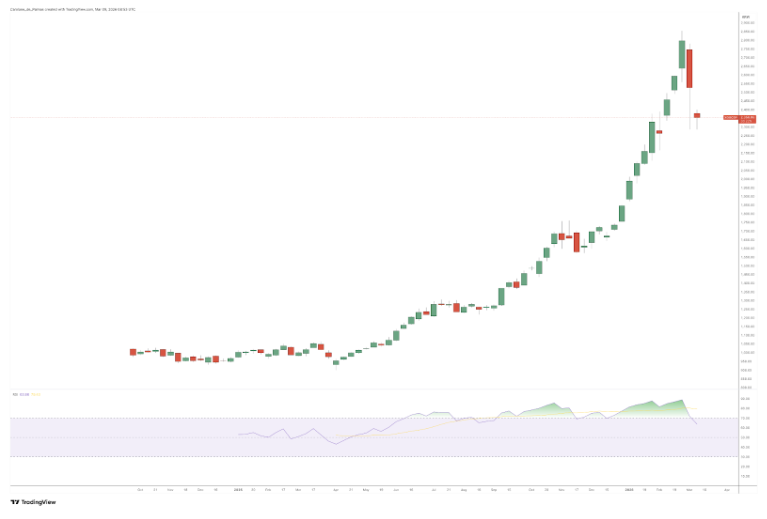
Building on its status as the world's top-performing index in 2025 with a staggering 75% return, the KOSPI has continued to outpace its global peers well into 2026. But can the South Korean index still hit new highs in 2026?
Part one: The making of a market phenomenon
As of the market close on Friday, March 6th, the South Korean benchmark has climbed an additional 25% year-to-date—a remarkable feat at a time when most major markets are struggling. The Nasdaq has declined 4.64% since January, while Europe's DAX 40 and CAC 40 have slipped 3.70% and 1.50% respectively. Heightened geopolitical tensions—from U.S. intervention in Venezuela and diplomatic friction over Greenland to ongoing turmoil in the Middle East—have weighed on Western equities. Against that backdrop, Seoul's continued outperformance makes investors wonder what is actually driving this, and can it last in 2026? To answer that, it helps to understand three structural forces that helped the KOSPI index become an outperformer in 2025.
Reason one: A generation priced out of housing turned to stocks
To understand one of the reasons behind the KOSPI's rise, you have to look beyond trading screens and into the lives of younger South Koreans who have quietly abandoned one of their country's most deeply held ambitions: owning a home.
For generations, homeownership in South Korea was more than a financial objective—it was a cultural cornerstone, a marker of adulthood, and the primary mechanism through which ordinary families accumulated wealth. But a relentless surge in property prices, particularly in Seoul, has placed that milestone firmly out of reach for much of the population.
According to South Korea's Ministry of Land, Infrastructure and Transport, a household in Seoul needed to save their entire disposable income for nearly 14 years to afford a home in 2024. By comparison, the equivalent figure in New York City—itself one of the world's most expensive housing markets—stood at around 9.7 years based on 2022 data from the Office of the Comptroller. The gap is striking even accounting for the two-year difference in the datasets, and it speaks to a housing affordability crisis that has no easy fix.
The social consequences have been profound. Younger Koreans are increasingly vocal about the futility of saving for property in Seoul. "Home prices are too high to even consider," one young investor noted. "Saving up to buy a house here is impossible." Faced with that reality, a generation has redirected its financial means toward the stock market. Retail participation in Korean equities surged to record levels in 2025, injecting sustained waves of fresh domestic capital into the index.
The government recognised the need to change things about equity investment and to make the market more rewarding for individual shareholders. When taking office last June, President Lee Jae Myung went as far as pledging to push the benchmark index toward the 5,000 level within his 5-year term—a rare and striking political commitment to a specific market milestone. In January 2026, the KOSPI had surpassed 5,000 for the first time in its history and in February 2026, it had also surpassed the 6,000 mark.
Reason two: The "Korea discount" is finally being dismantled
The second major driver of the KOSPI's transformation is structural, and arguably the most consequential for its long-term trajectory: a sweeping corporate governance overhaul that is beginning to close the valuation gap between Korean stocks and their international peers.
For years, the "Korea Discount" kept South Korean stocks trading at significantly lower valuations than their counterparts in the U.S., Europe, and Japan. This persistent gap was largely attributed to the dominance of chaebols—large, family-led conglomerates—whose opaque governance structures often favored the interests of founding families at the expense of minority investors. These structural issues historically dampened foreign investment and left the South Korean market undervalued by global standards.
The "Value-Up" initiative, launched in 2024 and gaining significant momentum through 2025, is altering how international and domestic investors perceive the South Korean equity market by addressing long-standing structural issues.
The introduction of amendments to the Commercial Act in July 2025 shifted the legal landscape by establishing that directors owe a fiduciary duty to all shareholders and by enhancing protections for minority investors. This was followed by legislation requiring the cancellation of treasury shares within a single year, a move that prevented controlling families from using those shares to consolidate power and instead prioritized the return of capital to the broader investor base. Additionally, the National Assembly's decision in December 2025 to reduce the dividend income tax rate from 45% to a range of 14% to 30% created a clear financial incentive for companies to increase their payout ratios.
These policy shifts have led to measurable changes in market participation and performance. By the end of 2025, 174 companies had officially adopted Corporate Value-Up Plans, while foreign investor participation in the market nearly doubled during this period. The resulting change in market sentiment is reflected in the performance of the Korea Value-Up Index, which has increased by more than 130% since its launch in late 2024.
In a January 2026 analysis, Goldman Sachs drew a direct parallel between the current South Korean market and the Japan trade of 2020—a comparison that will resonate with investors who profited handsomely from Tokyo's own governance-driven re-rating.
Janus Henderson, meanwhile, has argued that governance reform will not only act as a catalyst for market re-rating but will become a driver of earnings power and corporate resilience in its own right. Further reforms are expected, including enforcement of the Stewardship Code and more robust Value-Up monitoring by regulators and the Korea Exchange—all pointing toward a market that is structurally more attractive than it was just two years ago.
Reason three: Two chip giants riding the AI wave
No analysis of the KOSPI's 2025 performance would be complete without examining the extraordinary contribution of its two dominant technology companies—Samsung Electronics and SK Hynix—which together account for roughly one third of the index's total market capitalisation, according to the Korea Capital Market Institute.
Both companies are world leaders in memory semiconductors, and both became direct and outsized beneficiaries of the artificial intelligence infrastructure boom that accelerated sharply through 2024 and 2025.
The explosion in demand for high-bandwidth memory chips—specialised components essential for powering AI processors and servers, including those manufactured by the extremely popular company Nvidia—drove earnings at both firms to record levels. SK Hynix, which has established itself as the undisputed global leader in HBM technology since being acquired by SK Telecom for approximately $3 billion in 2012, posted a record operating profit of 47.2 trillion won for the full year 2025, surpassing Samsung's 43.6 trillion won—the first time SK Hynix had overtaken its larger rival on this measure.
According to MS Hwang, research director at Counterpoint Research, SK Hynix has established itself as a preeminent AI leader within the Asian market. Hwang attributes this success to the company's dominant position in the HBM sector, emphasizing that its superior product quality and reliable supply chain have been fundamental to the global expansion of AI infrastructure.
Samsung, while slightly diluted by its broader business spanning consumer electronics and contract chip manufacturing, still delivered a remarkable performance. Its memory segment alone generated operating profits of approximately 24.9 trillion won in 2025. According to TrendForce data, Samsung held 28% and SK Hynix held 22.1% of the global NAND market by revenue in the fourth quarter of 2025—a combined share exceeding 50% even as both companies deliberately reduced NAND output to focus on higher-value AI memory products.
The market validated this leadership. SK Hynix skyrocketed 274% in 2025, and as of March 6th 2026 has added a further 41% year-to-date. Samsung surged 125% in 2025, and is up approximately 56% since the start of this year. These strong performances pushed the entire South Korean index and placed the Korean technology sector firmly on the radar of global institutional investors.
Together, these three forces—a generational housing exodus into equities, a genuine corporate governance revolution, and two world-class technology companies riding the most powerful investment theme of the era—explain how the KOSPI became 2025's most compelling equity story. In Part Two, we examine whether that momentum can hold, and what the risks are that could derail it.
Stay up to date with what's moving and shaking on the world's markets and never miss another important headline again! Check ActivTrades daily news and analyses here.
Author

Carolane de Palmas
ActivTrades
Carolane graduated with a Masters in Corporate Finance & Financial Markets and got the AMF Certification (Financial Markets Regulator in France). Afterward, she became an independent trader, investing mostly in European and American stocks/indices.