|

BoJ says open to faster rate hike pace as yen adds price risk – Bloomberg

According to a Bloomberg report, the Bank of Japan (BoJ) is widely seen holding interest rates steady at the July meeting. The report also shows that the recent weakness in the Japanese Yen (JPY) poses an upside risk to Japan’s inflation, which allows the central bank to fasten its monetary tightening cycle.

Market reaction
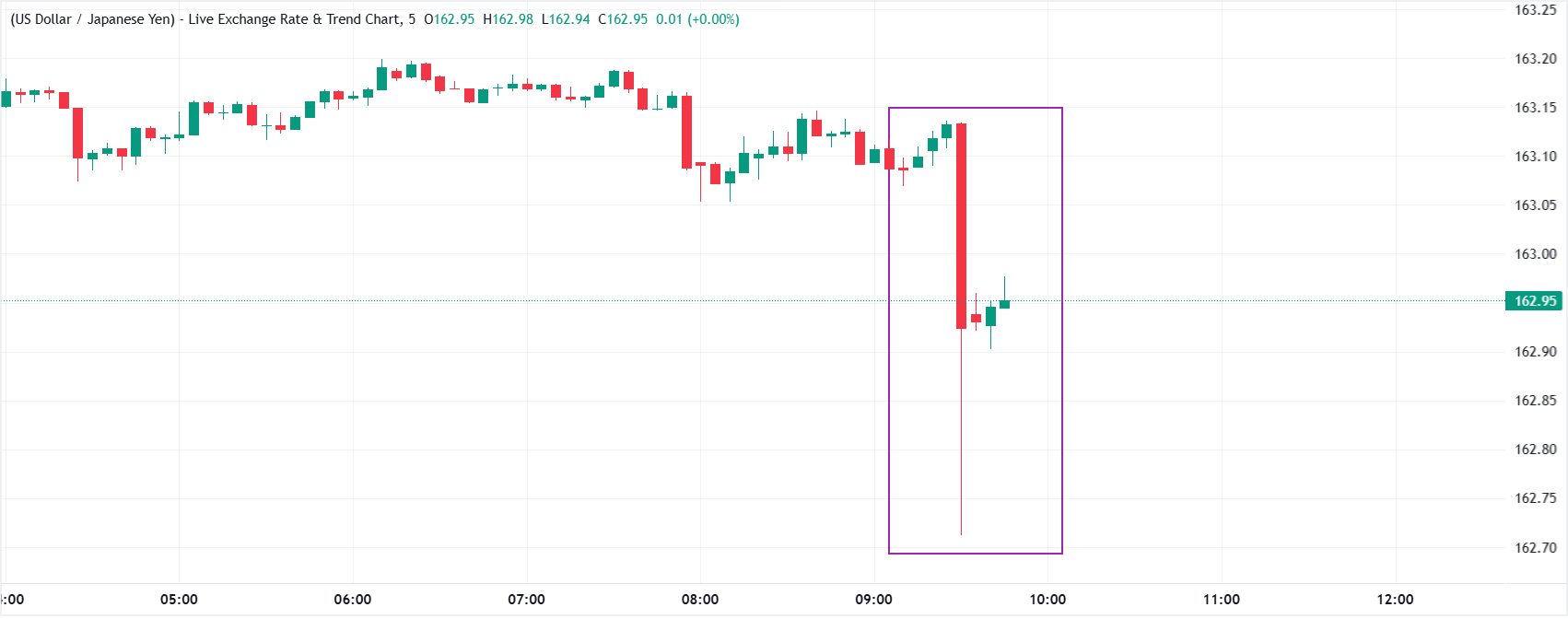
A sharp appreciation is seen in the Japanese Yen (JPY) following the report release. USDJPY fell sharply to near 162.65.

Bank of Japan FAQs

The Bank of Japan (BoJ) is the Japanese central bank, which sets monetary policy in the country. Its mandate is to issue banknotes and carry out currency and monetary control to ensure price stability, which means an inflation target of around 2%.

The Bank of Japan embarked in an ultra-loose monetary policy in 2013 in order to stimulate the economy and fuel inflation amid a low-inflationary environment. The bank’s policy is based on Quantitative and Qualitative Easing (QQE), or printing notes to buy assets such as government or corporate bonds to provide liquidity. In 2016, the bank doubled down on its strategy and further loosened policy by first introducing negative interest rates and then directly controlling the yield of its 10-year government bonds. In March 2024, the BoJ lifted interest rates, effectively retreating from the ultra-loose monetary policy stance.

The Bank’s massive stimulus caused the Yen to depreciate against its main currency peers. This process exacerbated in 2022 and 2023 due to an increasing policy divergence between the Bank of Japan and other main central banks, which opted to increase interest rates sharply to fight decades-high levels of inflation. The BoJ’s policy led to a widening differential with other currencies, dragging down the value of the Yen. This trend partly reversed in 2024, when the BoJ decided to abandon its ultra-loose policy stance.

A weaker Yen and the spike in global energy prices led to an increase in Japanese inflation, which exceeded the BoJ’s 2% target. The prospect of rising salaries in the country – a key element fuelling inflation – also contributed to the move.

Author

Sagar Dua

Sagar Dua

FXStreet

Sagar Dua is associated with the financial markets from his college days. Along with pursuing post-graduation in Commerce in 2014, he started his markets training with chart analysis.


More from Sagar Dua
Share:

Editor's Picks

GBP/USD holds recovery gains near 1.3400 despite soft UK CPI data

GBP/USD clings to recovery gains near 1.3400 in European trading on Wednesday. The UK annual Consumer Price Index (CPI) inflation cooled to 2.6% in June against the market forecast of 2.7%, failing to deter the British Pound's rebound from weekly troughs. However, the pair's further upside could be limited by ongoing Mideast tensions and sustained US Dollar demand as a haven.

EUR/USD gains ground above 1.1400 on hawkish ECB tone

The EUR/USD pair holds positive ground near 1.1410 during the early European trading hours, bolstered by a hawkish tone from the European Central Bank. However, the potential upside for the major pair might be limited amid escalating military tensions and recent retaliatory airstrikes between the US and Iran.

Gold ease from two-week top as energy-driven inflation fears bolster Fed hike bets

Gold retreats slightly from a two-week high touched earlier this Wednesday, albeit it retains an intraday bullish bias through the first half of the European session. Hopes that US-Iran diplomacy could ease energy prices and temper hawkish US Federal Reserve expectations undermine the US Dollar, which is seen supporting the commodity. In fact, top negotiators for Iran and the US signaled that they have not walked away from talks.

Cardano: Short-term recovery lacks retail support

Cardano price edges lower after the 50-day Exponential Moving Average at $1.770 capped two consecutive days of recovery seen earlier this week. ADA futures point to waning retail traction as Open Interest and trading volume decline amid elevated long liquidations. The technical outlook for ADA is bearish, as momentum remains subdued below a resistance trendline near $0.1782.

Chip stocks are more volatile than Oil

I continue to start the day by looking at these two charts: US crude & Kospi. The former is extending gains, trading above $86 per barrel for WTI and $92 per barrel for Brent, while the Kospi is up more than 4.5%, led higher by Korean chipmakers following a similar jump in VanEck's Semiconductor ETF yesterday.

US Dollar mid-year outlook: Exceptional currency, exceptional risks?
The US Dollar enters the second half of 2026 in a markedly different position from a year ago. The King currency has recovered, reflecting persistent US inflation, changing expectations for Fed policy, geopolitical tensions and renewed demand for defensive assets.













