|

AMC Stock News: AMC Entertainment tumbles as company debuts APE shares

  • NYSE:AMC fell by 41.95% during Monday’s trading session.
  • AMC’s new preferred shares began trading under the ticker symbol APE.
  • AMC rival Cineworld prepares to file for Chapter 11 bankruptcy.

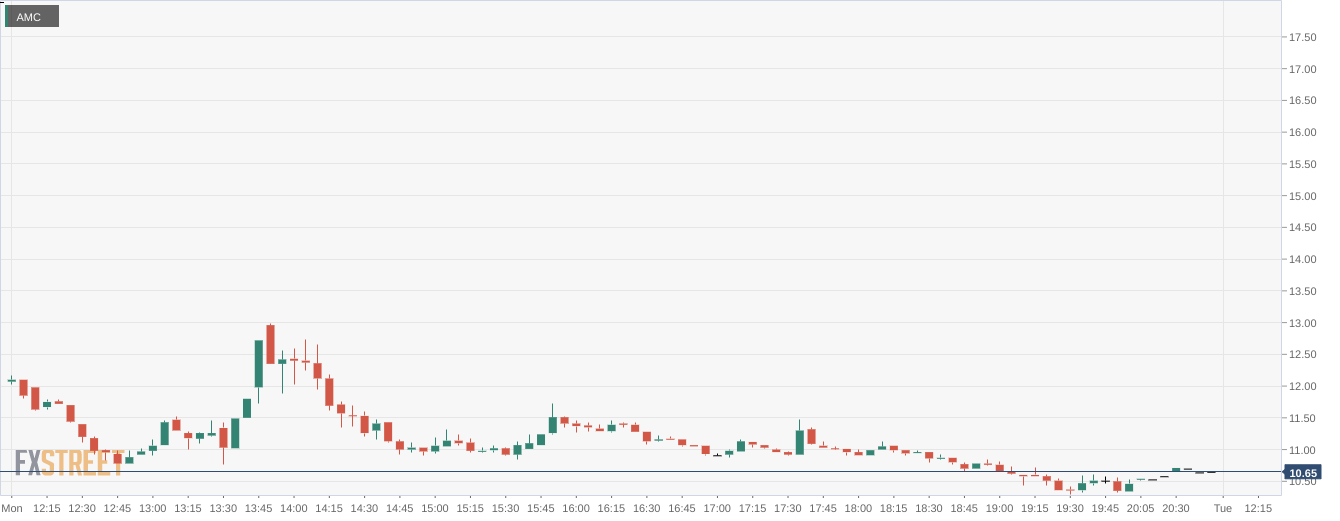
NYSE:AMC had its worst trading day in years as the meme stock began trading its preferred APE shares on the NYSE. On Monday, shares of AMC tumbled by 41.95% and closed the trading session at a price of $10.46. Stocks also started the week on the back foot as all three major indices plummeted ahead of the key Fed meeting at Jackson Hole, Wyoming later this week. Overall it was the worst trading day since June for the broader markets. The Dow Jones lost 643 basis points, the S&P 500 dropped by 2.14%, and the NASDAQ tumbled by 2.55% during the session.


Stay up to speed with hot stocks' news!


While many believe that AMC’s issuance of new preferred shares is just a long way of further diluting its stock, nobody could prepare Apes for how much AMC’s stock would fall on Monday. With AMC falling by 41.95% and the new Ape (NYSE:APE) shares also dropping by 13.67%, meme stock traders were down bad to start the week. This negativity hit other meme stocks as well with GameStop (NYSE:GME) and Bed Bath and Beyond (NASDAQ:BBBY) slumping by 5.32% and 16.23% respectively during Monday’s session.

AMC stock forecast
AMC Stock

Another thing hitting AMC’s stock on Monday? The owner of Regal Cinemas, Cineworld (LON:CINE) is taking further steps to prepare for Chapter 11 bankruptcy. The UK-based company saw its stock fall a further 20.47% on Monday after revealing last week that its bankruptcy was likely imminent. Obviously this is disappointing news for other movie theater chains like AMC, and the news definitely put more selling pressure on AMC’s stock.


Like this article? Help us with some feedback by answering this survey:

Author

More from Stocks Reporter
Share:

Editor's Picks

GBP/USD extends the drop to 1.3360

GBP/USD builds on Monday’s decline and briefly clinches five-day lows near 1.3360 on Tuesday. Cable’s extra pullback follows the better tone in the Greenback as uncertainty in the Middle East prompts investors to adopt a cautious stance. Meanwhile, an apathetic UK labour market report also collaborates with the selling pressure on the British Pound.

EUR/USD holds gains above 1.1400 on hawkish ECB expectations despite US-Iran tensions

The EUR/USD pair trades with mild gains around 1.1405 during the early Asian session on Wednesday. A hawkish tone from the European Central Bank provides some support to the Euro against the US Dollar. Traders await the upcoming ECB interest rate decision on Thursday. 

Gold hits two-week highs above $4,100 despite widening Mideast conflict

Gold hits two-week highs above $4,100 in the Asian session on Wednesday. The bright metal seems to ride the optimistic wave that diplomatic efforts are underway. However, concerns about energy-driven inflation risks continue to fuel Fed rate-hike bets. They could act as a tailwind for the US Dollar amid widening US-Iran tensions, which, in turn, could cap the bullion.

The market runs back into AI despite higher Oil and yields
World stocks surged as traders made a spirited return to the market’s commanding centre of gravity, piling back into semiconductors, AI leaders and momentum, with the enthusiasm of a crowd rushing through the one door it still trusts. The Nasdaq led Wall Street higher, semiconductor shares jumped more than 5%, and momentum staged its strongest rebound in years.
The Iranian war has again risen
The Iranian war has again risen to the top of the economics factor list. There is no end in sight. Intelligence experts say the current level of offense/retaliation will not change minds in Tehran, while in Washington, Trump fears all-out war, which would mean boots on the ground.
US Dollar mid-year outlook: Exceptional currency, exceptional risks?
The US Dollar enters the second half of 2026 in a markedly different position from a year ago. The King currency has recovered, reflecting persistent US inflation, changing expectations for Fed policy, geopolitical tensions and renewed demand for defensive assets.