Silver edges lower as demand-led inflation keeps Fed tightening risks in focus
- Silver edges lower on Tuesday as inflation concerns reinforce expectations of further interest rate hikes in the United States.
- Several Federal Reserve officials warn that strong demand is also contributing to price pressures.
- Falling Oil prices and hopes for the reopening of the Strait of Hormuz, however, provide some support to the precious metal.
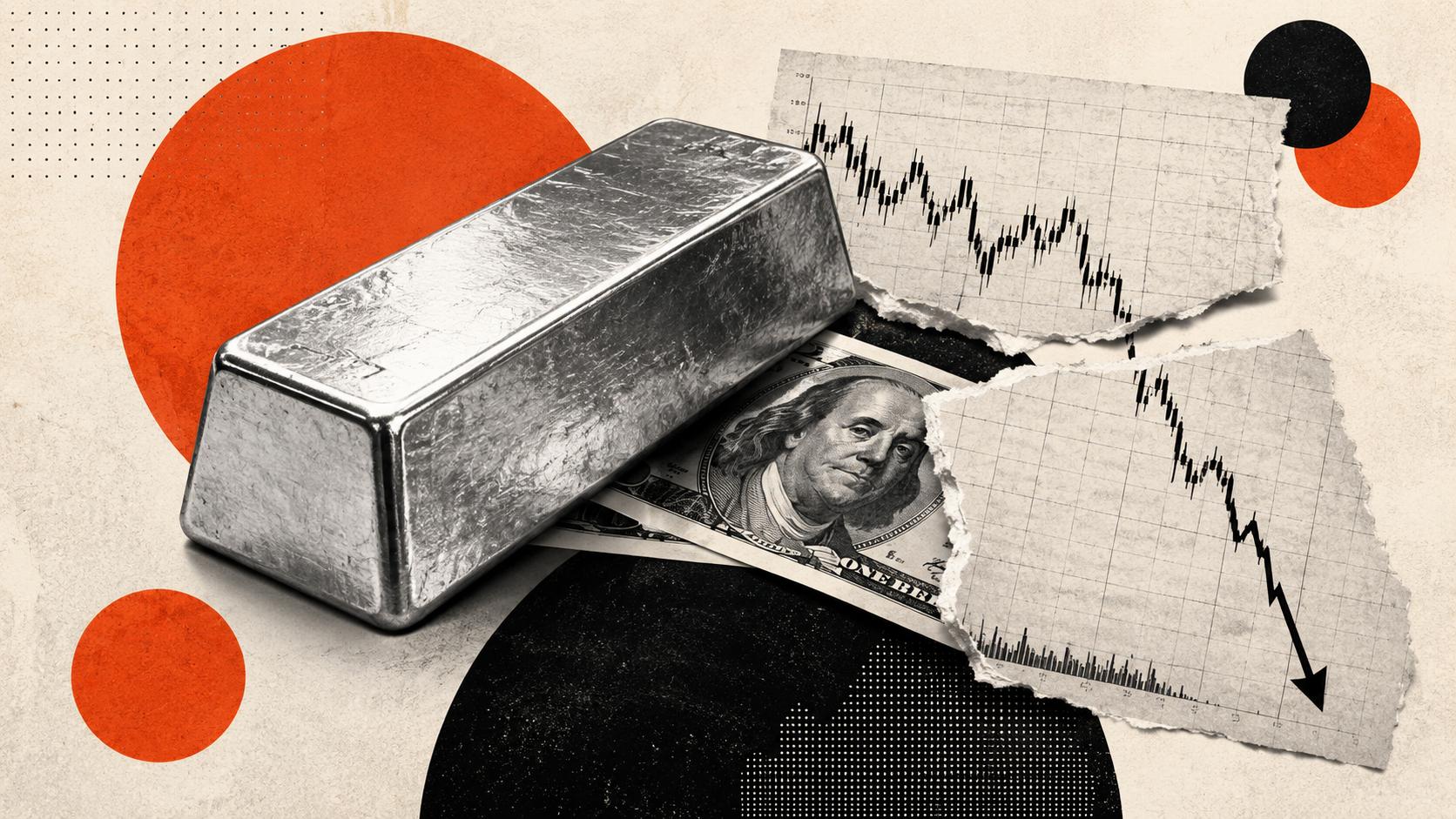
Silver (XAG/USD) declines 0.38% on Tuesday and trades around $65.85 at the time of writing. The white metal remains under pressure as investors strengthen their expectations of further interest rate hikes by the Federal Reserve (Fed), with US central bank officials increasingly concerned that inflation is being driven not only by elevated energy prices but also by strong demand.
Chicago Fed President Austan Goolsbee said on Monday that robust demand could be contributing to inflation alongside energy prices, tariffs and other supply shocks. Minneapolis Fed President Neel Kashkari also warned over the weekend that elevated inflationary pressures were not solely driven by higher Oil prices.
This distinction is important for the monetary policy outlook. Unlike a temporary energy supply shock, inflation supported by strong domestic demand could require interest rates to remain higher for longer. According to the CME FedWatch tool, markets currently see an almost 90% chance that the Fed will deliver at least one additional interest rate hike this year.
These expectations represent a headwind for Silver, which does not offer any yield and therefore tends to lose appeal when interest rates and bond yields rise. The Fed already raised its benchmark interest rate by 25 basis points last week to a range of 3.75%-4%, while 16 of 18 policymakers expect at least one additional increase this year.
Developments in the Middle East could, however, quickly alter the inflation outlook. Iran has offered to reopen the Strait of Hormuz within seven days if the United States (US) lifts its blockade of Iranian ports and reduces military pressure, according to Kyodo News, citing a senior Iranian official. A potential reopening of the strategic waterway could encourage a further decline in Oil prices and ease inflation concerns. A further decline in energy prices could gradually reduce pressure on US interest rate expectations and provide some support to Silver.
Meanwhile, the US Dollar (USD) gives back some of its earlier gains. The US Dollar Index (DXY), which measures the Greenback's value against a basket of six major currencies, trades around 100.45 after reaching 100.67 earlier in the day, its highest level since July 30. The Greenback's pullback limits the pressure on Silver for now, as a weaker US Dollar generally makes the metal cheaper for investors using other currencies.
Investors now turn their attention to a meeting scheduled for Tuesday between leaders from the United States and several Gulf nations on the sidelines of the United Nations (UN) General Assembly in New York. Discussions are expected to focus partly on possible ways to increase Oil supply from the Middle East. Geopolitical tensions remain elevated, however, following fresh threats between Washington and Tehran over the weekend, while a potential meeting between US President Donald Trump and Iranian President Masoud Pezeshkian has yet to be confirmed.
For Silver, developments in energy prices therefore remain closely linked to the outlook for US interest rates. A sustained decline in Oil prices that eases inflationary pressures could weigh on Fed tightening expectations and support the white metal. Conversely, further evidence that inflation remains supported by robust demand could keep interest rates higher for longer and continue to exert pressure on Silver.
Silver FAQs
Silver is a precious metal highly traded among investors. It has been historically used as a store of value and a medium of exchange. Although less popular than Gold, traders may turn to Silver to diversify their investment portfolio, for its intrinsic value or as a potential hedge during high-inflation periods. Investors can buy physical Silver, in coins or in bars, or trade it through vehicles such as Exchange Traded Funds, which track its price on international markets.
Silver prices can move due to a wide range of factors. Geopolitical instability or fears of a deep recession can make Silver price escalate due to its safe-haven status, although to a lesser extent than Gold's. As a yieldless asset, Silver tends to rise with lower interest rates. Its moves also depend on how the US Dollar (USD) behaves as the asset is priced in dollars (XAG/USD). A strong Dollar tends to keep the price of Silver at bay, whereas a weaker Dollar is likely to propel prices up. Other factors such as investment demand, mining supply – Silver is much more abundant than Gold – and recycling rates can also affect prices.
Silver is widely used in industry, particularly in sectors such as electronics or solar energy, as it has one of the highest electric conductivity of all metals – more than Copper and Gold. A surge in demand can increase prices, while a decline tends to lower them. Dynamics in the US, Chinese and Indian economies can also contribute to price swings: for the US and particularly China, their big industrial sectors use Silver in various processes; in India, consumers’ demand for the precious metal for jewellery also plays a key role in setting prices.
Silver prices tend to follow Gold's moves. When Gold prices rise, Silver typically follows suit, as their status as safe-haven assets is similar. The Gold/Silver ratio, which shows the number of ounces of Silver needed to equal the value of one ounce of Gold, may help to determine the relative valuation between both metals. Some investors may consider a high ratio as an indicator that Silver is undervalued, or Gold is overvalued. On the contrary, a low ratio might suggest that Gold is undervalued relative to Silver.
Author

Ghiles Guezout
FXStreet
Ghiles Guezout is a Market Analyst with a strong background in stock market investments, trading, and cryptocurrencies. He combines fundamental and technical analysis skills to identify market opportunities.