France's bond spreads near the 2011 crisis record: Why 1.1000 looms for the Euro

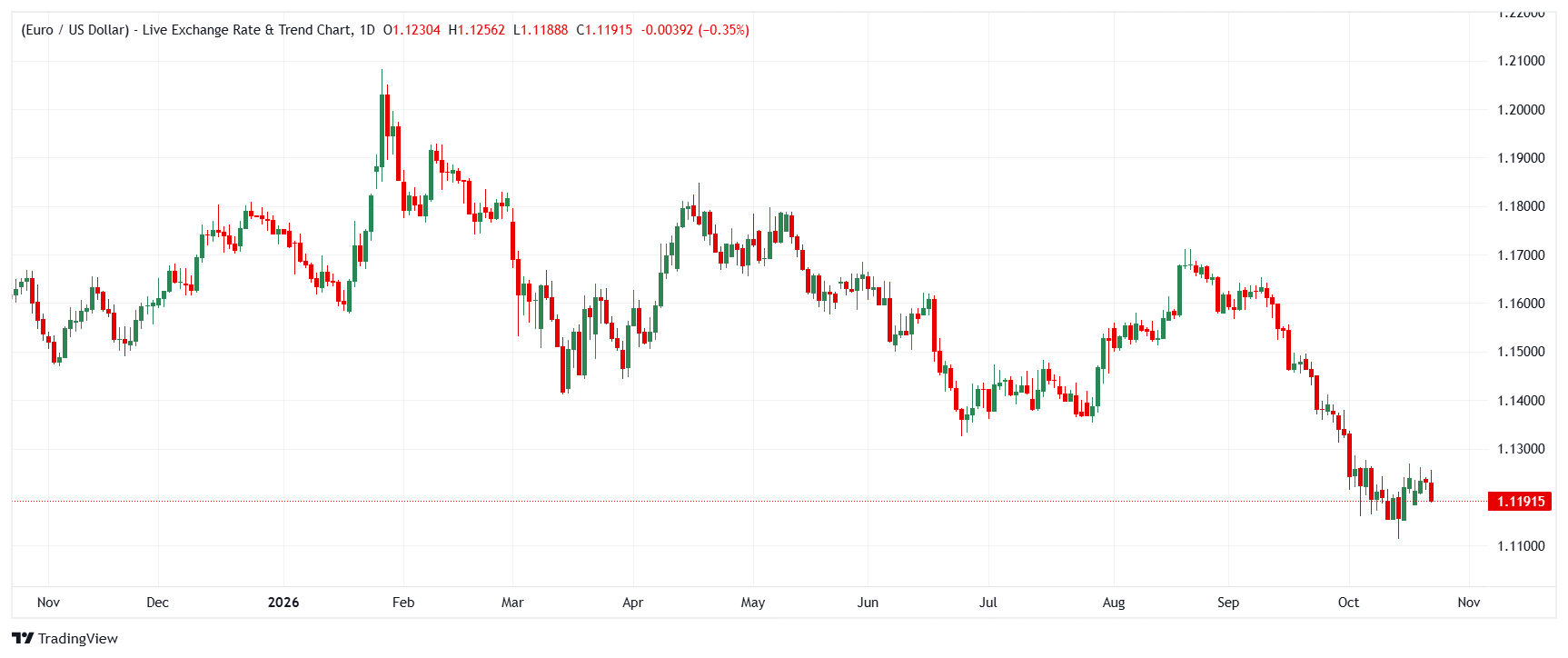
The Euro (EUR) is walking a tightrope between French fiscal risk and a firm Federal Reserve (Fed). Brown Brothers Harriman (BBH) warns that widening French-German yield spreads — already at 175 bps, near the record set during the 2011 crisis — could drag EUR/USD down to 1.1000, using Italy's 2018 budget turmoil as the template. ING, meanwhile, observes that EUR/USD is holding up stubbornly well despite higher energy prices and the unresolved French budget crisis, attributing the resilience to a gentle unwinding of heavy, concentrated positioning in US tech and the US Dollar (USD). Commerzbank adds a longer-term dimension: ECB Chief Economist Philip Lane's push for a bigger global role for the Euro, which Thu Lan Nguyen welcomes as a transmission booster — but insists it is no guarantee of price stability.
Brown Brothers Harriman: French spreads are closing in on crisis territory
Elias Haddad at BBH highlights France's deteriorating public finances as the key risk to the Euro. The French 10-year bond yield premium over Germany sits at 175 bps, closing in on its 2011 record high of around 190 bps, and Haddad warns that, on Italy's 2018 template, the spread could widen to about 250 bps and pull EUR/USD down to 1.1000. The nuance matters, though: France's widening so far is just over half Italy's 2018 peak, Euro exit fears are muted today (the Sentix Euro breakup index stood at 2.4% in September versus around 13% in Italy's crisis), and the ECB's Transmission Protection Instrument — with its ability to buy sovereign bonds subject to fiscal checks — reduces the risk of spillover. France's 2027 presidential election could offer a turning point, but only if it delivers credible deficit reduction.
"French 10-year bond yield premium over Germany is up over 100bps since late February to 175bps, closing in on its 2011 record high of around 190bps. The spread can widen to about 250bps if Italy’s 2018 budget crisis is any guide and drag EUR/USD down to 1.1000."
Commerzbank: A bigger global euro role is no price-stability panacea
Ahead of next week's ECB and Fed meetings, Commerzbank's Thu Lan Nguyen discusses ECB Chief Economist Philip Lane's argument that broader international use of the single currency could help the ECB fulfil its price stability mandate — monetary policy would increasingly influence demand abroad, amplifying its impact, while greater use of the Euro as an invoicing currency could reduce exchange rate pass-through and make the Euro area less vulnerable to external shocks. Nguyen's caution is the point: inflation is shaped by many other factors, including the economy's structure, fiscal policy, and external shocks, so a more effective transmission mechanism alone cannot safeguard credibility.
"A stronger role for the euro in the global financial system may improve monetary policy transmission, but it is certainly no panacea for price stability or monetary policy credibility."
ING: Heavy tech and US Dollar positioning is the real EUR/USD driver
Chris Turner at ING argues that the biggest market driver right now is not French politics but heavy, concentrated positioning in US tech and the US Dollar, which is being gently pared back — which explains why EUR/USD is trading quite well despite higher energy prices and an unresolved French budget crisis. The firm view: expectations for further Fed tightening have stayed rock-solid at around +75 bps in recent weeks and could remain the case for coming months, keeping the US Dollar strong and capping Euro upside. A tech wobble that prompts a dovish repricing at the short end could trigger a broader US Dollar correction — a break of 1.1270/75 could open 1.1340/50, although Turner stresses "we would not chase the rally." ING's one-month EUR/USD forecast stands at 1.13.
"Expect FX traders to keep a very close watch on the short end of the US curve now. Expectations for further Fed tightening have stayed rock-solid at around +75bp over recent weeks. We think that could remain the case for the coming months and that the dollar could stay strong."
Where the banks see the Euro's next move
All three banks agree the Euro's near-term fate is being decided outside currency markets, but they weight the drivers differently. BBH sees the clearest downside risk: if French spreads widen toward Italy-2018 proportions (250 bps), EUR/USD's slide toward 1.1000 would accelerate, with the 2027 French election the only credible medium-term fix. ING shares the capped-upside view but from the positioning angle — with Fed tightening expectations rock-solid around +75bps, EUR/USD has limited room to the upside (1.13 one-month forecast), while a tech-driven US Dollar correction is the tail risk that could open 1.1340/50. Commerzbank is the structural outlier: a bigger global Euro role could strengthen transmission — a modest long-term positive —, but Nguyen refuses to treat it as a guarantee of price stability or rate credibility.
The takeaway
The Euro's near-term direction depends on a race between French spread widening and a potential US repricing. If France's premium extends beyond 175 bps toward the ~250bps Italy-2018 template, BBH's 1.1000 target becomes the risk scenario for EUR/USD. ING's base case keeps the euro contained at 1.13 as long as Fed tightening stays firmly priced, with any tech-led US Dollar correction opening 1.1340/50 — but not a setup worth chasing. Watch the French-German spread, next week's ECB and Fed meetings, and the Sentix Euro breakup index to confirm either direction; and, as Commerzbank reminds, remember that even a more globally relevant euro cannot substitute for the structural and fiscal factors that ultimately decide the ECB's inflation fight.
(This article was created with the help of an Artificial Intelligence tool and reviewed by an editor. Know more.)
Author

FXStreet Insights Team
FXStreet
The FXStreet Insights Team is a group of journalists that handpicks selected market observations published by renowned experts. The content includes notes by commercial as well as additional insights by internal and external analysts.

















