TRON Network approves proposal to decrease daily free bandwidth allocation to accounts
- The No.87 voting request of the TRON network has officially been approved.
- The purpose of the proposed modification is to decrease the volume of low-value transactions on the TRON network.
- Despite the new proposal’s restrictions, users will still be able to send some free transactions.

TRON network, a popular blockchain platform for decentralized applications (Dapps) and smart contracts, has made a transformative decision, approving a proposal to limit the daily free bandwidth given to user accounts. Despite the proposal TRON has assured users they will still be able to send free transactions.
Also Read: Trading on centralized exchanges like Binance, Coinbase grows in Q2 despite regulatory crackdown
Tron network to reduce daily free bandwidth allocation
TRONDAO twitter account announced the approval of proposal No.87 voting request, to modify the bandwidth parameters for accounts on its network. The change in the daily free bandwidth allocation means that users will have less free bandwidth available to them. The specific parameter that determines this allocation, called freenetlimit, will be reduced from 1500 to 600. The intention behind the adjustment is to encourage users to use network resources more wisely and efficiently.
The No.87 voting request of the #TRON network was officially approved at 13:40:06, 2023-07-03, Singapore time.
— TRON DAO (@trondao) July 4, 2023
This proposal is to modify the freenetlimit from 1500 to 600, meaning the daily free bandwidth for an account changes from 1500 to 600. pic.twitter.com/h6UGpmTzVm
With daily free bandwidth allocation for accounts decreased by around 60%, the number of low-value transactions on the network will reduce significantly as users are encouraged to use resources more efficiently for higher-value transactions.
Proposal targets the low-value transactions to optimize overall performance
The main goal of this change is to address the issue of low-value transactions on the TRON network. Low-value transactions are small-scale transactions that do not contribute much to the overall value of the network. By reducing the daily free bandwidth, TRON aims to discourage a large number of these transactions, which can take up a significant amount of network resources. This change will help optimize the performance and scalability of the network, ensuring that resources are used for more important and valuable transactions.
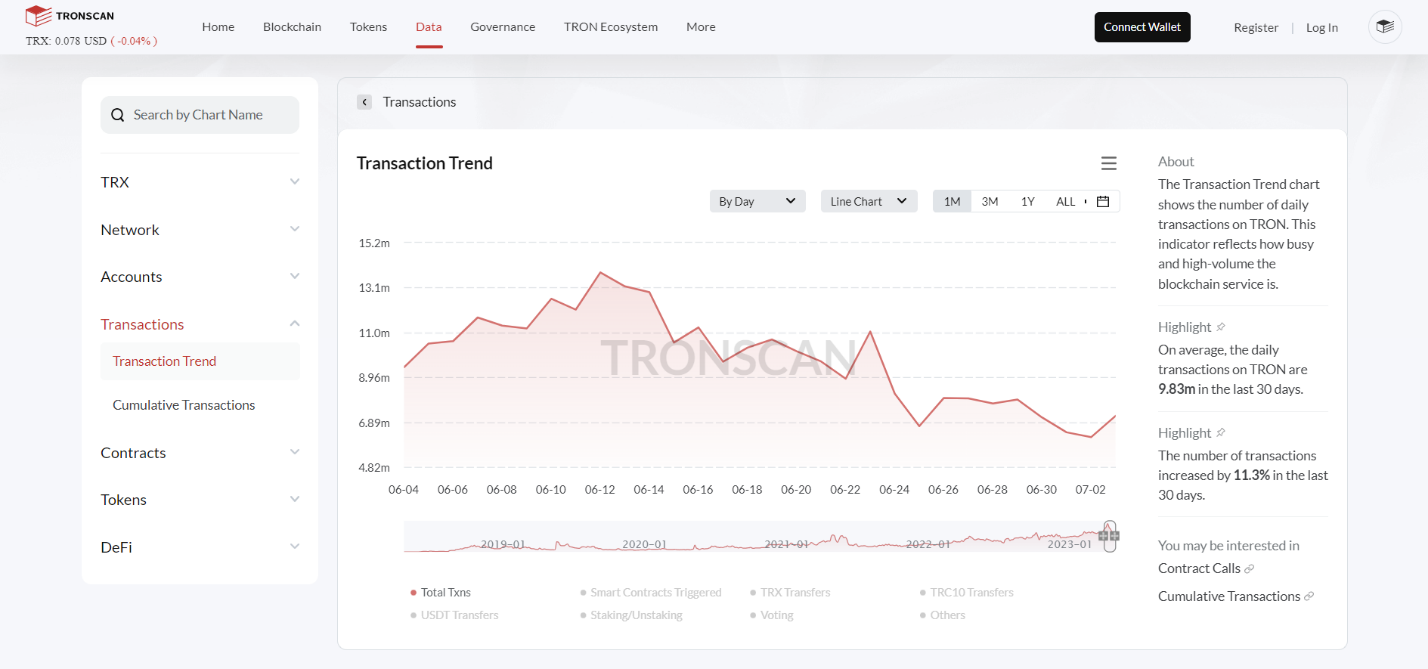
The significance of this change is demystified in the recent transaction trends on TRON as shown by TRONSCAN. The transaction chart represented by this indicator shows the number of daily transactions on TRON. The indicator reflects how busy and high-volume the blockchain service is.
The chart below shows total Bandwidth consumed on TRON per day. The higher the number, the more transactions are on the blockchain. On average, the daily Bandwidth consumption is 2.99 billion in the last 30 days.
Based on the chart above, there have been an average of 9.83 million transactions per day on the network over the past 30 days. While this shows that TRON is a very active platform, it should be noted that the values account for both high and low value transactions.
Nevertheless, transaction volumes have increased by 11.3% over the 30-day period, pointing to a growing usage and therefore liking for the network.
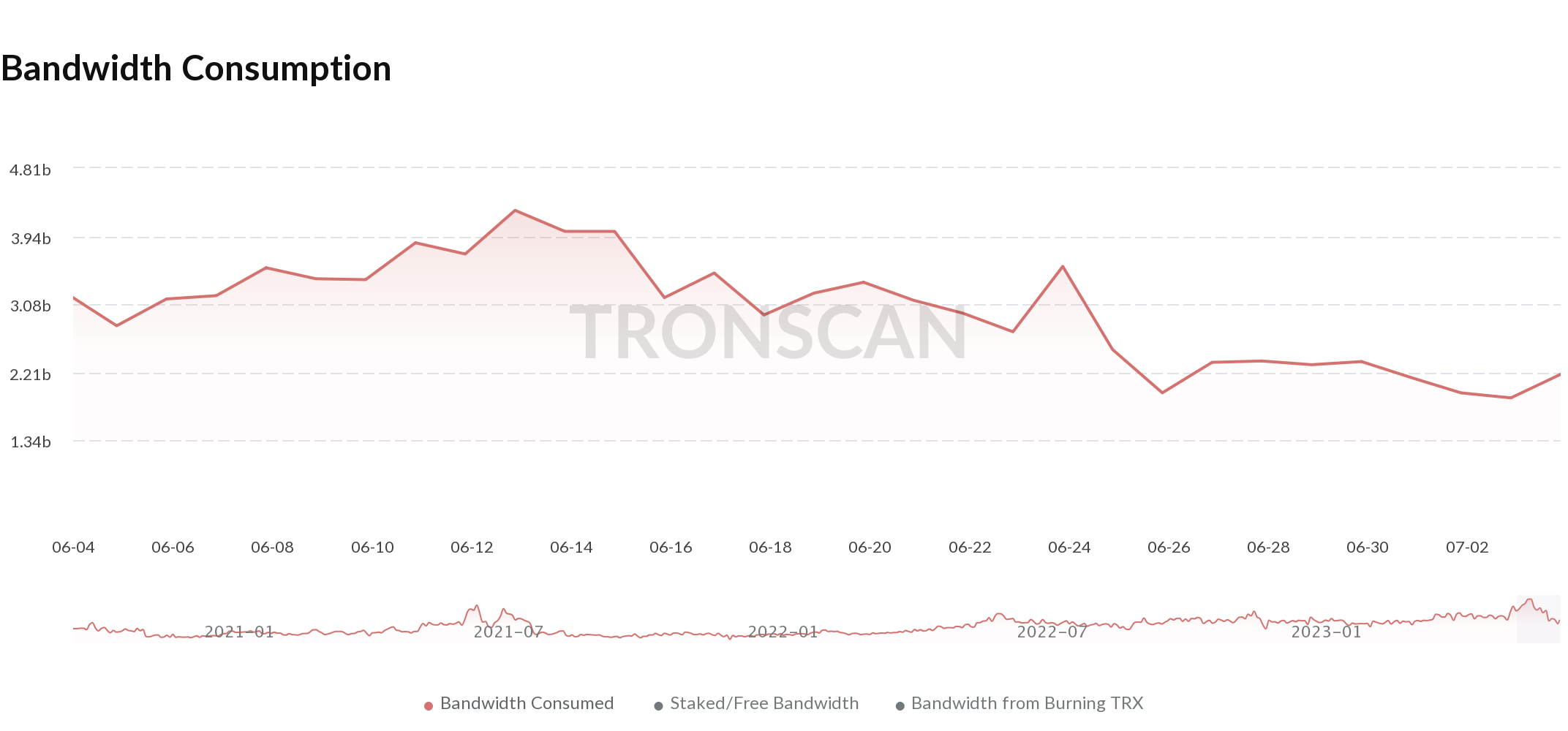
Among the Bandwidth consumed on July 3, over 77.82% is from users' staked TRX or obtained free.
The Potential Impact of these Modifications on User Transactions
With the new bandwidth allocation, TRON account holders will have fewer opportunities for free transactions. This means that the number and size of transactions users can make without paying fees or using additional resources will be reduced. However, it is important to note that TRON still wants to provide users with some transactional flexibility.
Under the new rules, users will still be able to send two free transactions using TRX or TRC10 tokens, or one free transaction using TRC20 tokens. This allows users to perform important transactions without immediate costs. TRON aims to find a balance between optimizing resource usage and providing a convenient experience for users.
✅ Main content: modify the parameters related to the bandwidth model to decrease the volume of low-value transactions in the network.
— TRON DAO (@trondao) July 4, 2023
After the proposal takes effect, it will still support a user sending 2 free #TRX/#TRC10 transactions or sending 1 free #TRC20 transaction.
While this change may not directly affect the Total Value Locked (TVL) within the TRON ecosystem, it could indirectly influence user behavior and transaction patterns. The recent surge in transaction volumes, reaching 7,174,144 transactions on Tuesday, July 4, indicates sustained interest and demand within the TRON ecosystem.
Like this article? Help us with some feedback by answering this survey:
Author

Lockridge Okoth
FXStreet
Lockridge is a believer in the transformative power of crypto and the blockchain industry.