The Iran conflict pressures Bitcoin, but the market holds stronger than expected
- Bitcoin dropped to $63,000 and rebounded quickly back toward $66,600.
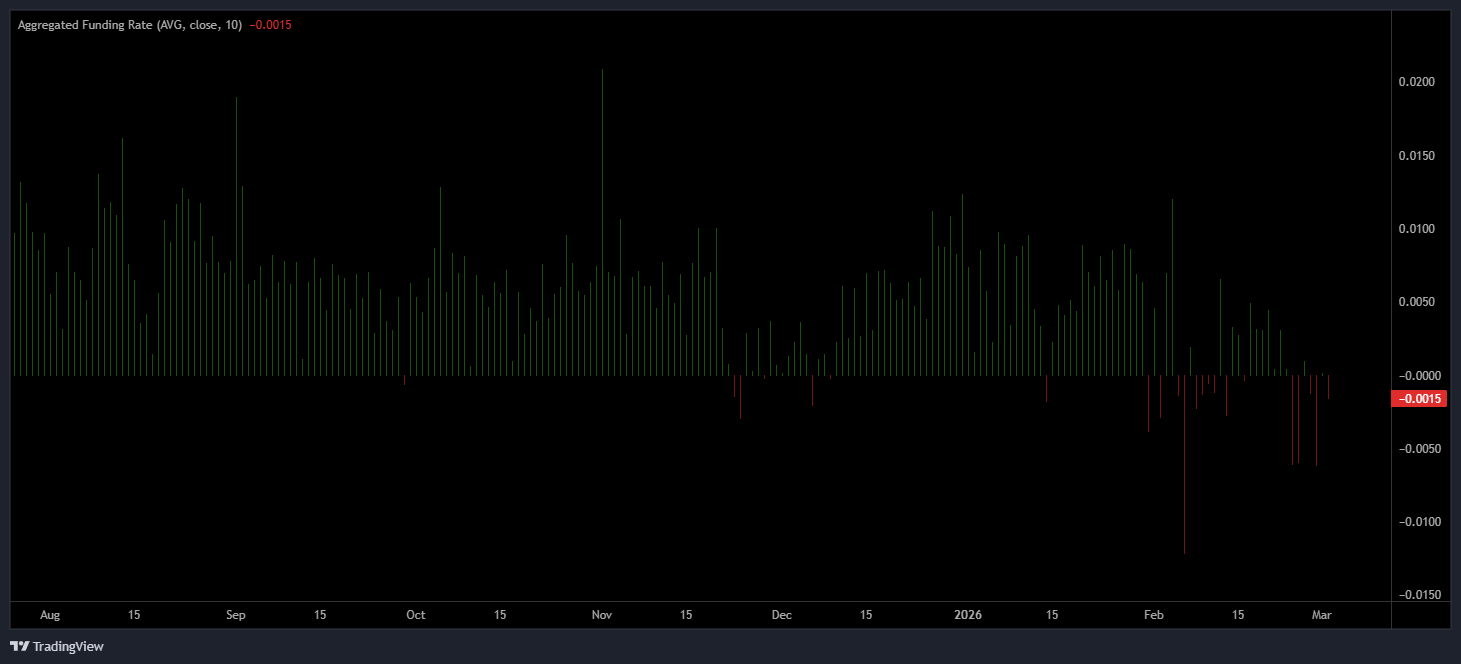
- Negative funding rates in futures signal heavily crowded short positions in derivatives.
- Oil surged 10% and gold climbed past $5,388 per troy ounce.

Bitcoin dropped to $63,000 over the weekend when news of military tensions in the Middle East rattled global markets. The asset recovered ground quickly, however, and trades near $66,600 today — a weekly decline of just 2.8% according to Tradingview data. For an asset that trades around the clock, seven days a week, that level of resilience says a great deal about the current market structure.
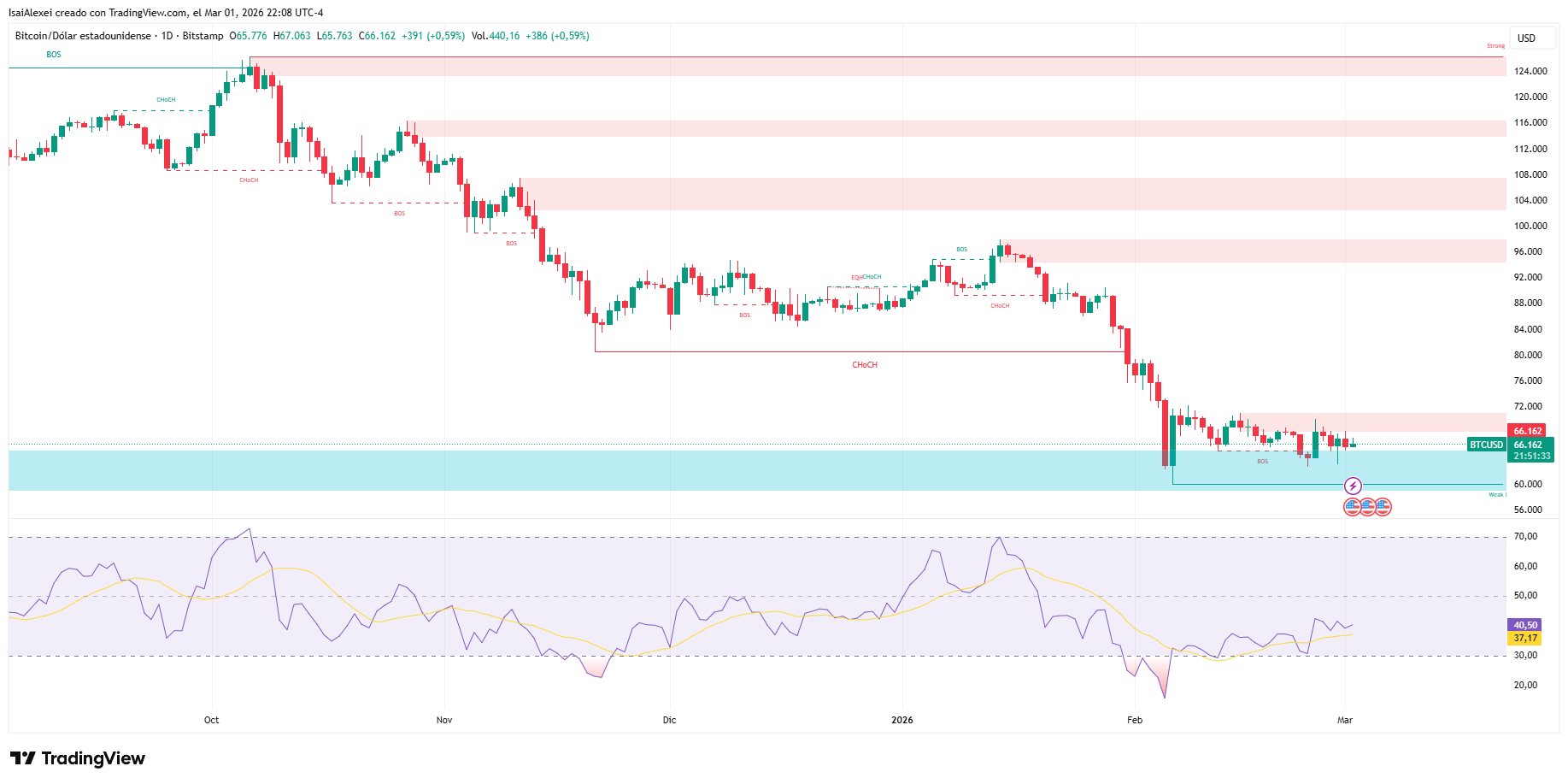
The trigger was straightforward: news tied to Iranian military activity broke over the weekend while stock markets sat closed. Investors looking to exit risk positions had one door open: the crypto market. That generated the initial selloff. Then, as panic faded, money came back in.
Brent crude jumped between 8% and 10%, pushing toward $80 per barrel, and gold climbed past $5,388 per troy ounce with a gain above 2%. Han Tan, chief market analyst at Bybit Learn, noted that the Middle East conflict feeds demand for safe-haven assets and that gold could see another leg higher if tensions fail to stabilize soon.
Negative funding rates expose a market positioned for a drop
One of the most telling data points about what is happening beneath the surface sits inside the derivatives market. Funding rates on Bitcoin futures contracts turned sharply negative, signaling that a large share of active traders placed bets on a continued price decline.
Those crowded short positions create the conditions for a forced rally: if the price rises instead of falling, traders positioned to the downside must close out, which pushes the price even higher in the process.
FXStreet Analysts warned that if oil stays elevated for an extended period, the probability of a higher inflation reading rises, and that hurts risk assets including Bitcoin. At the same time, she pointed out that large producers within OPEC have incentives to raise output and cover any supply gap, and that President Trump has clear political reasons to keep energy prices from running out of control.
That combination — forced sellers in derivatives, institutional buyers who held long positions through the dip, and an energy policy backdrop that can limit the oil rally — explains why Bitcoin did not extend its losses and instead bounced hard off the lows.
What happens next with the conflict sets the direction for the next price move. If hostilities stay contained and the Strait of Hormuz avoids serious disruption, the market has a foundation to look past the geopolitical noise and return to crypto-specific drivers: spot ETF flows, monetary policy expectations, and the approaching halving. If the conflict escalates and pulls crude prices higher for weeks, the resulting inflation pressure could shift interest rate expectations and inflict real damage on speculative assets.
For now, Bitcoin demonstrated that it can absorb a first-order shock without collapsing. The market processed the news, recalibrated, and found buyers above $63,000. That guarantees nothing about what comes next, but it does confirm that the structural demand sitting beneath the price did not vanish alongside the explosions in the Middle East.
Author

Isai Alexei
Independent Analyst
I am Isai Alexei. I work as a journalist and financial analyst covering cryptocurrency markets and traditional securities. I have spent ten years analyzing digital assets, trading activity, and market structure.