WTI Crude extends losses as geopolitical risk premium fades
- WTI closed below 200-day EMA for the first time since February.
- Hopes of easing Middle East tensions continue to weigh.
- Ceasefire remains fragile despite signs of diplomatic progress.
- A hawkish Fed could add further pressure on crude prices.

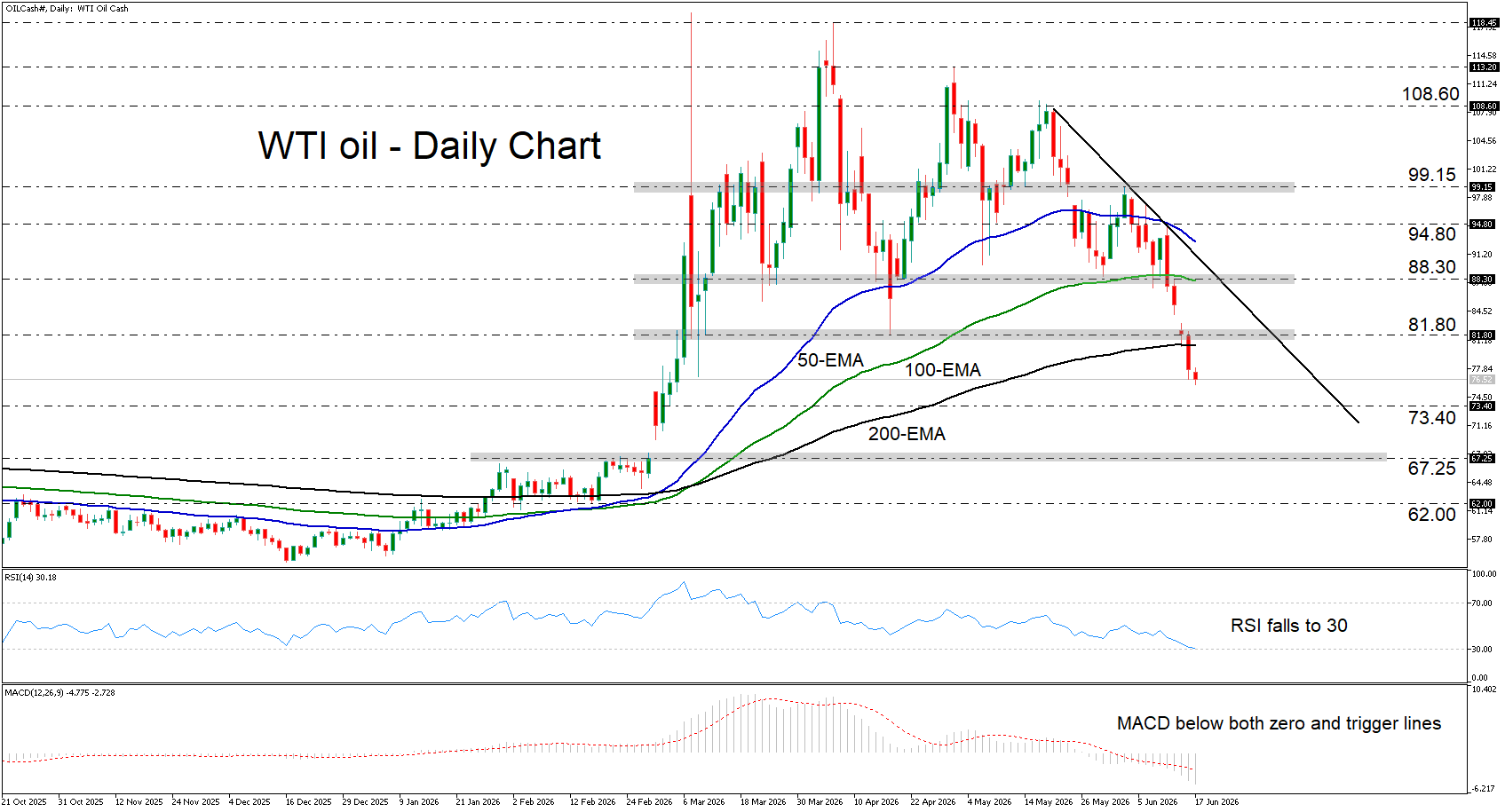
WTI crude oil extended its decline on Tuesday, falling and closing below the 200-day exponential moving average (EMA) for the first time since February 17. The risk premium embedded in oil prices amid the Middle East conflict appears to be fading on expectations that the latest US-Iran deal could result in the reopening of the Strait of Hormuz, while the US may allow Iran to sell oil again.
The new deal extends the prior ceasefire by another 60 days to facilitate further negotiations toward a permanent truce. However, the prior 60-day ceasefire was not smooth sailing, with hostilities frequently occurring, and renewed tensions cannot be ruled out. Israeli drones have already hit three vehicles in Lebanon on Tuesday, suggesting that the new ceasefire is also very fragile.
This is likely to keep investors cautious despite optimism following the ceasefire. After all, they are still worried about high inflation and continue to believe that the Fed will need to raise interest rates in the foreseeable future. According to Fed funds futures, there is a nearly 70% chance of a rate hike by the end of the year.
Today, the Committee is likely to remain on hold, but a more hawkish outlook and a dot plot projecting rate increases could push the US dollar higher, adding further pressure on the dollar-denominated WTI crude.
The bears could remain in charge for a while longer and perhaps aim for the low of March 4 at 73.40. A decisive break below that level could allow for a move toward the 67.25 zone, which offered resistance between January 29 and February 27. For the outlook to become more constructive, a strong recovery above the confluence of the 88.30 level and the 100-day EMA may be needed. Such a move could also signal a break above the downtrend line drawn from the high of May 20.
Author

Charalampos joined Trading Point in August 2022 as a senior market analyst. He has extensive experience in analyzing financial markets, gained through a decade-long career, with his primary focus being on the currency market.