Why We Should Love Oil Pipelines

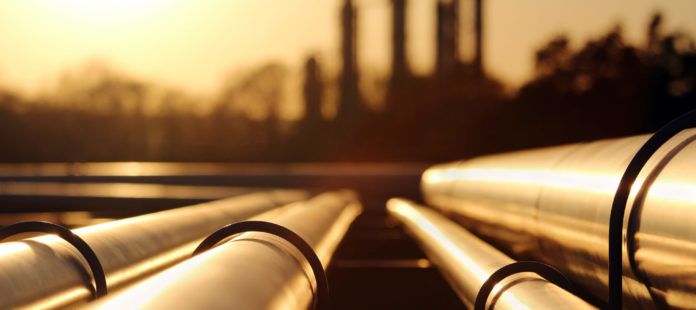
The Keystone XL Pipeline remains the poster child for unwanted oil and gas pipelines.
This TransCanada Corp owned pipeline would shorten the distance between two existing points on the greater Keystone Pipeline, from Hardisty, Alberta, to Steele City, Nebraska.
The XL section drew protests and sit-ins, even though the owner had completed all environmental requirements. The fact that it would carry oil over a shorter distance than the original path didn’t matter either.
The Obama administration sat on the approval, which tacitly meant not approved. President Trump signed off on the pipeline early in his tenure, much to the chagrin of environmentalists.
Stories like this make the news, but they distort reality…
There are plenty of us who love pipelines. It’s not the thousands of miles of steel and concrete that attract us. It’s what all of it represents: jobs and industry.
Recently, the Gulf Connector Project, developed by Williams, was opened for business. The Gulf Connector taps into the 10,000-mile Transco pipeline that extends from South Texas to New York City. It delivers natural gas across the Southeastern and Eastern U.S.
We need these pipelines because Americans are using more natural gas, which is a good thing.
As our economy and our population grows, we use more energy. Natural gas burns cleaner than coal. Switching from coal to natural gas is much better for the environment. And it allows us to use an inexpensive, domestic resource.
And we’re not keeping all the good news for ourselves…
We’re becoming a major exporter of natural gas by shipping much of it through existing pipelines to Mexico. And now we liquify the fuel for transport on liquified natural gas (LNG) ships.
The newest addition to the Gulf Connector Project brings gas from the Transco Pipeline to the LNG export facilities at Corpus Christi, Texas, and Freeport, Texas. The Gulf Connector already delivers LNG for export to the Sabine Pass Liquifaction project in Cameron Parish, Louisiana.
The demand for natural gas from export facilities served by the Transco pipeline is expected to expand by 11 billion cubic feet per day by 2025.
Can you say, “Jobs?” Or perhaps, “Industry?”
On a separate but related note, through the first 10 months of 2018 ,the U.S. was on track to export more natural gas than it imports. That would make it the second year in a row that we’re a net exporter of the fuel. The energy department anticipates that U.S. natural gas production for 2018 will reach a record.
All that gas has to go somewhere…
We export more than five billion cubic feet per day to Mexico through a myriad of pipelines (there’s that word again!) that drape across Texas. Adding LNG facilities makes the energy pie bigger.
Two LNG export facilities operated last year: the one in Cameron Parish, Louisiana, and the Cove Point facility in Maryland. The Corpus Christi recently came online and the Freeport terminal should be online soon, and there are several others in the works.
All of this points to the domestic energy sector getting stronger, and to the U.S. solidifying its position as the largest energy producer in the world in the years to come.
This leads to energy independence and gives us greater control over our future.
As for investing in the sector, that’s generally done through MLPs, which Charles Sizemore typically covers in his Peak Income newsletter.
So, if you’re interested in this space, follow his work and he’ll let you know when these investments are back in favor, which might be soon as they’re trading at cheap levels right now.
In the meantime, you can smile when you see, or read about, energy pipelines, because you know they symbolize our nation’s growth, strength, and move toward cleaner energy.
And those are things we can all be happy about.
Author

Dent Research Team of Analysts
Dent Research

















