Why the Fed-BoJ policy divergence may not save the Yen
- Fed rate hike expectations have fallen sharply.
- BoJ hike bets remain elevated despite yen weakness.
- Fed-BoJ divergence may be stretched, favoring dollar/yen upside.
- A break above 160.00 could add fuel to post-intervention recovery.
Fed-BoJ policy divergence widens
Expectations about Federal Reserve and Bank of Japan monetary policy actions have been on the front page of investors’ agendas, but despite the distinct divergence, they seem to be struggling to set a clear path when it comes to trading the US dollar against the Japanese yen.
Fed hike bets scaled back amid streak of weak US data
The greenback has come under selling pressure recently as the latest US data has prompted investors to scale back their Fed rate hike bets. Non-farm payrolls for July largely disappointed, inflation data for the same month revealed a slowdown, despite the rebound in oil prices during that period, and retail sales deteriorated.
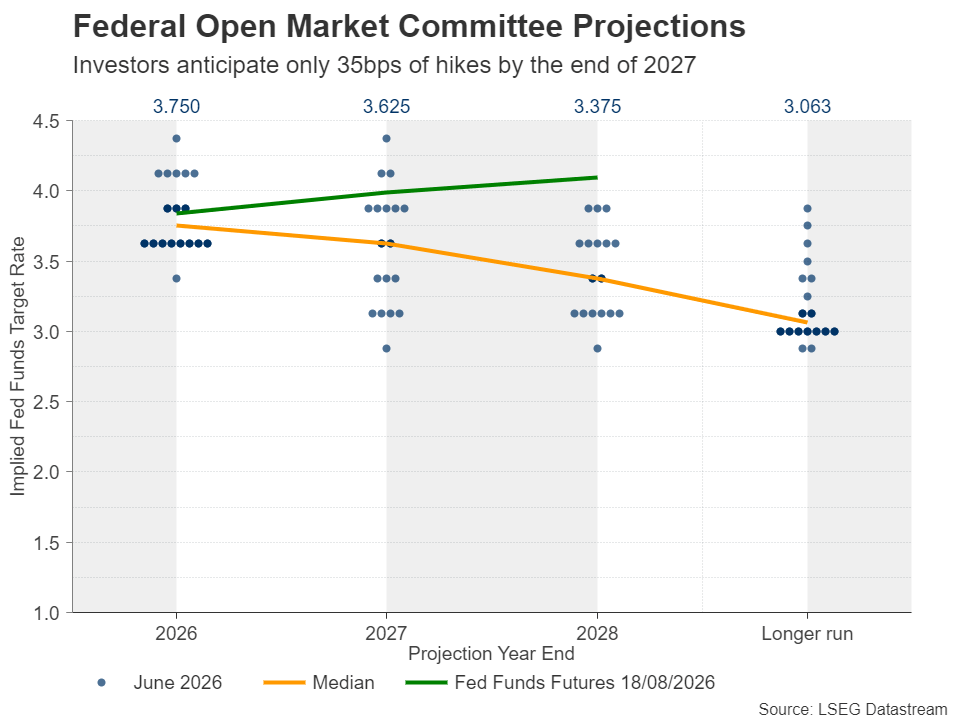
Despite the tensions in the Middle East and the stalemate in negotiations between the US and Iran over the reopening of the Strait of Hormuz, investors are now assigning only a 30% chance of a Fed rate hike in September, while they are factoring in only 35bps worth of rate increases by the end of 2027. It is worth mentioning that a while ago, a September 25bps hike was fully priced in, while another one was anticipated by March.
And this is despite the latest rise in oil prices on Trump’s recent threats about striking Oman if the nation “gets in the way” and distorts negotiations with Iran on a deal to reopen the strait. It seems that there is some sort of fatigue when it comes to the market reacting to Middle East headlines. Perhaps investors are waiting to see a major military escalation before they become again concerned about inflation spiraling out of control. Headlines have been oscillating from positive to negative and vice versa for months.
BoJ seen raising rates to 2% by the end of 2027
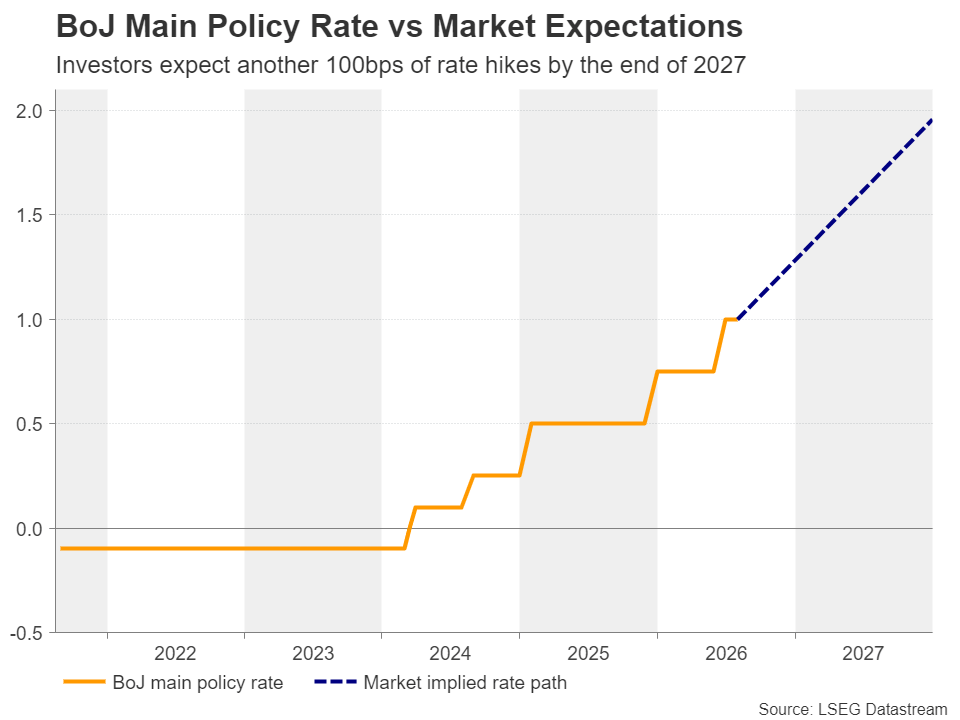
In Japan, the BoJ raised its policy rate to 1% in June, the highest in more than 30 years, and although it refrained from acting in July, it sounded hawkish enough to prompt traders to add to their rate hike bets. Officials highlighted rising inflation risks, especially from a weak yen, higher import costs as well as elevated energy prices.
According to Japan’s Overnight Index Swaps (OIS) market, there is a strong 65% chance of a rate hike at the upcoming meeting in September, while around 100bps worth of increases are penciled in by the end of 2027.
Japanese yields surge but not only due to hike speculation
This, combined with concerns about Prime Minister Takaichi’s fiscal plans, has prompted Japanese government bond (JGB) yields to surge. Actually, Japanese yields have been rising more quickly than their US counterparts since July, when the Liberal Democratic Party (LPD suffered a major election blow, speculation about Ishiba resigning intensified and Takaichi quickly emerged as one of the favorites for replacing him.
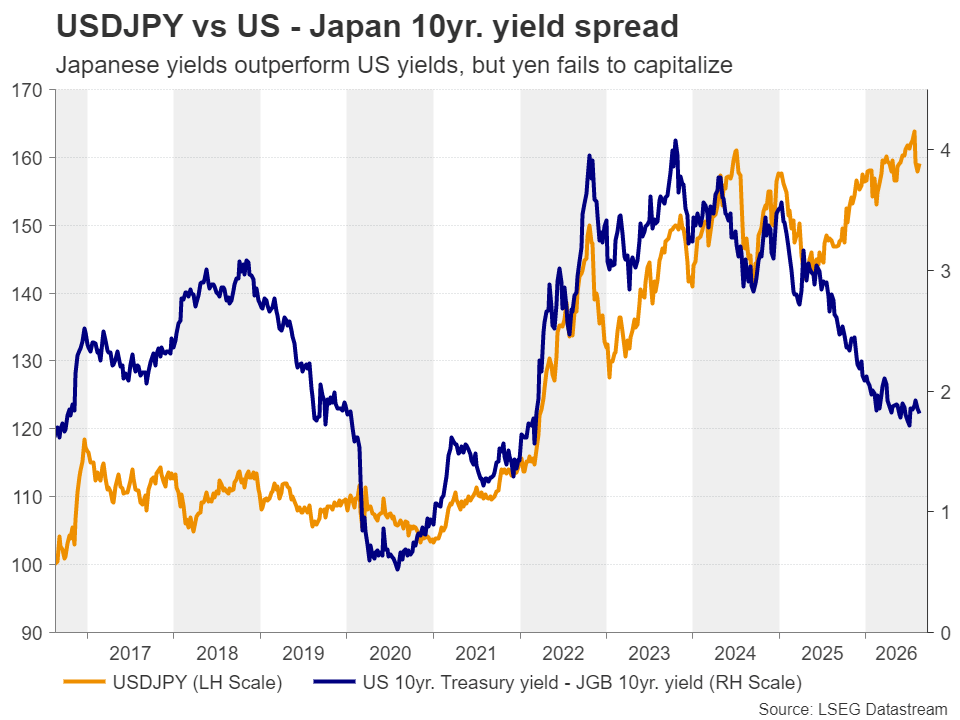
And yet, dollar/yen continued moving higher, with the yen suffering major losses, even with speculation about BoJ rate hikes remaining elevated. This was because Takaichi’s spending agenda spooked investors out of the bond market, as very few were willing to fund her plan to boost growth through increased spending, especially with the national debt so high.
Traders are not willing to buy the Yen
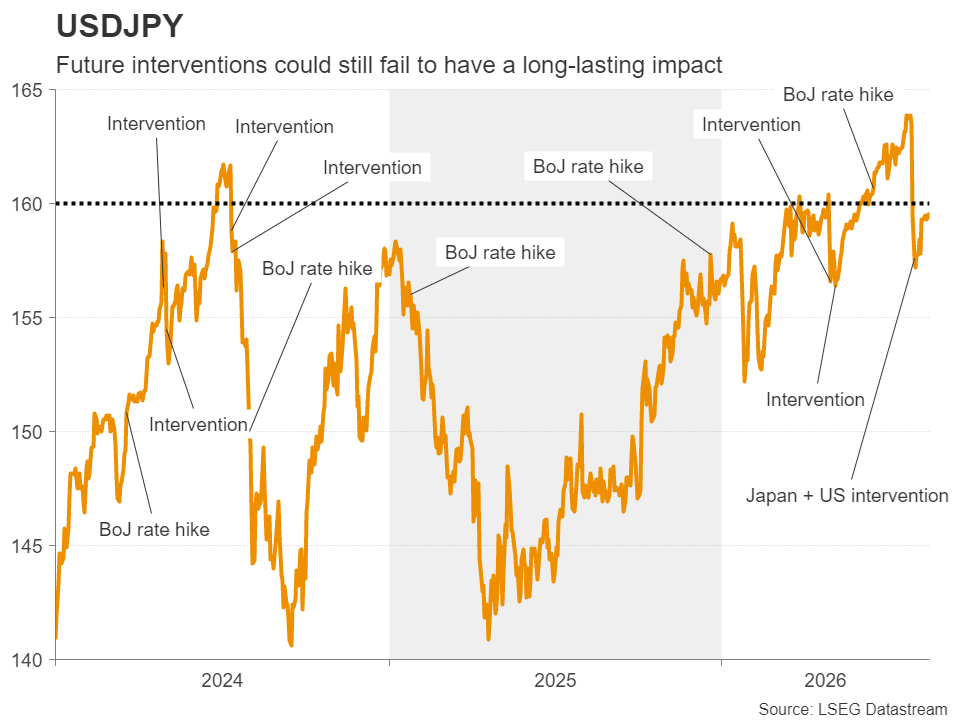
Even after the recent coordinated intervention from Japan and the US Treasury, the yen was unable to hold onto gains. Traders were not willing to take advantage of the widening policy divergence between the BoJ and the Fed. Besides, the fiscal anxiety, the fact that Japanese rates remain relatively low may have continued to encourage participants to use the yen for carry trades. Or many likely believe that the policy divergence is already very stretched.
Indeed, there are many arguments supporting the view that the divergence in Fed-BoJ expectations may have gone too far.
Is the Fed-BoJ divergence too stretched?
Getting the ball rolling questioning the dovishness in Fed rate expectations, Kevin Warsh was appointed by US President Trump on the premise that he will be more dovish than his predecessor Jerome Powell. However, since taking the helm, he repeatedly highlighted the Committee’s independence and noted that those expecting him and his colleagues to tolerate high inflation will be disappointed.
Therefore, should upcoming data favor faster rate hikes or should the Middle East conflict escalate into more forceful military actions, there is plenty of room for investors to revise their implied path higher.
Passing the ball to Japan. It is very hard to envision an even more hawkish Bank of Japan from here onwards. As already noted, PM Takaichi wants to bolster growth through increased spending, and to get the money for doing so, she wants interest rates to stay low and make bonds attractive. She could even influence the BoJ’s decision making and strategy by selecting dovish members to take Board positions. She already appointed two members leaning to the dovish side, and she could choose more officials sharing her dovish bias next summer, when the terms of two of the very hawkish members expire.
Therefore, the risks surrounding the dollar/yen pair may be tilted to the upside, even if Japanese yields continue to rise. Indeed, additional dollar/yen advances could lead to more intervention episodes by Japanese authorities, but traders are likely to continue seeing sharp declines as renewed buying opportunities. For that to change, investors may need to see room and capacity for the BoJ to become significantly more hawkish than it currently is.
Will Dollar/Yen break above 160.00 soon?
From a technical standpoint, dollar/yen has staged a strong recovery following the coordinated intervention by Japan and the US, rising from around 155.10 all the way up to 159.75. However, the pair was rejected near the latter level. It seems that a break above the psychological round figure of 160.00 may be needed for the bulls to recharge and aim higher. The next stop may be at around 161.30, the break of which could allow extensions towards the 162.75 zone, which acted as resistance on July 1 and 8.
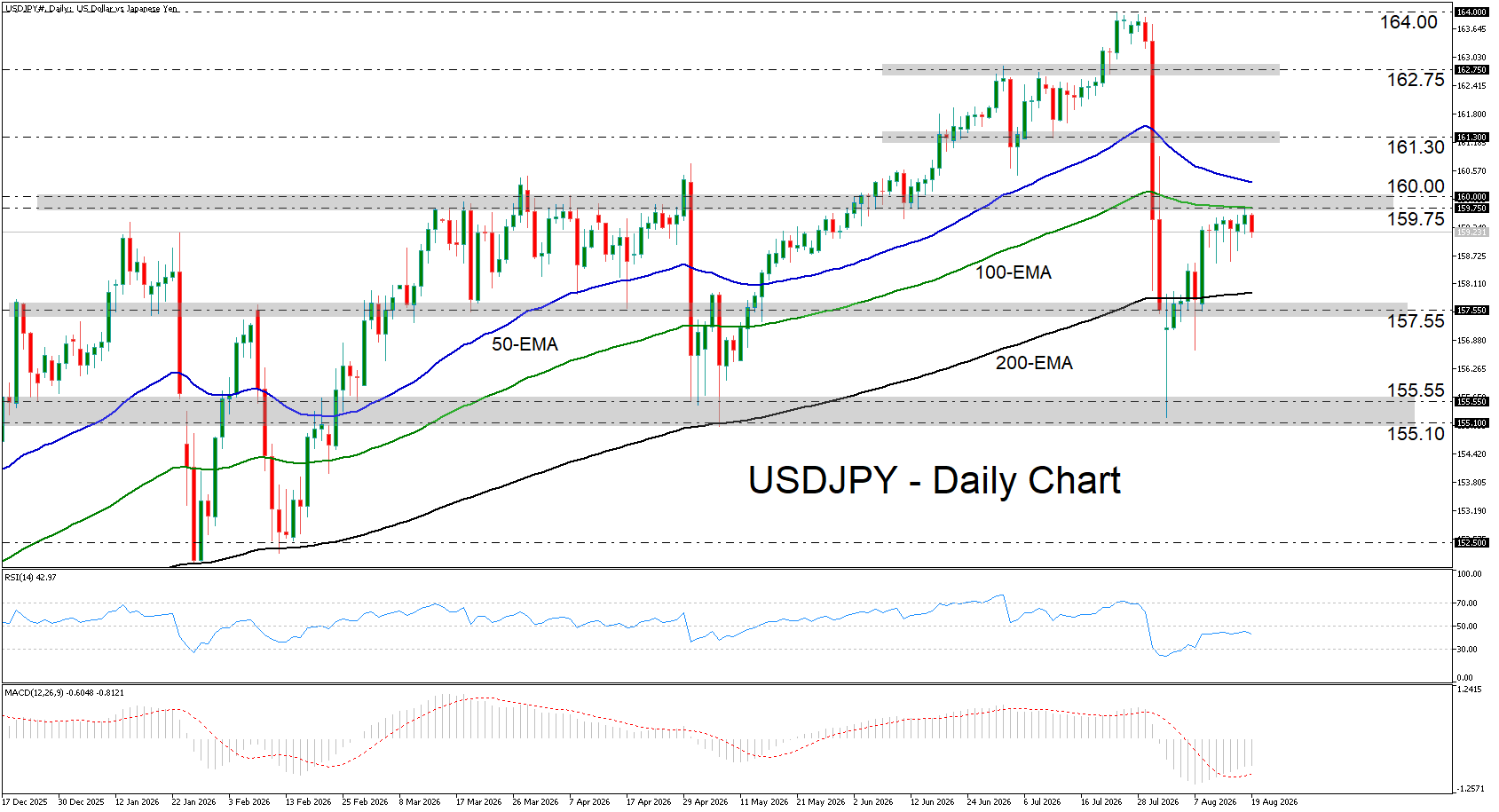
Taking into account that the 200-day exponential moving average (EMA) has offered key support since the beginning of this year, a decisive close below it and the 157.55 area may be needed for the picture to start looking bearish. The bears could feel confident in pushing the action towards the 155.55 level or the 155.10 barrier.
Author

Charalampos joined Trading Point in August 2022 as a senior market analyst. He has extensive experience in analyzing financial markets, gained through a decade-long career, with his primary focus being on the currency market.