Who finances private credit in the United States? What the Federal Reserve’s data reveal
The private credit market raises many questions, and its lack of transparency is not helping. Official public data remain scarce. The available estimates come mainly from private sources, whose methodologies vary widely. The Financial Accounts of the Federal Reserve (Fed) now shed new light on the matter. They reveal that private credit finances 7.1% of US corporate debt through households (31% of funds’ total financing), insurers and pension funds (20%), and banks (19%).
Who finances US private credit funds?
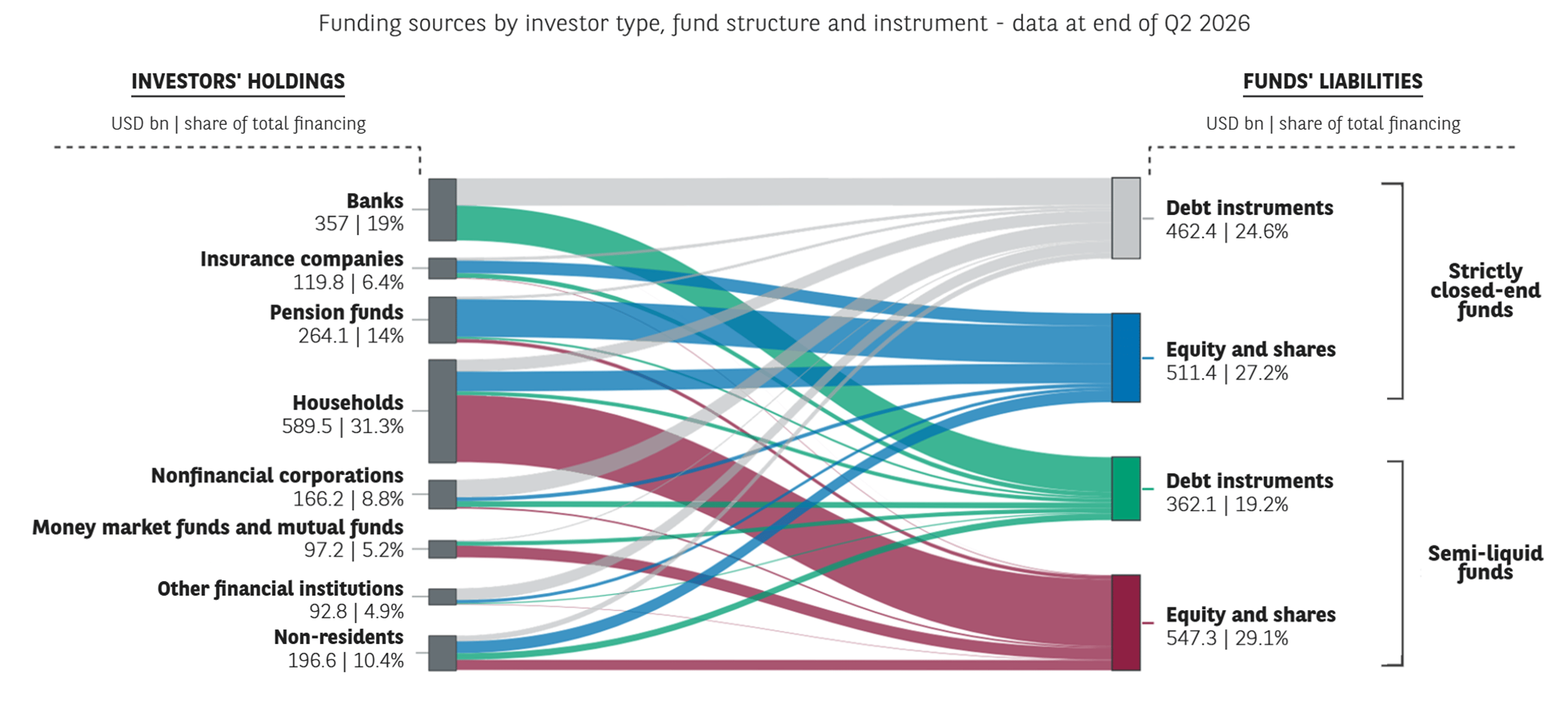
Source : Federal Reserve (Enhanced Financial Accounts), BNP Paribas
Private credit can take several forms. The most common is loans granted by closed-end funds[1] to small and medium-sized, unlisted and highly indebted companies. These loans are generally variable-rate, with flexible terms based on cash flow rather than a measure of profitability. While this asset class has inherent vulnerabilities[2] (Bank of France, 2025), it is also particularly well-suited to financing innovative and long-term projects (such as digital[3], infrastructure, renewable energy and healthcare), especially when combined with an equity stake in the company. Its slower growth in Europe likely explains, in part, the region’s lag in innovation financing.
Author

BNP Paribas Team
BNP Paribas
BNP Paribas Economic Research Department is a worldwide function, part of Corporate and Investment Banking, at the service of both the Bank and its customers.