Week Ahead – US inflation report coming up as Dollar storms higher [Video]
![Week Ahead – US inflation report coming up as Dollar storms higher [Video]](https://editorial.fxstreet.com/images/Markets/Currencies/Majors/EURUSD/macro-de-dinero-de-moneda-1.jpg)
The spike in US yields this week gave the dollar a boost, but the longevity of this recovery will be decided by the next edition of US inflation. According to the Cleveland Fed Nowcast model, there is some scope for an upside inflation surprise, which would be a blessing for the dollar. Aside from this release, there isn’t much else that can disturb the waters next week.
Dollar shines ahead of inflation test
Global markets are still reeling from the aftershocks of the US credit downgrade. Coupled with the Treasury’s announcement that it will be increasing its bond issuance in the coming months, these events propelled US yields higher this week, boosting the dollar through the interest rate channel.
The dollar attracted some safe-haven flows too, as riskier assets such as stocks suffered from the spike in yields. Moving forward, the question is whether this is the beginning of a lasting recovery in the US dollar, or simply a correction within the prevailing downtrend that started last year.
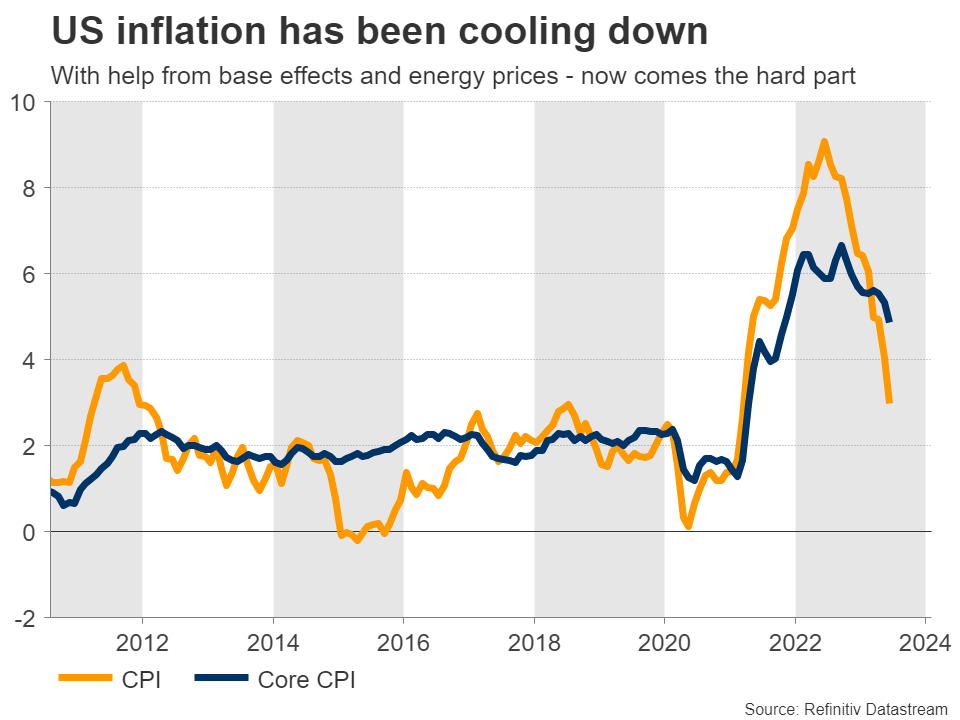
Fortunately, the outlook will become clearer on Thursday with the next round of US inflation data. Forecasts suggest that both the headline and core CPI rates rose by 0.2% in monthly terms in July, which would translate into an increase in the yearly CPI rate but a decline in the core rate. Specifically, the core rate is expected to drop to 4.7%, from 4.8% previously.
Yet, the risks surrounding these forecasts might be tilted to the upside. The Cleveland Fed has a model that attempts to forecast inflation, and it currently points to an increase of 0.4% for both the headline and core CPI rates, in monthly terms. Historically, this model tends to be quite accurate, so there is some scope for a hotter-than-anticipated CPI report.
In the FX arena, this could translate into a stronger US dollar as traders recalibrate the Fed’s interest rate path in a higher-for-longer direction, lifting US yields even higher.
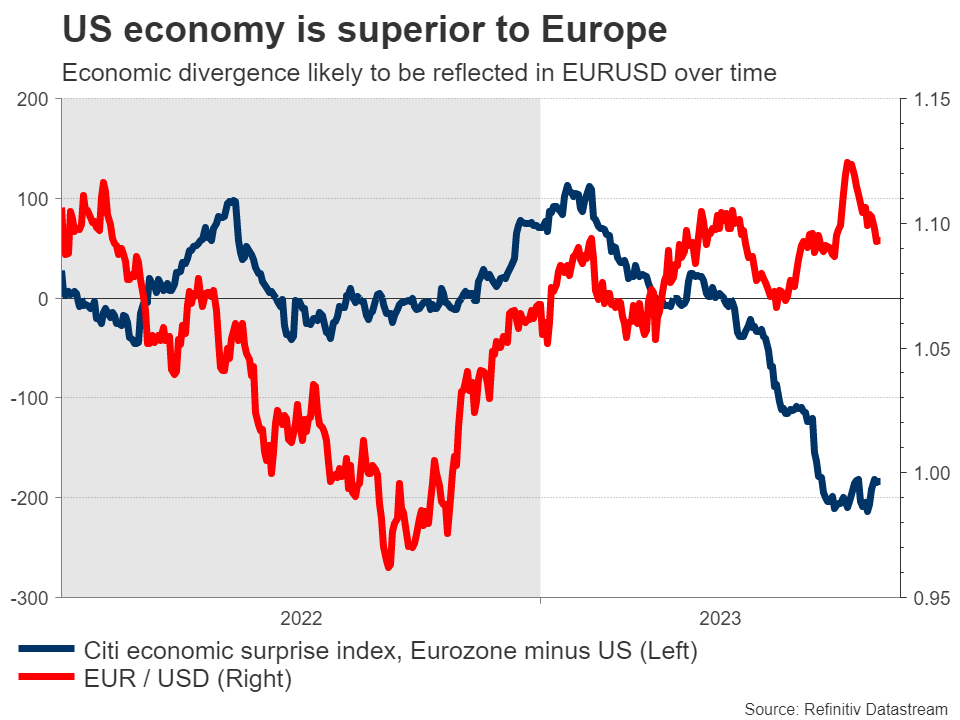
Overall, it is becoming increasingly clear that the American economy remains resilient, with economic growth running around 2%, solid consumption trends, and a labor market that is in good shape. In contrast, business surveys suggest the European economy is slowly descending into a recession, as the downturn in manufacturing has started to infect the services sector.
If this relative US outperformance continues to play out, it is likely to be reflected in the FX market eventually, putting downward pressure on euro/dollar.
British GDP eyed after BoE disappoints
In the United Kingdom, GDP stats for Q2 will hit the markets on Friday. This will be an important piece of the puzzle for the Bank of England, after the central bank raised interest rates in a cautious manner this week, dealing a blow to the British pound.
Still, the pound remains the second-best performing major currency this year, behind the Swiss franc. This powerful rally reflects two elements - expectations that the BoE will push rates higher than other central banks because the UK has a bigger inflation problem, and the cheerful tone in stock markets that tends to benefit the risk-sensitive pound.
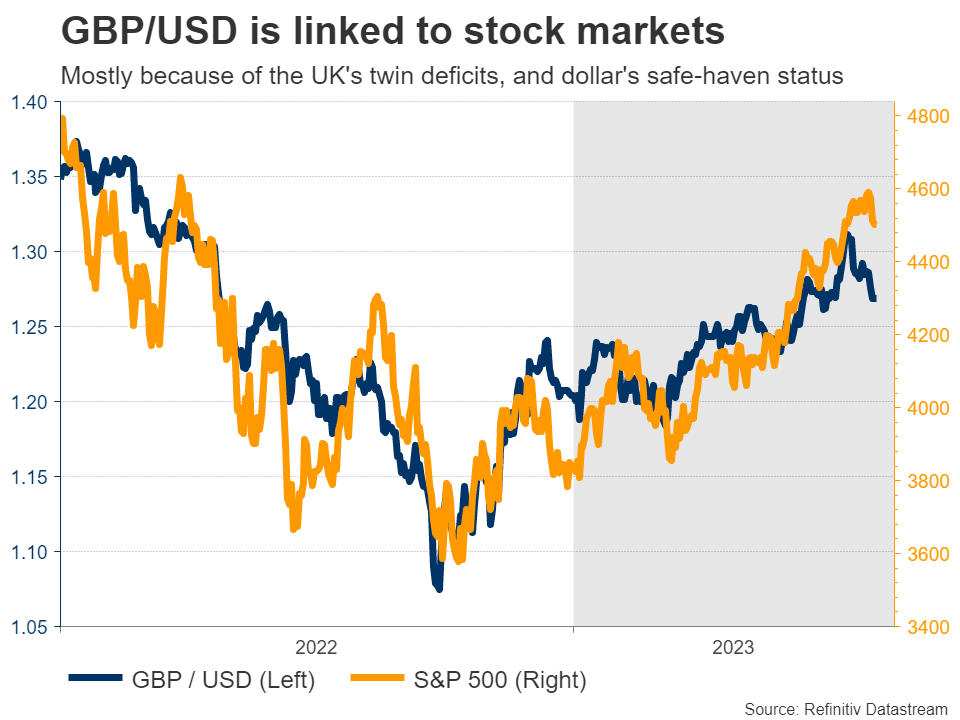
Now the question is whether these elements will remain in force moving forward. Business surveys suggest the British economy is set to “flatline at best in the coming months”, which is not exactly inspiring. Meanwhile, inflationary pressures continue to rage, painting the picture of an economy that is about to experience a period of stagflation.
Similarly, stock markets seem vulnerable to a correction after a stunning rally this year. This rally was not backed by rising earnings, so valuations simply became more expensive. Therefore, if yields keep rising, that could spark a correction in stocks that in turn inflicts collateral damage on risk-linked currencies like sterling.
Japanese and Chinese releases
Crossing into Asia, the ball will get rolling on Monday with the Bank of Japan’s summary of economic opinions for the July meeting, where the central bank raised its effective ceiling on Japanese yields.
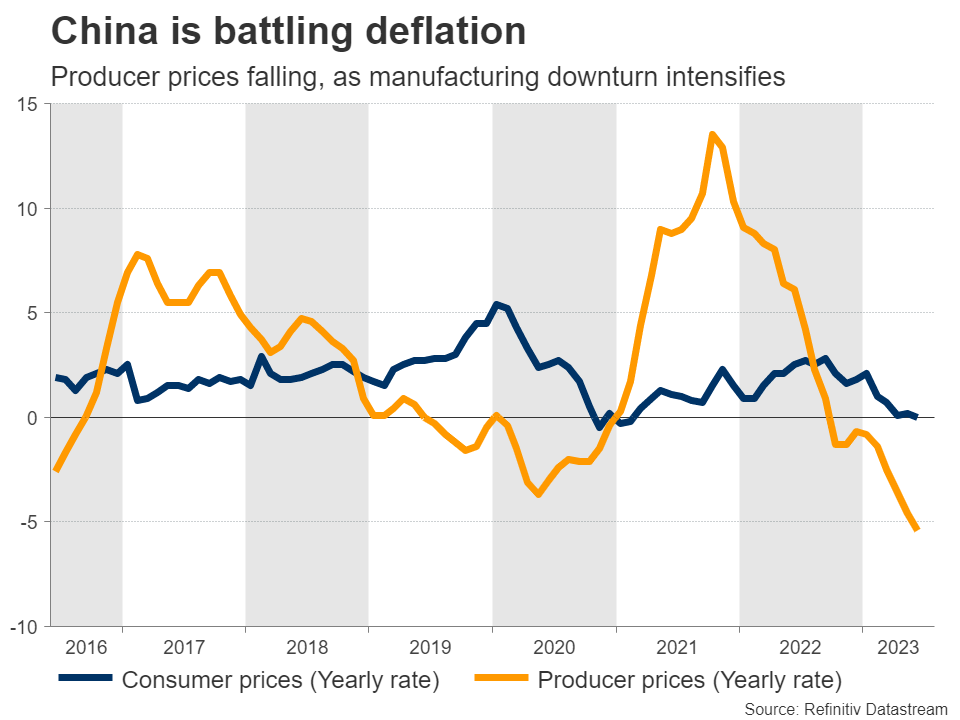
Over in China, the downturn in the manufacturing sector has taken a heavy toll on the economy and the stimulus measures announced by Beijing so far seem insufficient to turn the tide. This puts extra emphasis on the trade and inflation numbers for July, which will be released on Tuesday and Wednesday, respectively.
Another disappointing dataset could amplify concerns about the health of the world’s second-largest economy, and by extension, keep China-sensitive currencies like the Australian dollar under pressure.
Author

Marios graduated from the University of Reading in 2015 with a BSc in Economics and Econometrics. Prior to joining XM as an Investment Analyst in December 2017, he was providing financial analysis, reporting and consulting service

















