Week ahead – Stocks seek direction as earnings take centre stage
- US equities struggle as risk-off sentiment boosts sovereign bonds.
- US earnings and midterm elections in the spotlight amidst tech sector weakness.
- UK jobs and inflation data could challenge current BoE rate hike bets.
- Eurozone PMIs and Chinese data in focus, as both euro and aussie seek support.

US stock weakness boosts sovereign bonds
It has been a challenging week for investors as the hotter US CPI report and the solid start to the earnings season did not produce the expected market movements. With the exception of the aussie, the US dollar is currently posting minimal gains across the FX spectrum, with its post-CPI rally proving short-lived, especially as dovish Fedspeak persists. However, the weakness of the Nasdaq 100 index has been in the headlines, creating angst among investors.
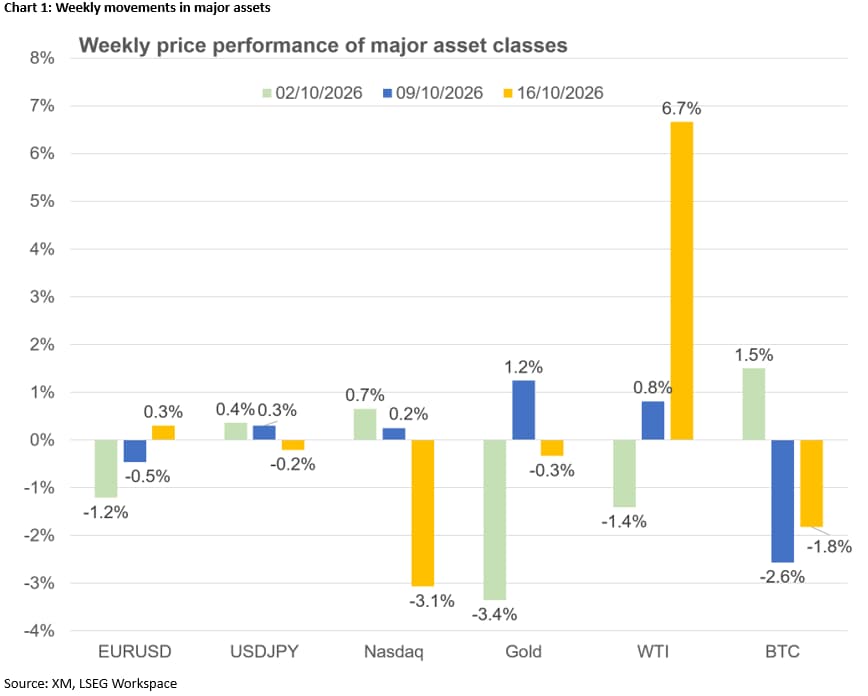
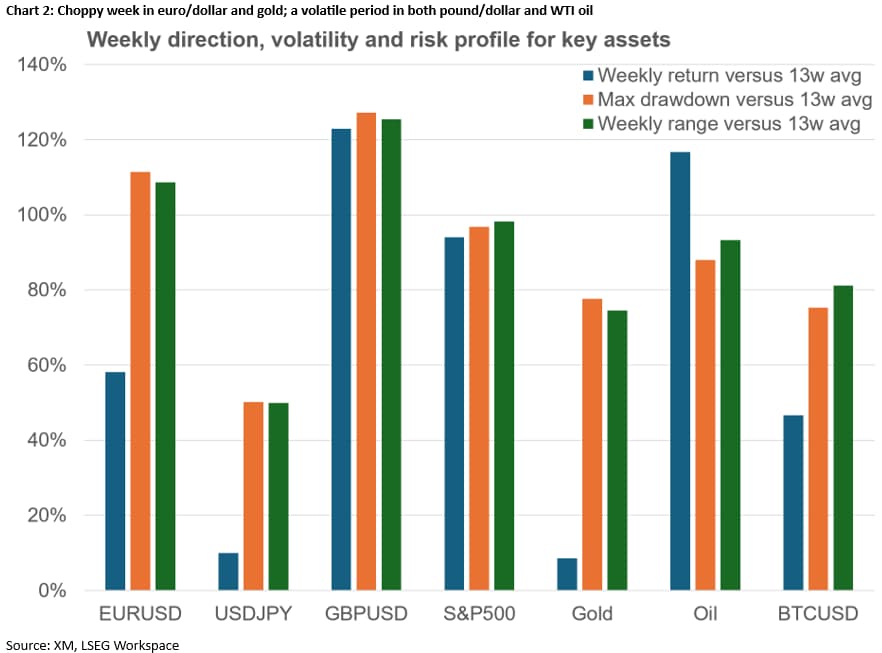
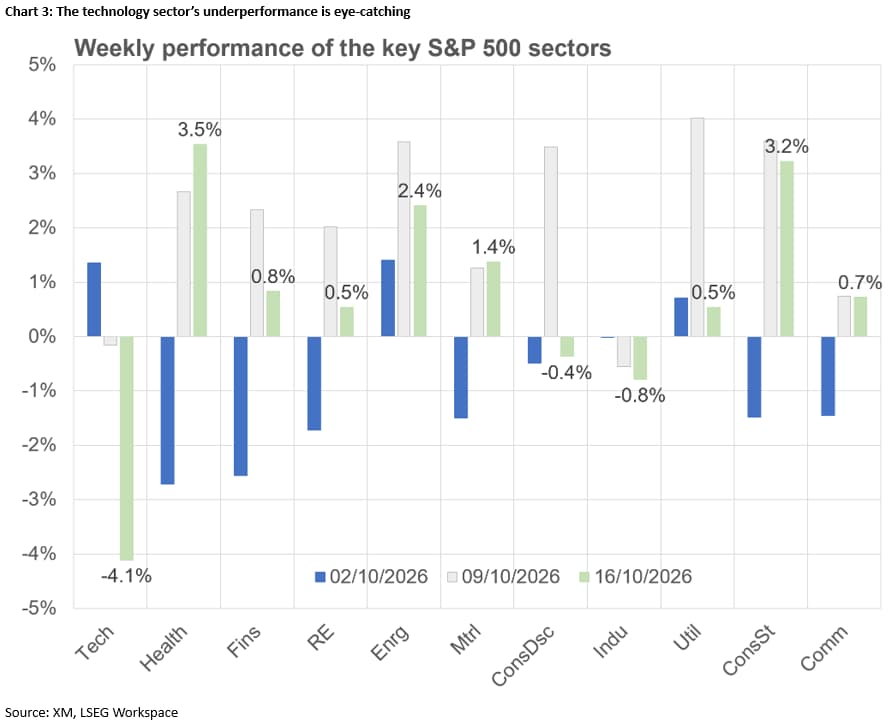
Following two positive months and despite the initial positive AI-related earnings, technology stocks are in the red in October, with the sector posting its second consecutive negative weekly performance for the first time since late March, when stock markets came under severe pressure due to the US-Iran conflict and the oil price rally. Similarly, the S&P 500 index is surrendering last week’s gains as energy and consumer staples price rallies are not enough to keep the index above water.
The waning risk appetite appears to be succeeding where US Treasury Secretary Bessent failed with his rhetoric and debt buybacks. US Treasury yields have been retreating, with the 10-year yield dropping to 5%, a three-week low, with smaller, but still sizeable, declines also seen in eurozone and UK yields. The prevailing risk-off sentiment could also explain gold’s movement after the initial negative post-CPI reaction. That said, its ability to develop bullish momentum remains limited as real yields remain high.
Earnings and US midterm elections in focus
With the countdown to the October 28 Fed meeting underway and Fedspeak expected to be light next week – due to the usual blackout period – investors will shift their attention to US data releases, earnings announcements and the political/geopolitical newsflow.
The current earnings season started on a positive note for US financial institutions, and, more importantly, with an upbeat outlook from TSMC and other AI-related firms that reported last week. The focus now shifts to Tesla, Netflix, Lam Research and Western Digital, with P&G, Amex and Eni also offering valuable insight into most key sectors of the US economy, ahead of the technology giants reporting in the following week. Excessive earnings growth expectations are threatening the AI hype, especially as analysts start to question their profitability targets.
As already seen, technology stocks are under pressure, and with most investors having oversized exposure to these stocks, a continued and persistent underperformance could result in a widespread sell-off, dragging risk assets like bitcoin lower but potentially benefiting the dollar and bond markets.
Meanwhile, a plethora of housing sector data and a 20-year auction – higher yields may support demand, but it is an unloved part of the curve – complete next week’s picture, but the icing on the cake will be the political developments. The US midterm elections are just 20 days away, with the races heating up, as polls show that the Democrats are ready to regain control of the House of Representatives after six years, with the main battle concentrated on the Senate. The prospects of President Trump being in a constant battle with a Democratic-controlled Congress could have significant implications for fiscal policy and legislative progress, thus exponentially increasing market uncertainty.
Stable Oil prices equal stable central bank expectations
Despite the quiet increase in oil and gas supplies from the region, the lack of progress in US-Iran talks and the fresh Houthi attacks on Saudi Arabia are keeping oil prices elevated. More importantly though, the supply of refined products is proving a tough enigma for most governments, partly justifying US President Trump’s decision to agree with Russia on the phased release of millions of barrels of diesel.
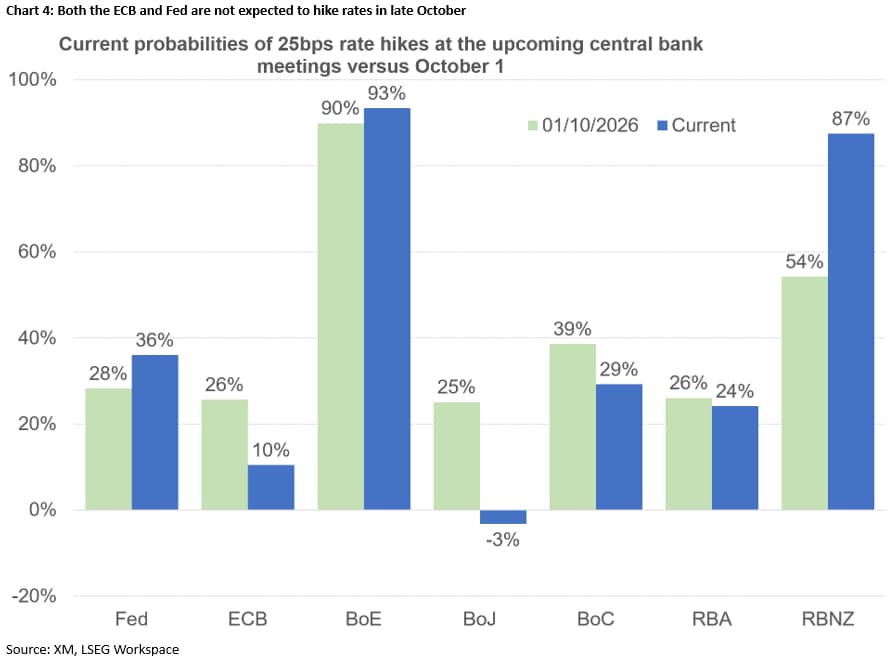
The lack of another aggressive rally above $100 in WTI oil prices is keeping rate hike expectations subdued for both the Fed and the ECB, which are expected to stand pat in 10 days’ time. On the other hand, both the Bank of England and the Reserve Bank of New Zealand are forecast to hike by 25bps, while an upside surprise at next Wednesday’s Canadian CPI report could materially boost the Bank of Canada rate hike bets.
Could UK data upset the current strong hike bets?
The Bank of England is meeting on November 5, a week after the Fed and ECB meetings, with MPC members also having sufficient time to digest the crucial October 28 budget announcements. With hawks Greene, Mann and Pill pushing for a rate hike at the next meeting and Governor Bailey tempted to join them, next week’s labour market, inflation and retail sales reports are critical.
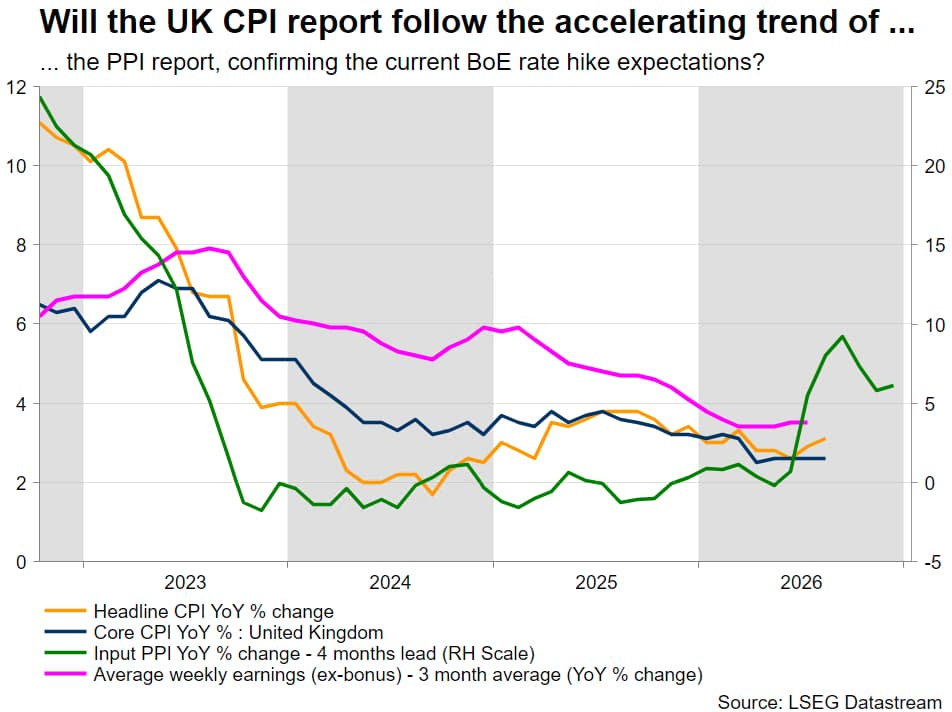
A series of upside data surprises would rubberstamp current market rate hike bets, while only a significant deceleration in inflationary pressures – for example a sizeable dip below 2.4% in the case of core CPI – could trouble investors and make MPC doves more vocal. Meanwhile, the pound has certainly been performing very well against other major currencies.
PM Burnham’s comments about rapprochement with the EU, the softening of expectations about the mix of measures to be detailed in the budget, which appear exaggerated considering the rumoured fiscal gap, and the persistent BoE rate hike bets have been supporting the pound against the ailing euro, as the pair dropped to a fresh 18-month low.
Can the Euro’s weakness continue?
The political shenanigans have proven to be a very strong headwind for the eurozone currency. Euro/dollar dropped to 1.1112 this week, the lowest level since May 2025, as the French parliament started to debate the 2027 budget and bond yields remained highly elevated. There has been a flurry of articles about the ECB warming up its printing presses to buy French bonds on the secondary market, though such a programme would further weaken the euro’s appeal despite successfully containing French bond yields.
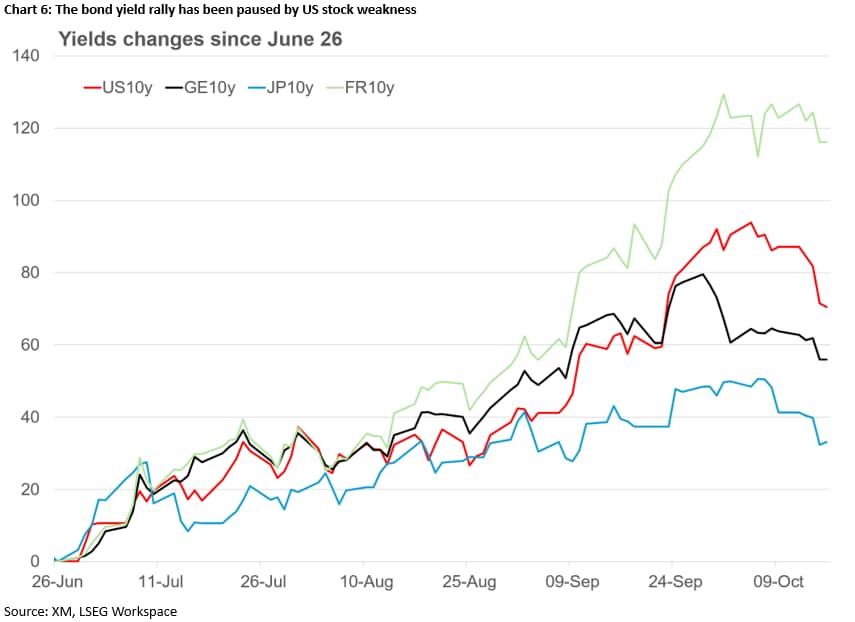
With EU leaders failing to agree on the next seven-year EU budget, as widely expected, the weight falls on Friday’s preliminary PMI surveys to reverse the current euro negative sentiment. German PMIs have been gradually improving, with the manufacturing survey hovering at its highest level since mid-2022, but the French equivalent is hovering around 50, despite the more upbeat services PMI. A weak set of numbers could also dent the ECB’s expected hawkishness at the upcoming meeting.
Key Chinese data on tap
Finally, following a series of public holidays and the fruitful EU-China trade negotiations, next week’s data prints will offer valuable insight into the Chinese economy. With the September PMIs returning above the 50 threshold, despite the persistently strengthening yuan, and September’s Producer Price Index accelerating, a flurry of data releases such as new home prices, retail sales and industrial production for September, along with the Q3 QoQ GDP report, will be released on Monday.
With the aussie/dollar decline reaching 4.5% since early September, the Australian currency would very gladly welcome strong Chinese data releases, which, along the October 28 Australian CPI report, could tip the balance in favour of another RBA rate hike in early November.
Author

Achilleas joined Trading Point in November 2022. He holds a BSc in Business Economics from Middlesex University and a MSc in Mathematical Trading and Finance from Bayes Business School, City University.

















