Week ahead: Fed and Bank of England in focus, as well as a big week for earnings

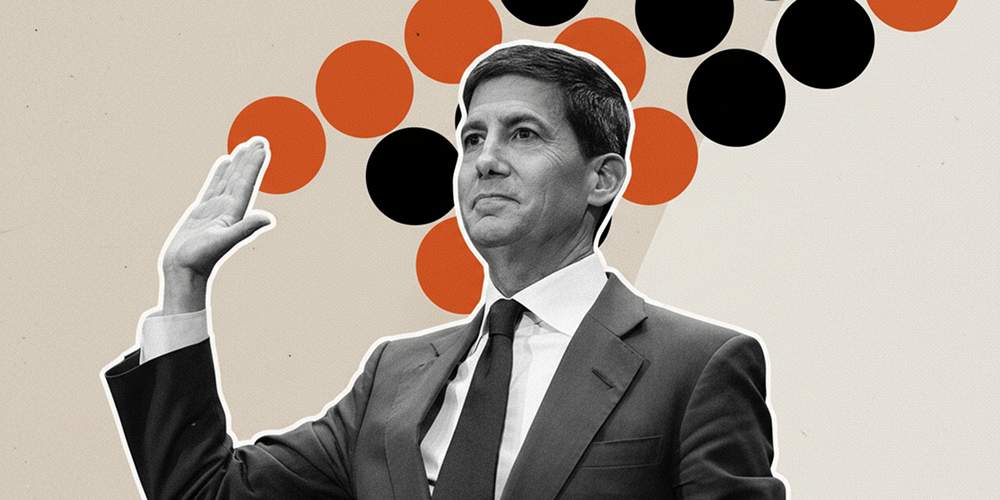
FOMC rate decision - 29/04 – having sat through the testimony of new Fed chair nominee Kevin Warsh it seems clear that there probably won’t be wholesale change at the Federal Reserve this summer. While some Democrats sought to paint him as a sock-puppet for the President it's quite likely he will prove to be his own man, raising the question as to why President Trump nominated him. Warsh was at pains to say that interest rates would be his central focus, along with the balance sheet, while he went on to say that there ought to be less Fed speak. We also learnt that he would be looking to get rid of the dot plots, which while a talking point for a lot of people were as much use as a chocolate teapot. So, what to expect at the latest meeting? It’s likely to be a case of steady as she goes with the labour market still looking resilient despite a sharp increase in inflation, driven primarily by gasoline prices. The FOMCs biggest concern is likely to be around second round effects in the form of higher wages, along with higher prices for staples as well as consumer discretionary items. This almost seems inevitable given that the Straits of Hormuz remains closed and the effects of that disruption is yet to be felt in most global supply chains.
Bank of England rate decision – 30/04 – the Bank of England is faced with a different problem than the US central bank in that while inflation has risen quite sharply, the labour market is not in any way healthy. Under normal circumstances the bank might have been leaning towards a rate cut, however we aren’t operating in a normal environment. While the government can lament from the rooftops that this crisis is not of their making, it is their policies, as well as previous governments, that have brought us here in the insane dash towards Net Zero. This inability to look beyond the end of their noses has brought us to where we are now, and the likelihood that inflation could go above last year’s peak of 3.8% in the weeks and months ahead. The big surge in PPI input prices is also a bleak harbinger of what could come in the weeks and months ahead if businesses either raise prices or cut headcount in an attempt to maintain their margins. With rates expected to stay on hold the central bank may well be rueing its decision to follow the Bernanke model of each policymaker outlining their outlook for interest rates at precisely the same time as new Fed chair Kevin Warsh is looking to cut back on central bank jibber-jabber in the view that too much talking by policymakers tends to muddy the message. Governor Andrew Bailey would do well to manage the message better than he did last time when he had to do a round of TV interviews in the wake of a sharp sell-off in gilt markets in the wake of their last decision.
ECB rate decision – 30/04 – on two previous occasions the ECB took the decision to hike interest rates on the back of concerns about a sharp rise in inflation raising concerns that they might go down the same route again when they meet in a few days’ time. Some ECB policymakers have already started to make noises to that end in response to the recent sharp rise in energy prices that has driven EU inflation from 1.9% to 2.6% in March. In 2008, and then again in 2011 the ECB made the mistake of raising interest rates at around the same time the economy was slowing, and there are concerns that they could be about to make the same error again. It is true that the sudden surge in inflationary pressure may well have longer term consequences in the form of price stickiness, however that doesn’t mean that the ECB should make matters worse. To do so would magnify the hit to demand that higher energy prices are already having, not only on business, but on consumers as well. It does appear that on some level certain policymakers are adopting a more cautious approach, notably German ECB member Isabel Schnabel who in recent comments said that the ECB doesn’t need to rush when it comes to moving on rates at its next meeting. Her remarks also suggest that it would be prudent to take some time before deciding if the economy was at risk from possible second round effects from the crisis. While she did go on to say that the ECB still needs to be attentive to incoming data, the fact that core prices have barely moved ought to be enough to keep the ECB on hold even if the likes of her countryman Nagel were keen not to rule out the prospect of a hike.
BP Q1 26 – 28/04 – When BP announced back in February that it was suspending its buyback it was one of those decisions that should have come a lot earlier. This misguided policy should have come to an end over a year ago given the company’s inability to get its debt levels under control. If you have a stated policy ambition to lower your debt to between $14bn to $18bn by the end of 2027, then it was always going to take more than heroic assumptions about disposals, as well as new production capacity, when your net debt pile rose to $26bn in Q3 of last year. It also tells investors you aren’t really serious about doing that. Having finally bitten that bullet, the shares have actually gone up since then, and while some of that has to do with the surge in oil and gas prices, it has also shown that this new management may well be serious about shifting back to what BP does best. With Meg O’Neill now in place as CEO this Q1 is likely to show an “exceptional” trading performance in oil, compared to a weak Q4. Brent crude averaged $81.13 a barrel in Q1, compared to $63.73 in Q4, while Henry Hub averaged $5.05, compared to $3.55. Net debt is still expected to be between $25bn and $27bn in Q1, higher than in Q4, largely due to a build in working capital of $4bn to $7bn. Reported upstream production is expected to be flat compared to Q4, with gas and low carbon energy expected to be slightly higher. It’s important not to have too high an expectation in what will be Meg O’Neills first earnings announcement as CEO but it should set the tone for what is to come next, and while BP has its fair share of problems, the fact that she’s joining the business after such a weak Q4, when it posted a $3.4bn loss, I would suspect the bar is quite low. Nonetheless BP will need to show its serious about improving its margins, as well as reducing its debt pile, as well as seeing off the challenge of some institutional shareholders who are pushing back against the election of chairman Albert Manifold on the basis of the firms pivot back to oil and gas, and the firm’s intention to retire a reporting resolution related to climate change.
Barclays Q1 26 – 28/04 – We’ve seen a bit of a pullback in the Barclays share price since the bank reported at the start of February, however it’s not been unique in that, with the entire sector coming under pressure on concerns over the impact of events in the Middle East. That said we have seen a decent rebound off the lows in March, helped in some part by decent results from US banks earlier this month. At the end of its last fiscal year Barclays reported a 13% increase in annual profit before tax of £9.1bn for 2025, with a ROTE of 11.3%, which was above its guidance of 11% which it raised in Q3. Net Interest Income also beat forecasts, coming in at £12.8bn, with Barclays UK contributing £7.7bn of that total. Total income for 2025, rose 9% to £29.1bn, while attributable profit to shareholders rose 16% to £6.2bn. Total dividend for 2025 was 8.6p, with a final dividend of 5.6p, along with total share buybacks of £2.5bn. For 2026, the bank says it is looking to boost ROTE to 12%, while looking to return at least £10bn of capital to shareholders through dividends and buybacks. £2bn in dividends is planned for 2026, with quarterly buybacks. Group NII target of £13.5bn, with Barclays UK target of £8.2bn mid-point.
Lloyds Q1 26 – 29/04 – having seen a peak of 114p back in February, the shares slipped to as low as 88p before rebounding in mid- March, rebounding off the 200-day SMA. We’ve seen a modest recovery since then in a similar vein to the rest of the banking sector, as concerns over mortgage and loan demand have receded somewhat, along with market interest rates. When Lloyds reported in January the numbers were impressive, reporting a 12% increase in annual statutory profit before tax of £6.66bn. This improvement came in spite of the big provision of £800m that was set aside in Q3 as a result of the Black Horse Finance issue. For Q4 statutory profit before tax was £1.98bn, an over £1bn increase on the same quarter last year. Net interest margin for Q4 was also higher at 3.1%, 13bps above last year, taking annual NIM up to 3.06% from 2.95% a year ago. The bank saw underlying loans and advances to customers increase to £481.1bn, up £4bn on Q3, and up by £22.1bn year on year. Customer deposits were steady over the quarter but also rose year on year by almost £14bn to £496.5bn. The bank said it would be paying a final dividend of 2.43p per share, taking the total dividend to 3.65p per share, as well as announcing that it would be buying back shares to the value of £1.75bn. For 2026 the bank said it expects to see underlying net interest income to rise to £14.9bn, a sizeable increase on this year’s £13.63bn, while delivering a cost to income ratio of less than 50%. It’s currently 58.6%.
Alphabet Q1 26 – 29/04 – When Google owner Alphabet reported its Q4 numbers at the beginning of February, the shares plunged sharply, albeit from record highs. Even allowing for the fact that there have been increasing concerns about escalating spending on AI infrastructure, the Alphabet share price had stood out of late up until then, the shares more than doubling from the “liberation day” lows of $139 of April 2025. For Q4 the company comfortably beat expectations across the board, revenues rising 18% to $113.83bn, pushing annual revenues up to a staggering $402.8bn, an increase of 15%. Net income for Q4 increased to $34.4bn, while on an annual basis this rose to $132.17bn, an increase of 32%. The share price slide in the aftermath of the numbers came about from the announcement that they intend to increase their AI spend from the $92bn they announced in Q3 to as high as $175bn to $185bn in the fiscal year 2026. This was way above market consensus which was $119bn. Management said that search revenue, which beat market expectations, was being driven increasingly by AI and Gemini with over 750m active users. The company saw growth across all of its business areas. Q4 advertising saw revenues surge 13% to $82.28bn, with search seeing revenues rise by $9bn to $63bn. YouTube also saw revenues increase, rising by $900m to $11.38bn. The cloud business stood out however with revenues there seeing an increase of almost 50% to $17.66bn. This growth in its cloud business may well be what’s driven Alphabet to up spending in order to build out its AI infrastructure, and while the amount being spent is indeed high, it’s not as if Alphabet can’t afford it, funding it from their existing cashflow at the time, although since then they have gone on to announce a multi-currency bond structure, worth over $30bn, including a 100-year century bond, which attracted over $100bn in orders. In the period since that announcement, the shares have recovered that lost ground after rebounding from their 200-day SMA.
Microsoft Q3 26 – 29/04 – one of the worst performing tech stocks since the shares hit a record high back in the middle of last year, sliding from $566 before finding a base in March at $355. Most of this was due to concern over the company’s exposure to OpenAI with 40% of its order backlogs contingent on its deal with OpenAI, where there is some doubt as to the ability of the latter to be able to pay for all of this work. Q2 revenues came in at $81.27bn, an increase of 17%, topping estimates across the board, and well above the $69.63bn a year ago. Annual revenues came in at $158.5bn, up from $135.2bn in 2025. Cloud revenue drove most of that gain rising to $51.5bn, compared to $40.9bn a year ago. Intelligent cloud which includes the Azure business also performed well bringing in $32.9bn, an increase of 29% and also beating forecasts. That said total costs also increased, rising to $50bn for the year, an increase of almost 20%. Capex for Q2 also saw a sharp increase, rising to $37.5bn, up from the $22.6bn in the same quarter last year, with the company saying it needed to do this to address these backlogs. All of the MS businesses performed reasonably well, with the notable exception of Xbox content and services where revenue declined 5%. On guidance for Q3 Microsoft said it expects to deliver $80.65bn-$81.75bn in revenue, with growth in its Azure business projected at around 37% which was in line with consensus
Meta Platforms Q1 26 – 29/04 – When Meta reported at the end of January the shares surged sharply after posting an impressive set of Q4 numbers. While those gains proved to be somewhat short-lived with the shares sliding sharply through February and March to a 10-month low of $518, we have seen a modest recovery since then, along with the rest of the tech sector. Q4 revenue came in above the upper end of guidance at $59.9bn, a 24% increase pushing total revenue for the year up by 22% to $200.96bn, while net income rose to $24.74bn. Total costs for the year came in line with forecasts at $117.6bn, a rise of 24%. While net income for Q4 came in 9% above the same quarter a year ago at $22.77bn, this wasn’t enough to prevent a 3% decline in annual net income to $60.46bn. Total capex for 2025 came in at $72.22bn. Breaking down the numbers, the Family of Apps operation delivered $58.9bn in revenue for Q4 and $198.76bn in annual revenue, as well as delivering total income from operations of $30.76bn and $102.47bn respectively. Reality Labs delivered $955m of revenue in Q4, and $2.2bn in annual revenue, as well as losses of $6bn and $19.2bn respectively. For Q1 26 Meta says it expects to see revenue to be in the range of between $53.5bn and $56.5bn, while total expenses are expected to be in the region of between $162-169bn, which will include higher infrastructure operating expenses and cloud spend. Capex spend will also increase to between $115-135bn.
Apple Q2 26 – 30/04 – of all the Magnificent 7 Apples shares had until recently lagged somewhat largely down to the fact that as far as AI is concerned, they were well off the 8 ball, and unlikely to catch up. The shares have also struggled since their December 2025 peaks despite a bumper set of Q1 results. Nonetheless they do appear to have solved this issue by signing a deal with Alphabet to use Gemini to augment Siri, thus contracting out their AI problem to a third party. This may well prove to be a smart move and could well pay off, however it also puts them at the mercy of someone else’s development timetable. Nonetheless Apple’s Q1 results always tend to be a decent quarter, covering as it does the Thanksgiving and Christmas period and this year was no different. Q1 revenue rose 16% to $143.8bn, while profits came in at $2.84c a share, or $42.1bn. The sale of its new iPhone along with services, drove this revenue surge as sales of the iPhone surged to $85.27bn, blowing through upper expectations, and well above the $69.14bn a year ago. The company reported growth in all its regions with Greater China seeing a large jump in sales to $25.5bn from $18.5bn a year ago. Mac sales were disappointing, slipping to $8.39bn from $8.99bn a year ago, while wearable sales also slowed. iPad sales on the other hand saw growth to $8.6bn, while services revenue jumped 14% to $30bn from $26.34bn. What was all the more surprising is that the concerns about tariffs slowing down sales seem somewhat overblown. With the shares largely trading sideways this quarter it will be interesting to see what Apple has to say about the recent disruption to supply chains in the Straits of Hormuz and the impact on chipset costs. It will also be interesting to see how the news that Tim Cook is stepping down as CEO to be replaced by head of hardware John Ternus will affect the way the company is run. How should Cook be judged? It is true that Apple is a cash machine, but innovation has slowed Apple Watch, AirPods and Vision Pro are notable, while Apple Music services growth has done well, along with sales of its core products. What comes next though? – Apple missed the boat on AI and it’s not immediately apparent what the next big thing is. Ternus will take over in September and oversee the first folding iPhone, along with an updated Siri.
Amazon Q1 26 – 30/04 – Google owner Alphabet set the bar at the start of February when they announced that they would be upping the ante hugely when it came to spending on its AI infrastructure build out plans by doubling its capex spend in this area. Rather than set a more cautious tone, Amazon did the equivalent of saying “hold my beer” and committed to spend $200bn in their new fiscal year as it looks to stay ahead in the AI build out race, prompting the shares to fall sharply to their lowest levels since May last year, as concerns about the AI arms race raised more and more questions about returns. That share price slumped proved to be more or less the bottom with the shares recovering all of those losses in the last few days. In Amazon’s case the market clearly believes they can afford it, and the numbers would appear to suggest that. In Q4 Amazon saw net sales increase 14% to $213.4bn, with North America seeing a 10% YoY gain, while international sales rose 17%. AWS also saw 24% YoY sales growth to $35.6bn. Net income increased to $21.2bn during the quarter. For the full year, total revenues were up by 17% to $716.9bn while net income increased to $77.7bn, compared to $59.5bn in 2024. Over the year AWS saw its fastest growth in 13 quarters, helped by AI agreements with OpenAI, Visa, BlackRock, Lyft, United Airlines and HSBC to name but a few. Free cash flow was sharply lower at $11.2bn, compared to $38.2bn in 2024, largely due to significant year over year increases in the purchases of property and equipment due to investments in AI. For Q1 Amazon says it expects net sales of between $173.5bn and $175.5bn, with operating income expected to be in line with Q1 last year at around $19bn, below expectations of $22bn.
NatWest Group Q1 26 – 01/05 – We saw a big sell-off in the NatWest share price in the aftermath of their full year numbers, largely over concern that the price being paid for wealth manager Evelyn Partners was too high, along with a suspension of buybacks for the remainder of 2026. With the unrest in the Middle East hastening that weakness the shares finally found a base at 505p, having fallen from their February peaks of 705p. We’ve seen a modest rebound since then on the basis that the move lower was seriously overdone. Suspension of buybacks doesn’t have to be a bad thing if it’s done to invest in the business which is what has happened here. In my opinion buybacks are a lazy way to enhance shareholder value, and symptomatic of a management that is out of ideas. If you want to reward shareholders simply boost the dividend, instead of trying to boost EPS. In going down a similar route to Lloyds, NatWest are recognising that there is money to be made in wealth management, and diversifying their business model, as well doubling their AUM, which should add significant profitability gains if managed correctly. On the numbers themselves last year Net Interest Income rose by 13.8% on an annual basis to £12.8bn, while total income jumped 13.2% to £16.64bn. Total profits for the year rose 21.3% to £5.83bn, despite an 86.9% increase in annual impairments to £671m. The bank reported a sizeable increase in net interest margin of 21bps to 2.34%, in spite of a falling rate environment. On guidance NatWest management were equally bullish saying that they expect total income for 2026 to be in the region of between £17.2bn and £17.6bn, and to deliver ROTE in excess of 17%.
Author

Michael Hewson MSTA CFTe
Independent Analyst
Award winning technical analyst, trader and market commentator. In my many years in the business I’ve been passionate about delivering education to retail traders, as well as other financial professionals. Visit my Substack here.