USD/JPY stabilizes amid Bank of Japan's cautious signals

The USD/JPY pair has found a stable footing around 143.22 as investors carefully analyse the recent comments from Bank of Japan Governor Kazuo Ueda. His remarks suggest that the BoJ is taking a measured approach to monetary policy adjustments, signalling a possible delay in interest rate hikes.
Governor Ueda emphasised the need to thoroughly analyse market and economic conditions before making policy decisions, indicating that immediate rate hikes are unlikely. He also highlighted external risks, including financial market volatility and uncertainties surrounding the US economy, which are critical considerations for Japan's monetary policy.
At its September meeting, the BoJ maintained the interest rate at 0.25% per annum, aligning with market expectations. Speculation suggests that the October meeting may not change the Monetary Policy Committee's structure. Still, by December, the BoJ might gather sufficient evidence to justify a rate increase.
The recent dip in the US dollar, spurred by weak consumer confidence figures in the US, has incidentally strengthened the yen. This shift has heightened expectations for further rate cuts by the Federal Reserve.
Technical analysis of USD/JPY
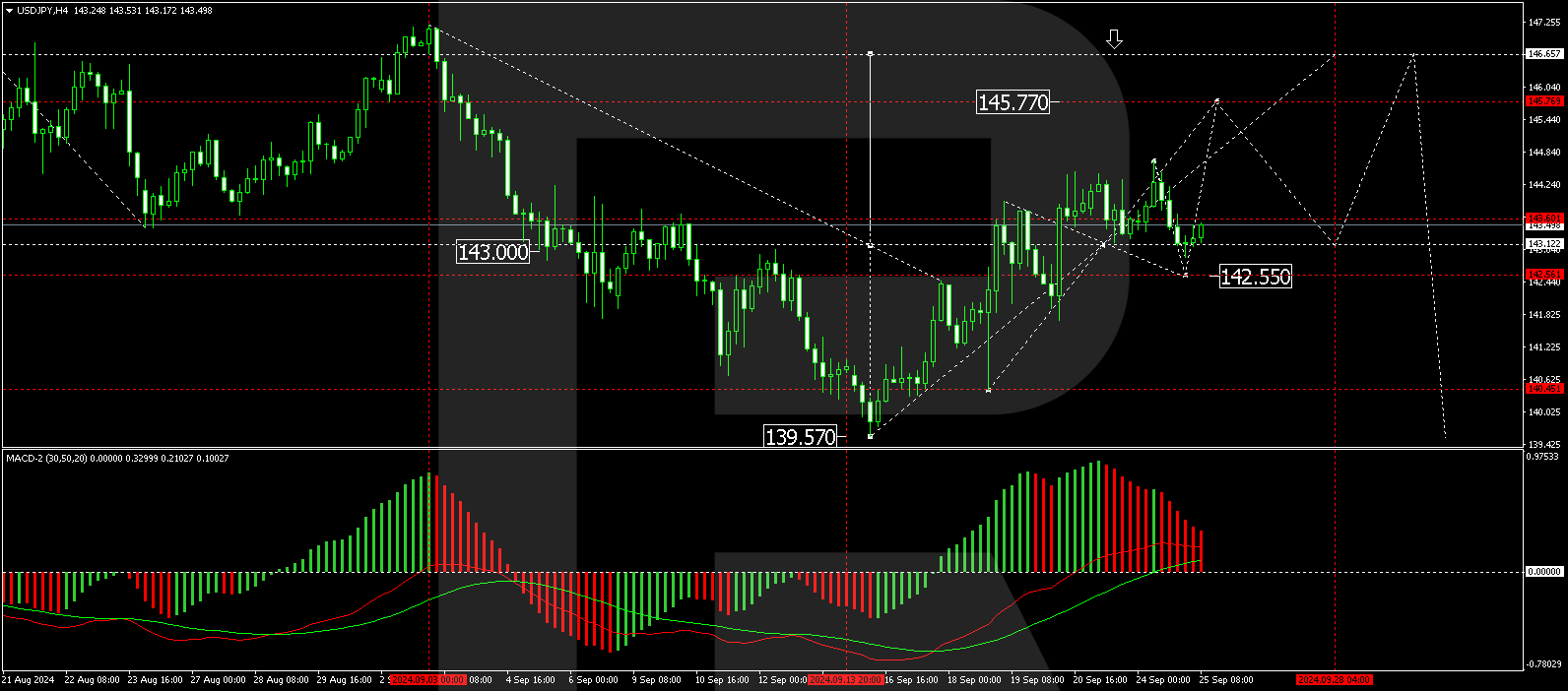
The USD/JPY is currently in a broad consolidation range centred around 143.43, extending to 144.66. The market has initiated a downward movement towards 142.55, testing this level from above. Subsequently, we anticipate a rebound to the upper boundary of this range. A breach above 144.70 could pave the way for a rise to 145.77, potentially extending to 146.66. Conversely, a decline to 142.00 and a subsequent breakdown could signal a trend continuation towards 137.77. The MACD indicator supports this bullish scenario, with its signal line positioned above zero and pointing upwards.
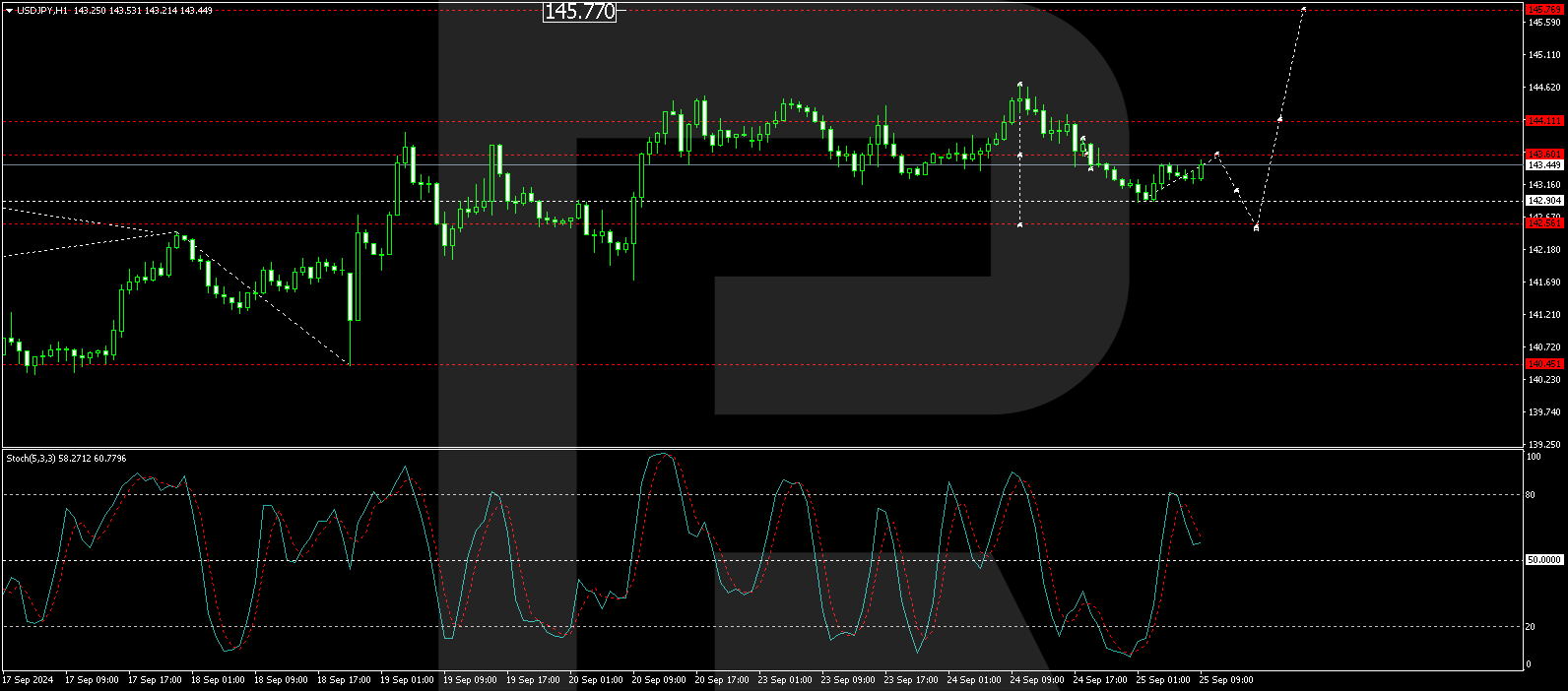
On the H1 chart, USD/JPY has crafted a consolidation range around 143.60, achieving the 142.90 local downside target. The pair is now moving upward towards 143.60, testing this level from below. The current setup suggests a retest of 143.60 could be followed by a new decline towards 142.55. The Stochastic oscillator, with its signal line above 50 and pointing upwards, corroborates this potential for a brief uptick followed by a continued downward trajectory.
Author

Andrey Goilov
RoboForex
Higher economic education. Andrey Goilov has been working on the Forex market since 2005. A financial analyst and successful trader. Preference in trading is highly volatile instruments.