USD/JPY holds firm: Yen loses some support

USD/JPY stood at 158.39 on Friday, with the Japanese yen giving back some of the gains made following the joint intervention by Tokyo and Washington. The renewed weakness has once again raised expectations of possible further action by the authorities.
The pullback has highlighted that currency interventions alone are insufficient to address the fundamental drivers of the yen’s weakness. Pressure on the currency is being driven by a wide interest rate differential, rising fiscal risks, and elevated energy and import costs.
An additional negative factor has been the strengthening of the dollar and the recovery in oil prices following renewed tensions around the Strait of Hormuz. Domestic data have also been weak, with Japanese household spending falling 3.3% in June, against expectations of 1.0% growth – pointing to subdued consumer demand.
Investors are now pricing in the possibility of a Bank of Japan rate hike in September. While the regulator left policy settings unchanged last week, markets continue to price in further tightening.
Technical analysis
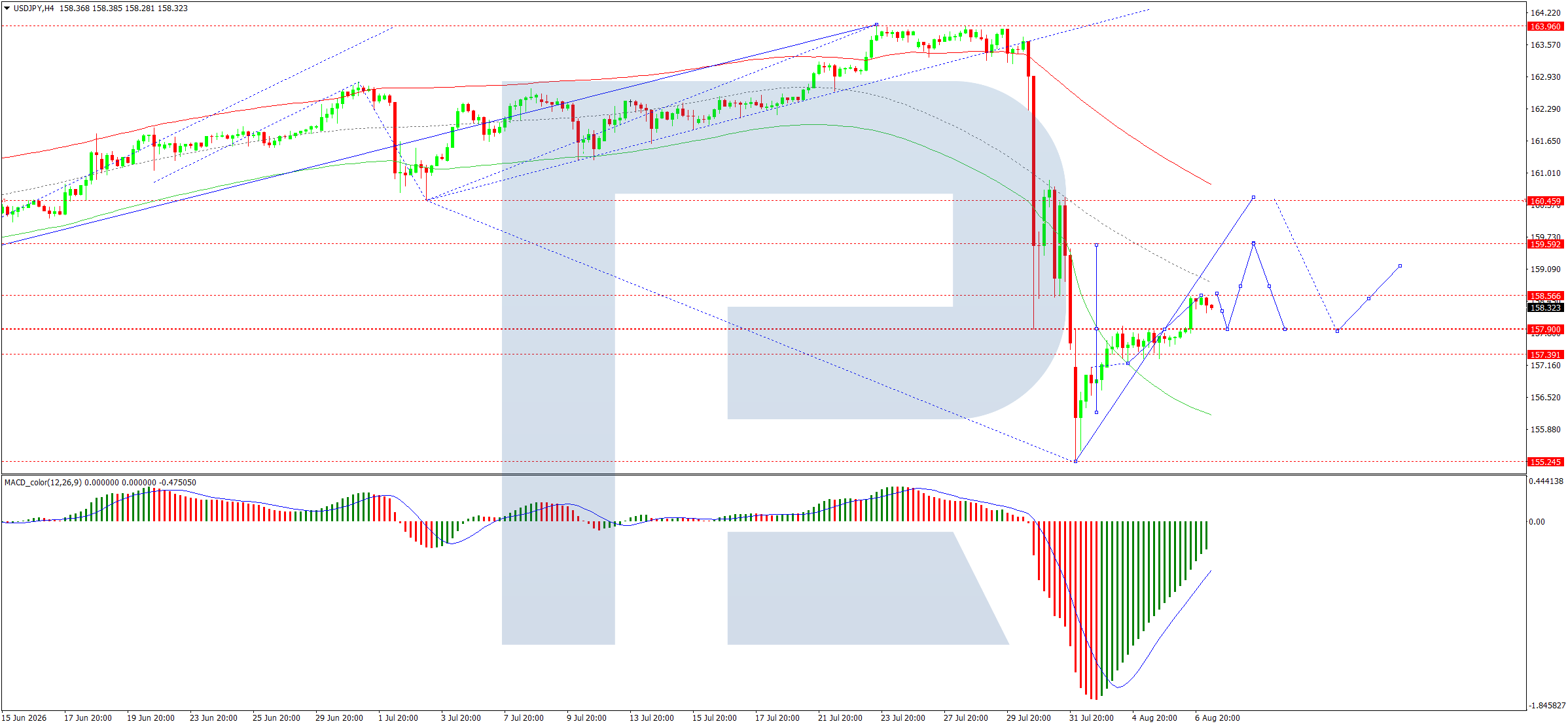
On the H4 USD/JPY chart, the market is forming a consolidation range around the 157.90 level, currently extending up to 158.56. A move lower towards 157.90 is expected today, followed by a move higher to 159.50. The MACD indicator supports this scenario, with its signal line below zero and pointing upwards.
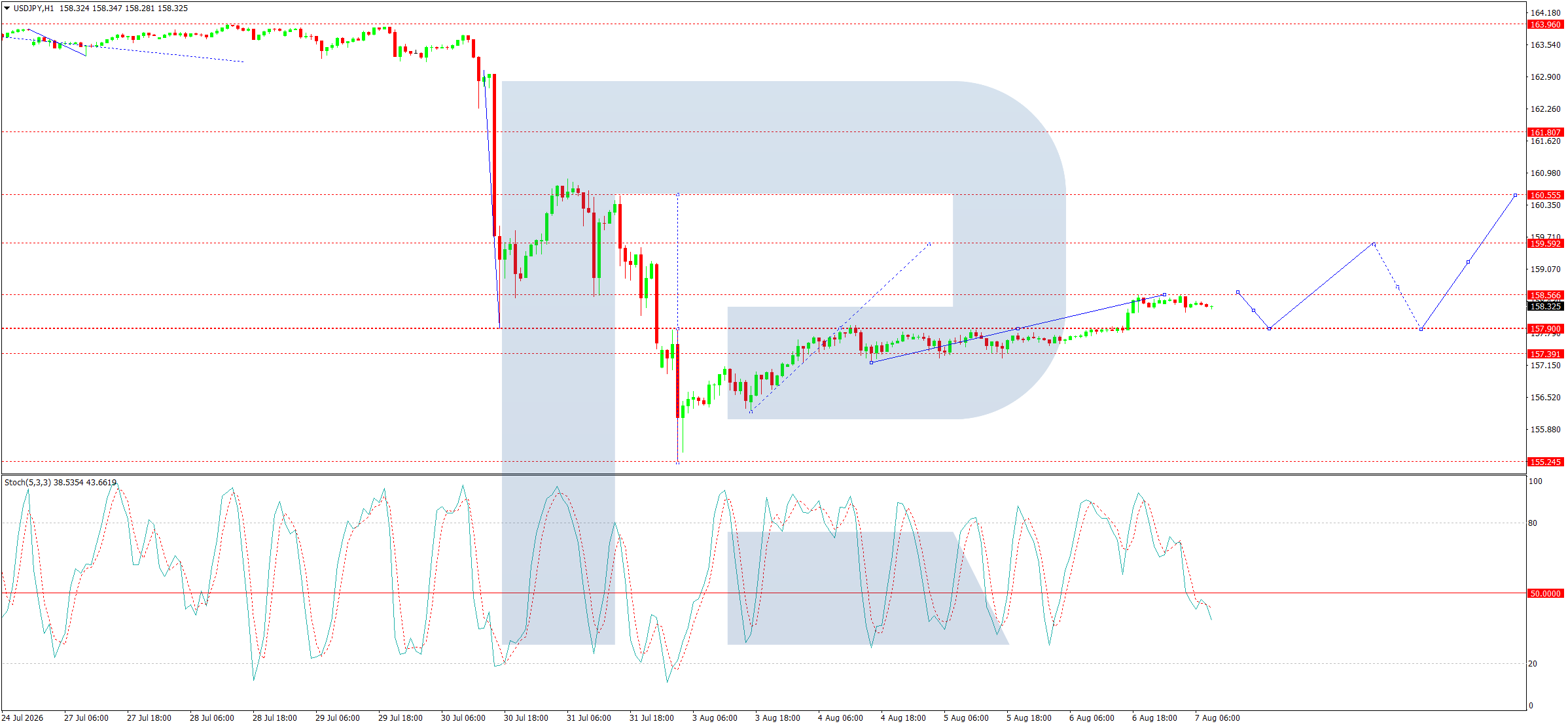
On the H1 chart, USD/JPY has completed an upward move to 158.56. A consolidation range is currently forming below this level. A move lower towards at least 157.90 is expected, followed by a move higher to 159.50. The Stochastic oscillator confirms this scenario, with its signal line below 50 and pointing downwards towards 20, indicating short-term downside pressure.
Conclusion
USD/JPY has regained some ground as the yen’s post-intervention gains fade, highlighting the limitations of currency intervention in addressing the fundamental drivers of yen weakness. Wide interest rate differentials, fiscal risks, high energy costs, and weak domestic spending continue to weigh on the currency. Renewed tensions around the Strait of Hormuz have pushed oil prices higher, while disappointing household spending data have added to concerns over sluggish consumer demand. Markets are now pricing in a potential Bank of Japan rate hike in September. Technically, USD/JPY may see a short-term pullback towards 157.90 before resuming its upward trajectory towards 159.50, with intervention risks remaining a key factor.
Author

RoboForex Analysis Department
RoboForex
RoboForex Analysis Department provides timely market insights, expert technical analysis, and actionable forecasts across forex, commodities, indices, and equities.