USD/JPY breaks out, why USD is stronger than the Yen now? [Video]
-
Wide yield gap (3.75%) favors USD as the Fed holds rates at 4.25% vs BoJ’s 0.50%.
-
US10Y yields steady above 4% reinforce dollar demand and fuel yen weakness.
-
Technical breakout above 148.286 opens path to 150, with support at 147.194 key for downside risk.
![USD/JPY breaks out, why USD is stronger than the Yen now? [Video]](https://editorial.fxsstatic.com/images/i/usd-jpy-02.jpg)

The USD/JPY pair has surged higher, reclaiming ground above 148.50 as the U.S. dollar continues to flex its strength over the yen. The move is rooted in fundamentals: the Fed’s policy rate at 4.25% still towers above the BoJ’s 0.50% pause, leaving a 3.75% interest rate differential in favor of the dollar. Combined with firm U.S. Treasury yields and the yen’s muted safe-haven appeal, the setup strongly supports further dollar dominance in this pair.
Why the US Dollar is stronger vs the Yen
The divergence between the Fed and the BoJ is stark:
-
Interest Rate Differential (4.25% vs 0.50%)
-
-
The Federal Reserve’s benchmark rate currently sits at 4.25–4.50%, even after a 25 bp cut in September.
-
The Bank of Japan, by contrast, has its short-term rate anchored near 0.50%.
-
This leaves a 3.75% yield advantage for U.S. assets, keeping USD firmly bid against JPY.
-
-
Fed’s Cautious Stance
Jerome Powell has acknowledged risks of softer labor conditions but remains wary of inflation, signaling no rush into deeper rate cuts. That balance continues to support the greenback. -
BoJ’s Limited Hawkishness
Despite inflation running above target, the BoJ has avoided aggressive tightening — wary of hurting fragile growth. This keeps the yen unattractive for yield-seeking flows. -
Risk Appetite & Safe-Haven Shift
Normally the yen benefits from global uncertainty, but with equity markets holding firm and risk sentiment stable, investors prefer the dollar’s higher yield instead of JPY’s safety. -
Policy Endorsement by Officials
U.S. and Japanese finance chiefs have both emphasized that current USD/JPY levels reflect fundamentals, reducing the likelihood of short-term intervention.
Yields narrative: US10Y keeps Dollar supported
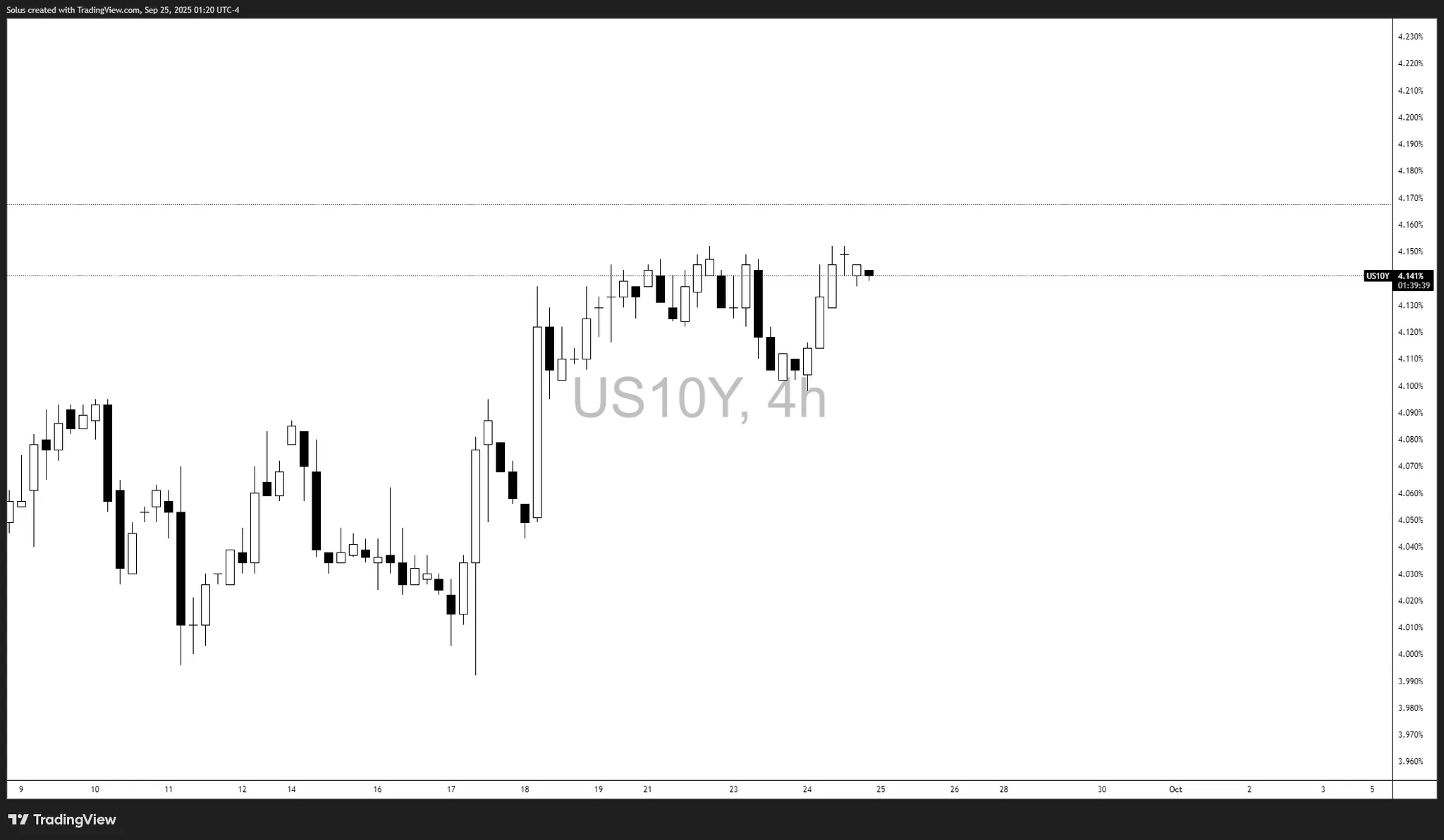
The U.S. 10-year Treasury yield remains firm at around 4.14%, underscoring confidence in U.S. assets despite recent Fed easing. For USD/JPY, this is crucial: higher yields attract capital to the U.S., reinforcing the interest rate gap.
As long as the US10Y holds above 4%, investors favor dollar assets over low-yielding Japanese bonds. This backdrop has acted as the backbone of USD/JPY’s breakout, supporting bullish momentum as price surged above the 148.286 resistance level.
Technical outlook – USD/JPY
Breakout context: Rate differentials driving price
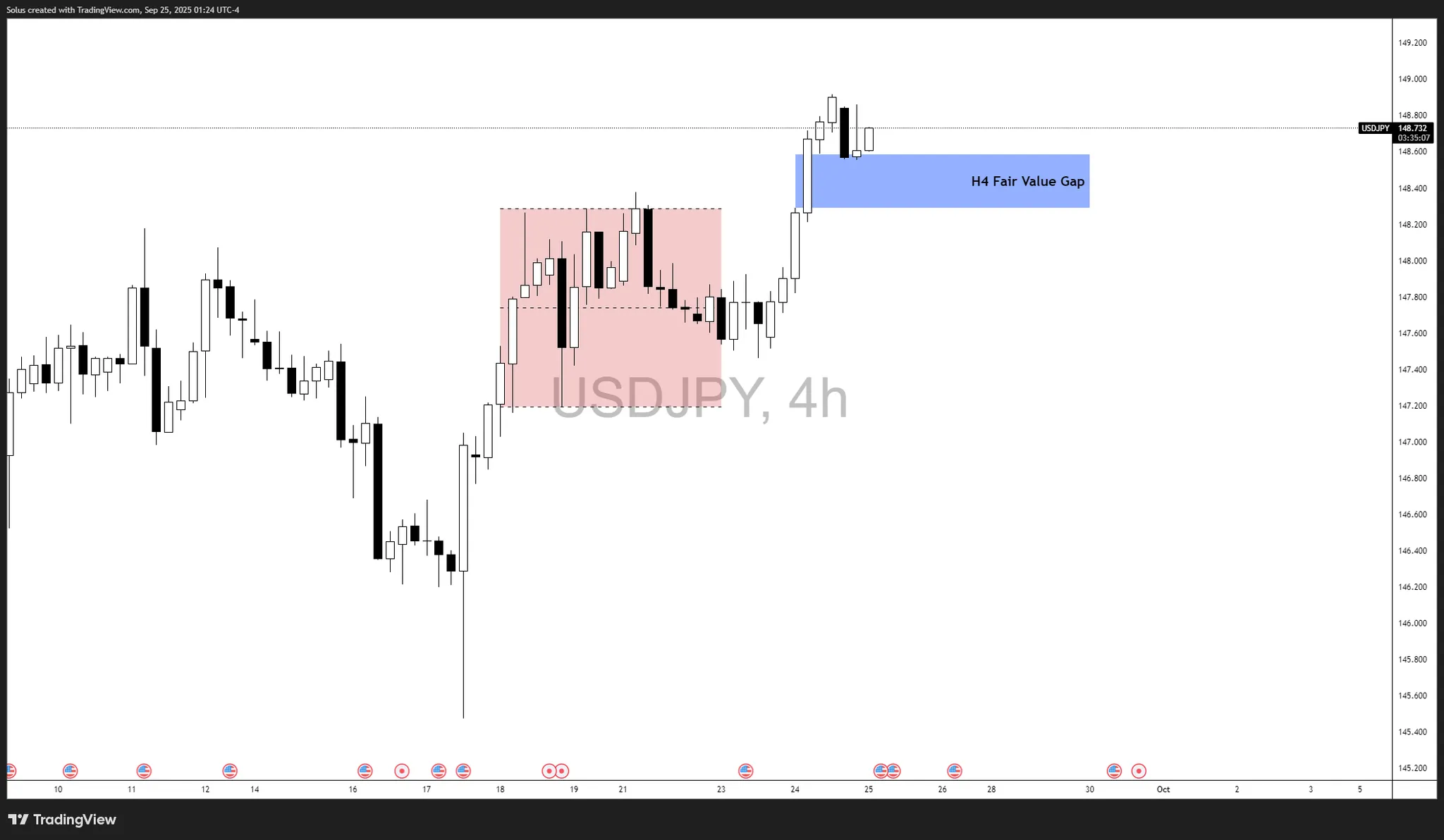
USD/JPY broke free from its previous range, where 148.286 was resistance and 147.194 was support. The breakout coincided with U.S. yields staying elevated and the yield spread narrative driving global flows.
Bullish scenario: Breakout continuation
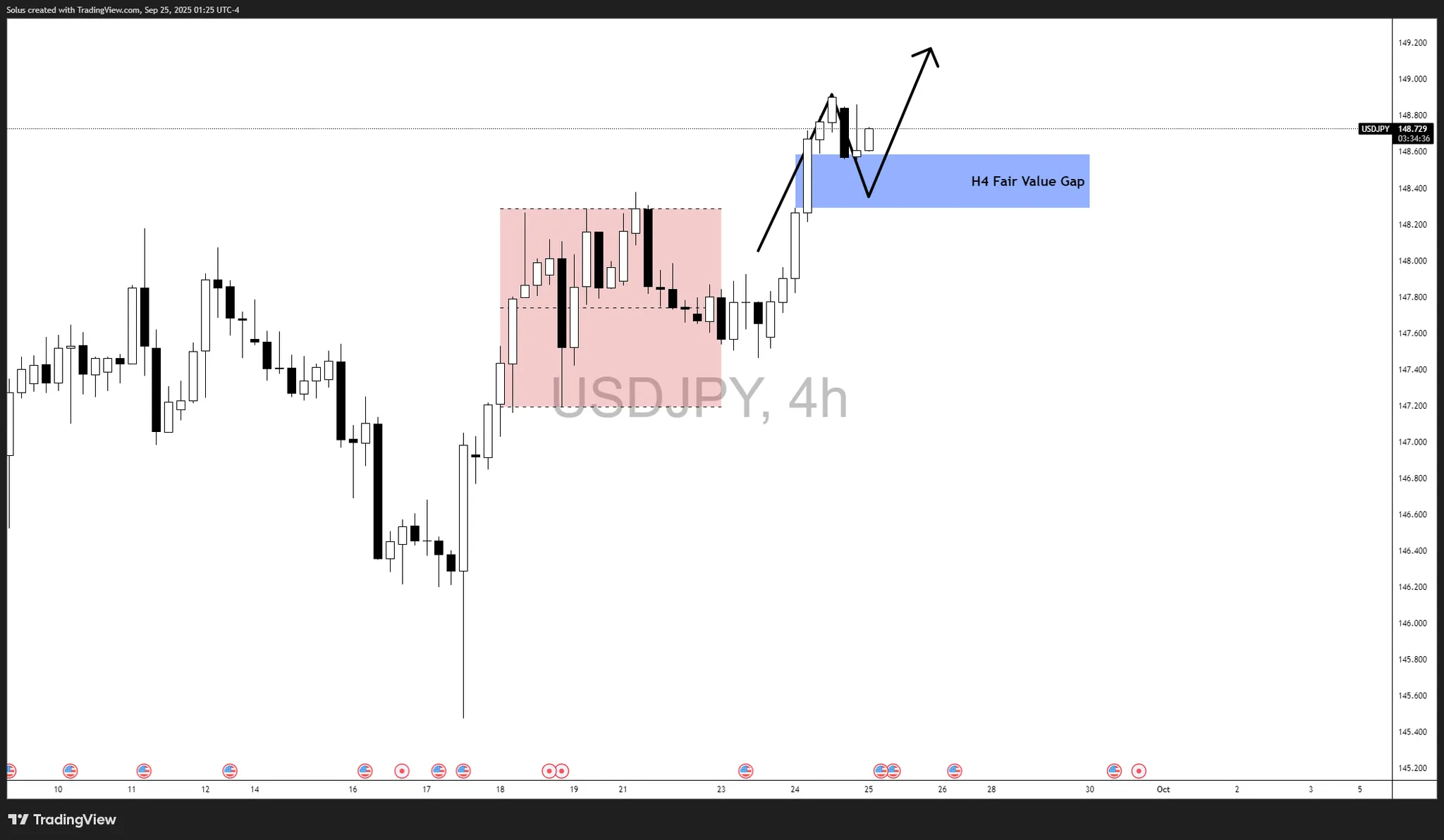
The pair is consolidating inside an H4 Fair Value Gap (148.291–148.587).
-
Holding this zone signals re-accumulation, with buyers eyeing the 150.00 psychological level.
-
On extended strength, momentum could carry price toward 151.50.
Bearish/pullback scenario: Range re-entry
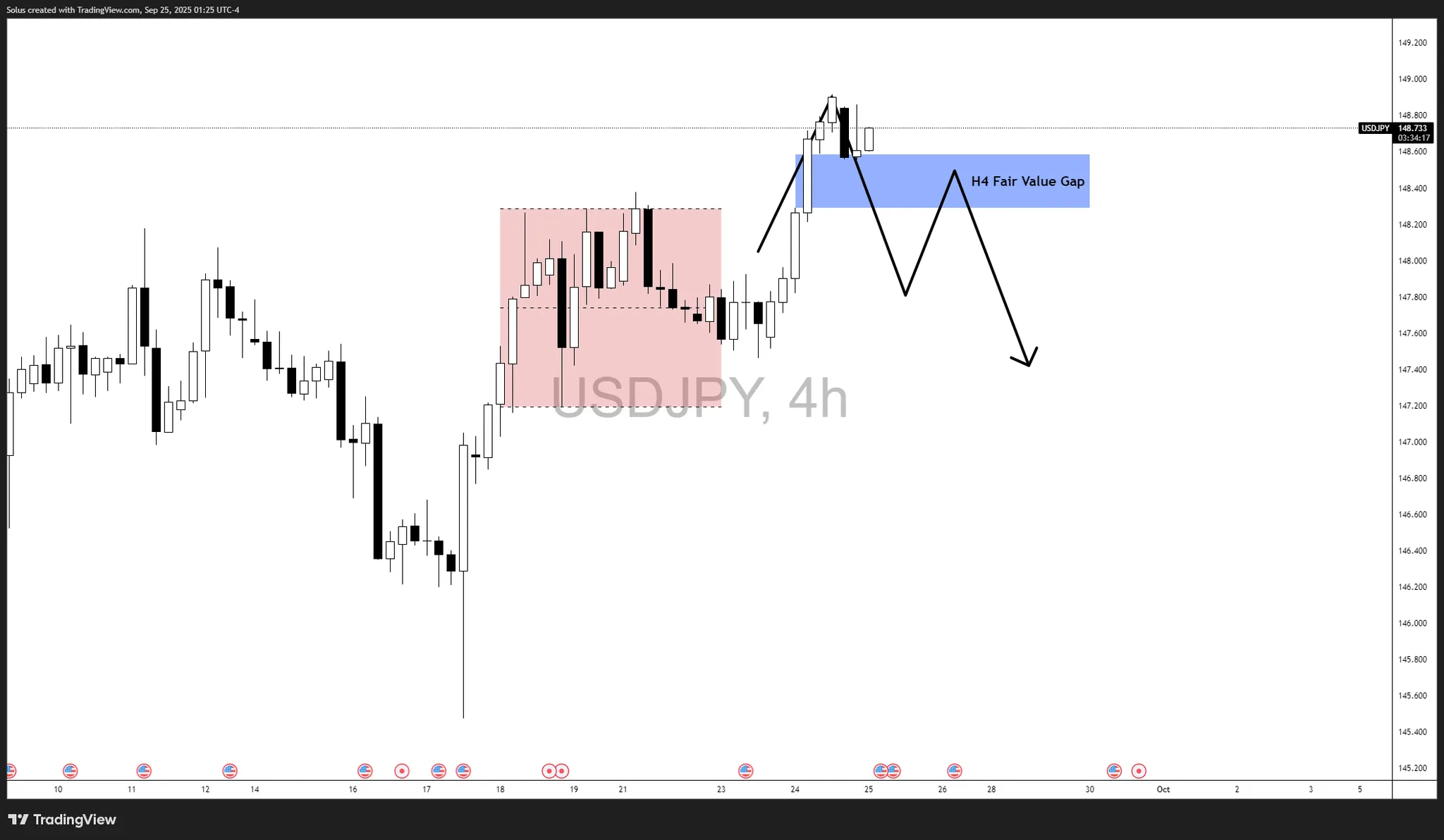
Failure to defend the 148.291–148.587 FVG may drag USD/JPY back into the old range.
-
First downside target: 147.194, the previous support and liquidity zone.
-
A dovish Fed shift, hawkish BoJ surprise, or sharp risk-off sentiment could trigger this move.
-
A breakdown below 147.194 would mark bearish re-entry into the prior consolidation..
Final thoughts
USD/JPY’s breakout above 148.286 highlights the power of fundamentals aligning with technical structure. With the Fed at 4.25%, BoJ stuck at 0.50%, and US10Y yields above 4%, the bias remains tilted to the upside. The key question is whether bulls can sustain momentum through the 148.291–148.587 zone, paving the way for a run at 150, or if price will slip back toward 147.194 to retest range support.
Author

Jasper Osita
Independent Analyst
Jasper has been in the markets since 2019 trading currencies, indices and commodities like Gold. His approach in the market is heavily accompanied by technical analysis, trading Smart Money Concepts (SMC) with fundamentals in mind.