USD dominance is the matter of time

Since the beginning of August, bears have taken control of the US stock market, with indices consistently closing in the red zone. The major reason is Fitch's downgrade of the US credit rating and the downgrade of ten US banks by Moody’s. Investors have suddenly realized that pushing interest rates to levels not seen in 20 years won't happen without repercussions.
Meanwhile, the economic situation is worsening
-
Late payments on loans backed by commercial mortgage bonds are rising;
-
Despite a decrease in inflation, people's incomes aren't growing, unlike credit card debt, which has crossed the $1 trillion mark;
-
There seems to be a significant impending downgrade in the ratings of American banks. Rating agencies will sooner or later contribute to the turmoil and worsen the situation;
-
In August Housing Market Index in the US dropped as high mortgage interest rates are turning off potential buyers;
-
One more thing: Over the past month, the US 10-year yields, which usually act as a forward indicator for the US dollar, skyrocketed to fifteen-year highs and have more room to increase.
There are two main factors pushing the yields higher
-
The growing hole in the US budget. Over the past year, US government spending has grown by 14%, while tax revenues have fallen by 7%. As a result, the federal budget deficit rose to $2.26 trillion, the maximum for the last 18 months, and this is not the limit.
-
Another risk factor is China. Investors fear that, as in 2015, China's regulator will start selling US government bonds to support the yuan.
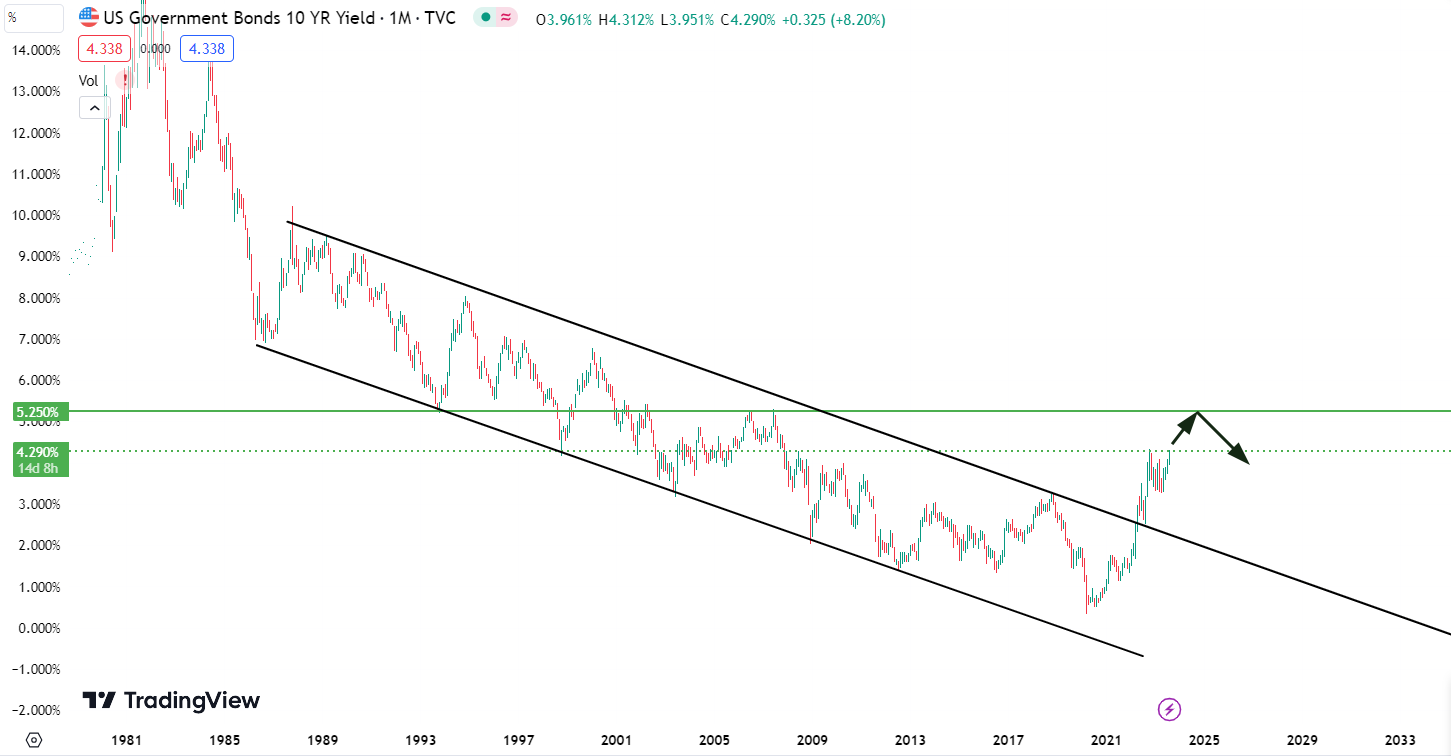
If we use technical analysts to the US10Y chart, we can notice that the only resistance which can stop the price is 5.25%, which is more than a 20% gain from current levels. As yields correlate directly with the US dollar index (DXY), we expect the greenback to show a strong performance this fall.
The head of the Minneapolis Fed confirms this assumption. Neil Kashkari says that inflation, although slowing down, is still too high, and the Fed may raise the rate again.
So there is no need to talk about the revision of the current monetary policy yet, which means that the problems listed above will not only not disappear in the coming months but may even worsen, pressuring the US stock market and boosting the greenback.
In summary, there are more and more reasons for continuing the decline.
S&P 500 technical analysis
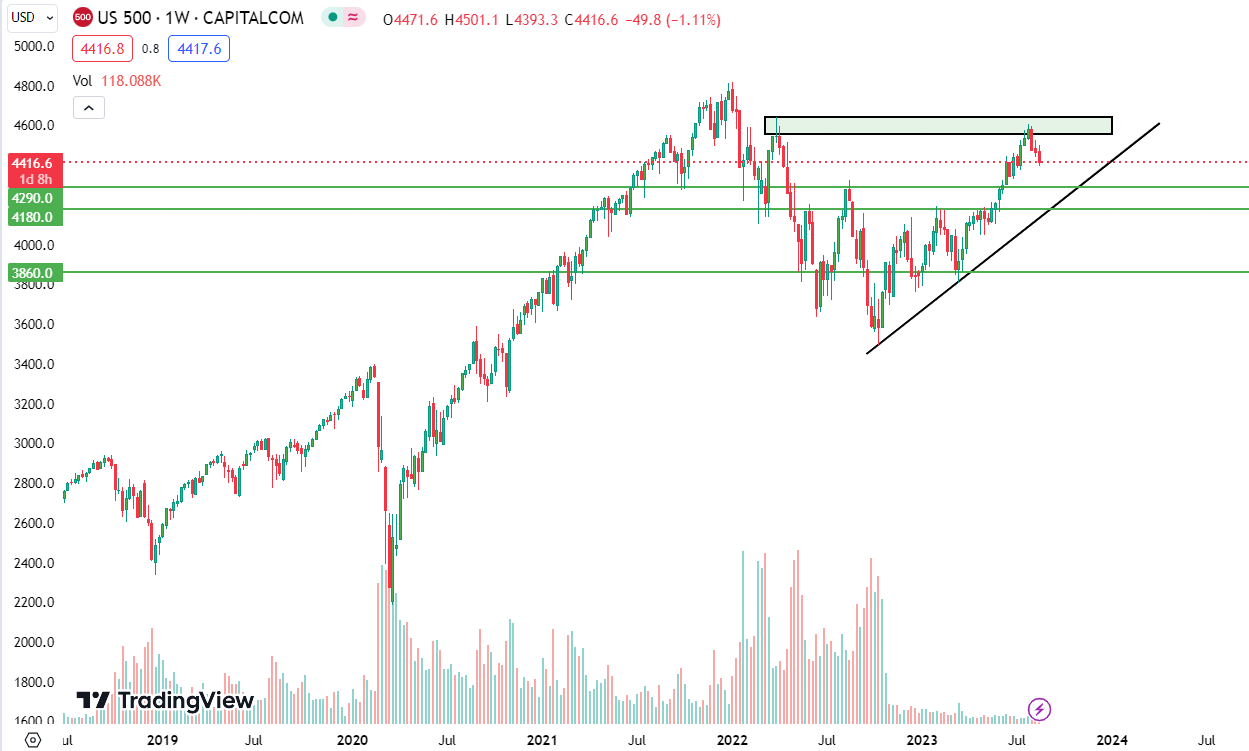
US500 (S&P500) index bounced off the 4600 resistance level. Currently, the price is moving toward the crosspoint of the 4180 - 4290 support range and trendline. If the price breaks below these supports, the index will massively drop to 3860.
US Dollar Index (DXY) outlook
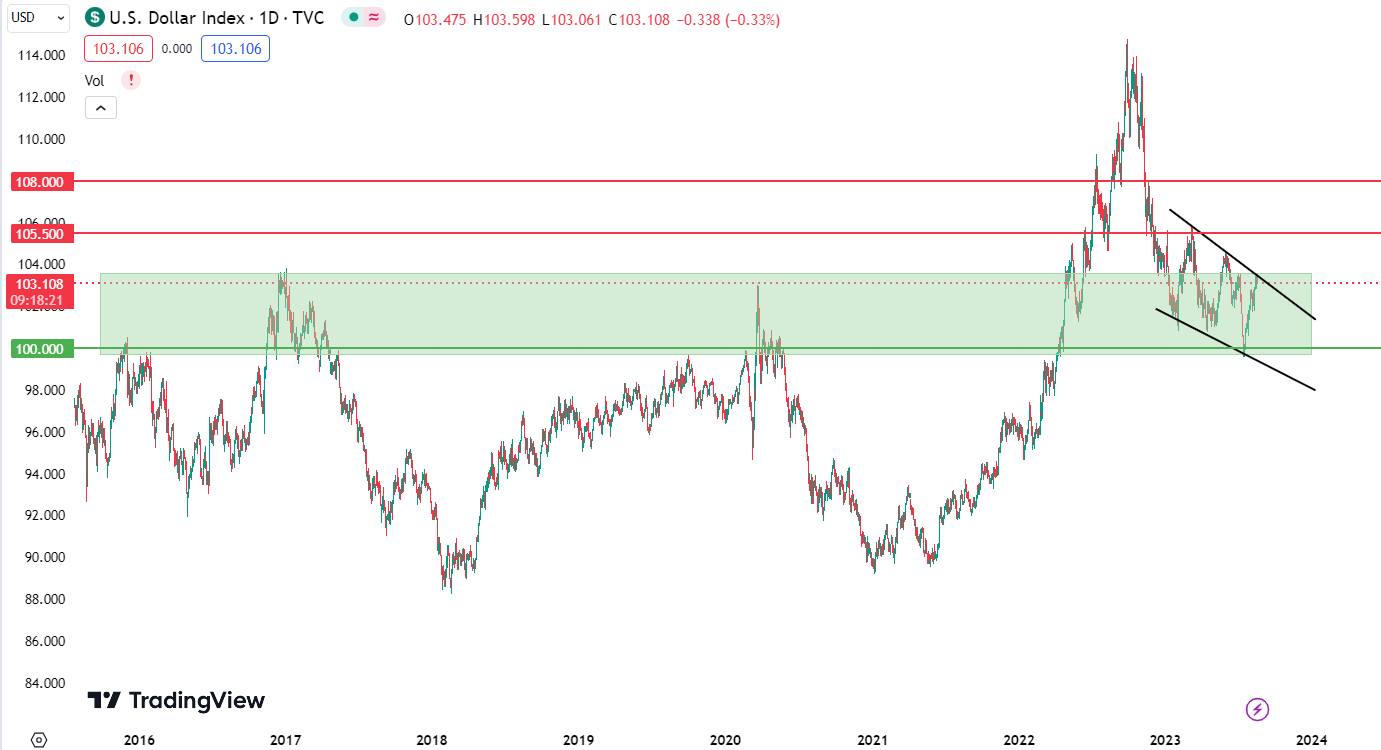
DXY reached the upper border of the bullish falling wedge. If the index rejects, it may turn toward 101.90 and even 100.80 support levels in the short term. However, in the long term, the index will follow the yields and break the upper wedge’s border. After the breakout, the index's major targets will be 105.50 and 108.00.
This article is sponsored content
Author

FBS Team
FBS
FBS team is a group of professional analysts focused on Forex, stock, and commodity markets. Each expert possesses a years-long experience in fundamental and technical analysis.

















