US Core PCE Preview: Only a sharp fall in the Fed's favorite gauge could dethrone King Dollar
- The Core PCE Price Index is set to decrease from 3.6% YoY in August.
- Fed officials watch this measure of inflation to determine policy.
- After the Fed's taper signal, only a sharp drop would stop the dollar.

After walking at the top of one mountain, is it time to begin descending? Mountaineers can look ahead and see the answers, but when it comes to inflation, "cresting" only reflects an opinion. The Core Personal Consumption Expenditure (Core PCE) is the Federal Reserve's preferred gauge of prices. Will it fall?
Core PCE hit 3.6% YoY in June and July but is set to drop in August. The main reason to assume the indicator would retreat is that the parallel Core Consumer Price Index (Core CPI) decelerated from a peak of 4.5% to 4% YoY in August. These separate publications use different methodologies, and CPI is published earlier.
As the chart below shows, Core PCE rarely topped 2% – the Fed's long-term target – before the pandemic struck.
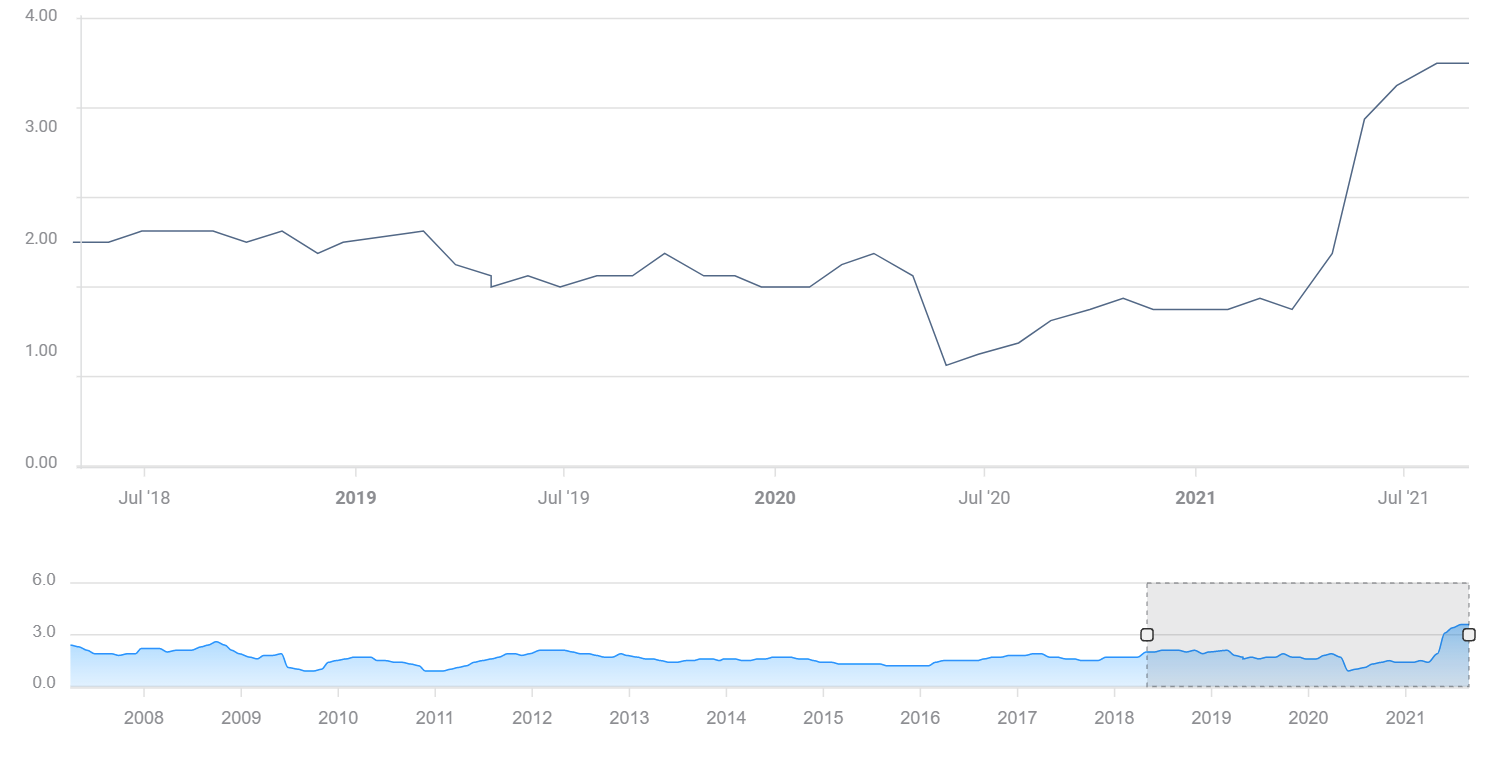
Back in 2020, the bank laid out a new policy targeting average inflation over several years rather than 2% every year. The implication is that prices would be allowed to temporarily surpass 2% in order to compensate for previously low inflation. Officials may have got more than they asked for.
Outcomes and reactions
Core CPI slipped from 4.3% to 4%, indicating a similar retreat in Core PCE – from 3.6% to a range of 3.2% to 3.4%. That would still leave underlying price pressures at high levels, supporting the case for a taper announcement in November. Fed Chair Jerome Powell signaled the bank would announce a reduction in bond-buying in the next meeting.
Even if markets shrug off such an "as expected" result, the dollar could still advance. Apart from tapering, investors are worried about the US debt ceiling and soaring energy prices that could derail the recovery in both Europe and China. The greenback benefits from safe-haven flows in times of trouble.
In case Core PCE surprises with a read of 3.5% or higher – thus hardly budging – the dollar could further advance. Investors would begin factoring in an accelerated taper timeline or perhaps an early rate hike. Powell and his colleagues went to great lengths to explain why reducing bond buys and raising rates are separate events, but markets remain concerned.
The only scenario in which the dollar would fall would be a more significant fall in Core PCE – 3.1% or lower. If price pressures substantially ease, some would speculate that the Fed could have a rethink on tapering in November, potentially pushing it back to December. It is essential to note that Core CPI surprised to the downside.
In that case, the greenback could decline across the board, as it would cause a considerable rethink.
Conclusion
The Fed's favorite inflation gauge is set to retreat, yet it would take a substantial plunge to turn the dollar down amid safe-haven flows.
Author

Yohay Elam
FXStreet
Yohay is in Forex since 2008 when he founded Forex Crunch, a blog crafted in his free time that turned into a fully-fledged currency website later sold to Finixio.