US Consumer Sentiment Preview: Every 0.1% deviation in inflation gauge to trigger wild dollar moves
- The University of Michigan is expected to edge up, but all eyes are on inflation expectations.
- Three days after the shocking CPI report, investors are closely watching every related figure.
- Any 0.1% deviation in long-term inflation expectations could trigger major dollar moves.

Early fireworks on Friday – that is what US Consumer Sentiment Index promises traders, and for several good reasons. It is hard to exaggerate the spotlight put on this release.
The University of Michigan's preliminary gauge for September is set to rise to 60, from 58.2 in the final read for August, but the main focus is on long-term inflation expectations, which stood at 2.9% in August.
Why is it so important? It is because Federal Reserve Chair Jerome Powell said so. Back in June, he dwelled upon the surprising increase in that month's measure to justify a last-minute shift in policy. The Fed hiked by 75 bps instead of the 50 bps initially telegraphed.
Will the bank opt for a jumbo 100 bps increase next week? At the time of writing, markets are pricing in a 30% chance of such a move happening – a relatively high chance that leaves room for volatility in both directions.
A quadruple-sized hike seemed off the cards until US inflation smashed estimates in a release earlier this week. The Core Consumer Price Index (Core CPI) MoM printed 0.6%, which was double the earlier expectations and obliterating investors that had bet on the narrative of peak inflation and peak Fed hawkishness.
The baseline scenario remains a third consecutive triple-sized 75 bps increase in borrowing costs, but uncertainty is much higher than beforehand. The Fed's silence – due to its self-imposed blackout period ahead of the decision – adds to tensions.
All in all, the timing of the publication, sandwiched between the shocking CPI report and the Fed decision, and ahead of the weekend, promises wild action.
Trading the data
As I have described above, the most important figure is long-term inflation expectations. These stood at 2.9% in August, at the bottom of the 2.9-3.1% range recorded in the past 12 months.
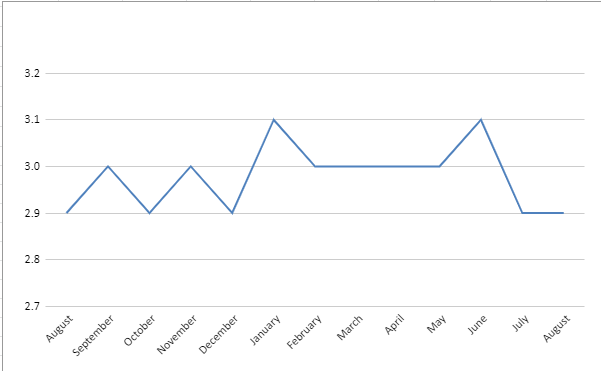
Here are three simple scenarios:
1) An increase: A 3% print or higher would signal faster price rises are becoming anchored, or entrenched in Americans' minds, and that it would take higher rates to crush them.
Odds of a 100 bps hike would rise and investors would wait for the Fed to leak it changed its intentions. The dollar would jump and stocks would tumble.
2) A drop: If the figure comes out at 2.8% or lower, it would indicate that the drop in gasoline prices and the Fed's hikes have impacted consumers' expectations and that future inflation could be lower. It would allow the Fed to slow down the pace of tightening.
The dollar would tumble on firming expectations for a 75 bps hike, and stocks would advance. More importantly, expectations for the peak rate would decline as well.
3) Unchanged: A 2.9% read would be neutral, but markets cannot be on the sidelines, and they will have to pick a side. In this case, the fact that inflation expectations have remained stable in September despite a jump in inflation during August would probably be seen as positive for stocks and would weigh on the dollar.
Final thoughts
If you are asking yourself: I understand the importance of the figure and the straightforwardness of the trade, but what does this analyst think the outcome will be? My answer is: I do not know. It is essential to remember that the preliminary estimates have been revised either up or down in the final publications. It is easier to bet on a scenarios of a change from last month's 2.9% than a repeat.
However, if pushed to a corner, I think the drop in gasoline prices has impacted consumers' minds more than the rise in everything else. That could trigger a 2.8% print and send the dollar down – at least temporarily.
Author

Yohay Elam
FXStreet
Yohay is in Forex since 2008 when he founded Forex Crunch, a blog crafted in his free time that turned into a fully-fledged currency website later sold to Finixio.