UK unemployment drops to February 1975 low

- The UK labor market remained strong in July with wage growth stabilizing and the unemployment rate dropping to 4.0%, the lowest since February 1975.
- The average weekly earnings increased by 2.7% y/y excluding bonuses, and by 2.4% including bonuses in June.
- The claimant count rose 6.5K after revised 9.0K in June.
The UK labor market remained strong in July with the unemployment rate dropping further to 4.0% in July, the lowest level since December 1974-February 1975 3-month average, the Office for National Statistics said on Tuesday. The total number of unemployed people in the UK reached 1.36 million that is 65K less than for January to March 2018 and 124K fewer than for a year earlier.
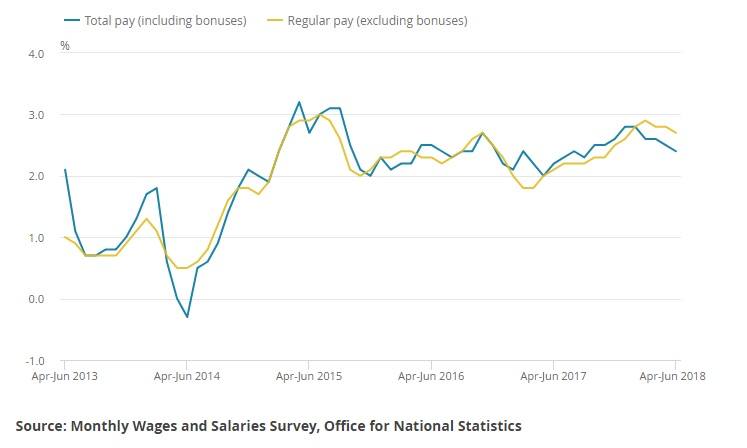
The closely watched wage growth stabilized in three months to June period with wages excluding bonuses rising 2.7% over the year and wages including bonuses decelerated to 2.4% y/y. The real, inflation-adjusted wages increased by 0.4% y/y excluding bonuses while rising 0.1% y/y including bonuses.
The average regular pay excluding bonuses for employees in the UK reached £488 per week before tax and other deductions from pay. This represents £14 increase per week from the same three-months average a year ago. The total average pay including bonuses was £518 per week before tax and other deductions from pay, up from £11 per week from a year ago.
The claimant count or the number of the people asking for the unemployment benefits rose 6.5K in July after revised 9.0K in June.
The UK labor market strength confirms the expectations of the policymakers at the Bank of England that justified the Bank rate hike at the beginning of August by the strength of the UK labor market that it expects to result in higher pay and further inflation pressures.
“Most indicators of pay growth had picked up over the past year and the labor market remained tight, suggesting that domestic cost pressures would continue to firm gradually,” the Bank of England wrote in August Inflation Report.
UK wage growth on April-June average basis
Author

Mario Blascak, PhD
Independent Analyst
Dr. Mário Blaščák worked in professional finance and banking for 15 years before moving to journalism. While working for Austrian and German banks, he specialized in covering markets and macroeconomics.