UK inflation is up, but there’s still no sign of second-round effects
Inflation is on course to hit 4% this winter. But there's still very little sign that the rise in energy prices is spilling into other parts of the inflation basket. The Bank of England is set to hike rates in November and probably February too. But assuming second-round effects stay contained, we think officials will return to rate cuts by the end of 2027.
Seven months on from the start of the Iran War, and there’s still no sign that the UK’s inflation shock is broadening out beyond energy. Second-round effects are so far non-existent.
Headline inflation was admittedly a tad above consensus at 3.5% in September, though in line with our forecast. What’s particularly eye-catching, though, is the month-on-month fall in food prices. This caps a remarkably benign period for food inflation. No doubt it will pick up into the winter, not least given the recent rise in natural gas prices. But all the models tell us we should be seeing some effect of the energy shock in food – and so far we aren’t.
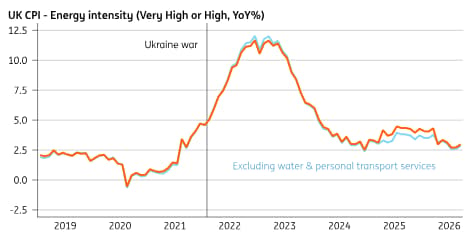
Partly as a result, our calculation of ‘energy intensive’ inflation has actually fallen this year and shows little-to-no sign of picking up. This remains the case even after stripping out last year's increases in water bills and car taxes, which would otherwise distort the picture. This gauge tracks inflation categories that are classed as having either ‘very high’ or ‘high’ energy intensity by the Office for National Statistics – and range from food to cafés.
'Energy intensive' inflation hasn't picked up this year
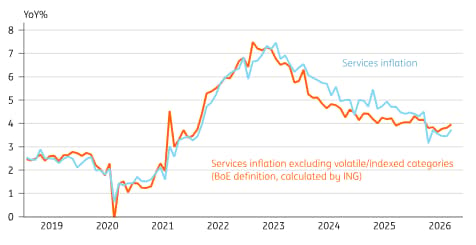
Services inflation also looks fairly well-behaved. The jump in the headline services CPI to 3.7% (from 3.4%) was exaggerated by airfares, which are notoriously volatile. Remove these jumpy categories, as well as those that are indexed, and the Bank of England’s preferred measure of ‘core services’ inflation is still relatively contained – albeit up slightly over the past few months. This echoes the calm picture of private-sector wage growth, which sits at 3.4% after accounting for compositional effects.
For the Bank of England, this poses a dilemma. While economic growth has been more resilient than feared, and the jobs market is stabilising, there’s very little evidence so far that the energy shock is spilling into other parts of the inflation basket. Nor is there much evidence that it will do so over the next few months.
'Core services' inflation has nudged slightly higher
So when the Bank likely hikes rates in early November, it will be entirely for risk management reasons. The truth is it’s still early days and officials will want another few months of data before concluding that the storm has passed. In the meantime, headline inflation is likely to briefly peak at 4% this winter – something officials have historically argued tends to raise the risks of second-round effects.
We’re less convinced. We expect hikes in both November and February, but by the spring, we think the Bank will be more confident in calling the ‘all clear’ on second-round effects.
If we’re right, then we think the Bank can start cutting rates again by next November and into 2028.
Author

James Smith
ING Economic and Financial Analysis
James is a Developed Market economist, with primary responsibility for coverage of the UK economy and the Bank of England. As part of the wider team in London, he also spends time looking at the US economy, the Fed, Brexit and Trump's policies.