Trump bypasses Europe to end Ukraine war – Euro and Gold fight for attention
-
US and Russian officials meet to discuss peace without Ukraine.
-
UK and EU shut out of talks, but markets see hope for Europe.
-
Is Trump cosying up to Putin, hanging NATO out to dry?
-
Even with a deal, gold is likely to stay in demand.


First talks to end Ukraine war
Talks aimed at resolving the war between Russia and Ukraine - the first since the conflict started three years ago – took place in Saudi Arabia this week. The long-sought push for peace should have brought widespread relief, except it comes with a caveat. The talks in Riyadh on Tuesday were not between Russia and Ukraine, as one would have expected, but between Russia and the United States.
US President Donald Trump, in his desire to reach a quick deal to end the war, has hijacked the negotiations, engaging directly with Russia’s President Putin and sidelining Ukraine and America’s European allies in the process. This is significant in two ways – first it’s symbolic that Russia has been brought in from the cold, ending the country’s isolation from the global stage, and second, it undermines the NATO alliance, as Trump seems ready for a thaw in relations with the West’s arch-foe at the expense of Washington’s traditional allies.
Will US-Russia talks bear fruit?
The question now is whether the Trump administration’s gamble will pay off. Trump’s businessman leadership style suggests he wants instant results, hence, why he’s reached out to Putin even before consulting with Ukraine’s President Zelensky. However, there is no guarantee that Ukraine will agree to any basis of a deal that’s been struck without its involvement.
US Secretary of State Marco Rubio argued that these talks were merely a “first step”, intended to determine how serious the Russians are about peace, and that Europe and Ukraine would become part of any “real negotiations”. But it appears that both sides were pleased with the initial discussions, as they’ve agreed to explore closer relations as well as a negotiated end to the conflict.
Trump opens US rift with Europe
Angry about being excluded from the talks, European countries, including the United Kingdom, held a summit in Paris on Monday to discuss the security threat posed to Ukraine as well as the wider continent from a possible Trump-Putin pact. Whilst the leaders agreed to meet again on Wednesday, expanding the number of countries participating to Canada and smaller European nations, Monday’s talks appear to have exposed divisions rather than come up with a unified response to Trump’s dangerous escapades with Russia.
What is clear, though, is that there is growing recognition among Europeans for the need to boost defence spending, but less so when it comes to the commitment for sending ground troops to Ukraine as part of any future peacekeeping force.
A negotiating tactic?
The latter is probably one reason why Trump is keen to obtain the upper hand in the negotiations. It’s unlikely that America will contribute to any peacekeeping troops, putting the responsibility firmly on Europe. Trump reportedly also wants Europeans to buy more weapons from the United States and it can’t be ruled out that he will not use tariffs to pressure the European Union to get his way. Moreover, Trump wants access to Ukraine’s very large reserves of rare earth minerals.
All this implies that Trump wants any peace deal to be first and foremost, a win-win situation for the US, even if it’s not the best outcome for Ukraine or Europe. It’s quite likely therefore that, despite the outrage in Kyiv and other European capitals, US-led negotiations with Russia will be able to bring an end to the current fighting in Ukraine but not necessarily guarantee the country’s security in the long term.
Peace talks lift the Euro and European stocks
Yet, investors seem to be seeing light at the end of the tunnel, pushing the euro higher on the first real prospect of a peace deal since the start of the war. European stocks have also rallied somewhat, with defense stocks in particular benefiting from the shift towards higher military spending.
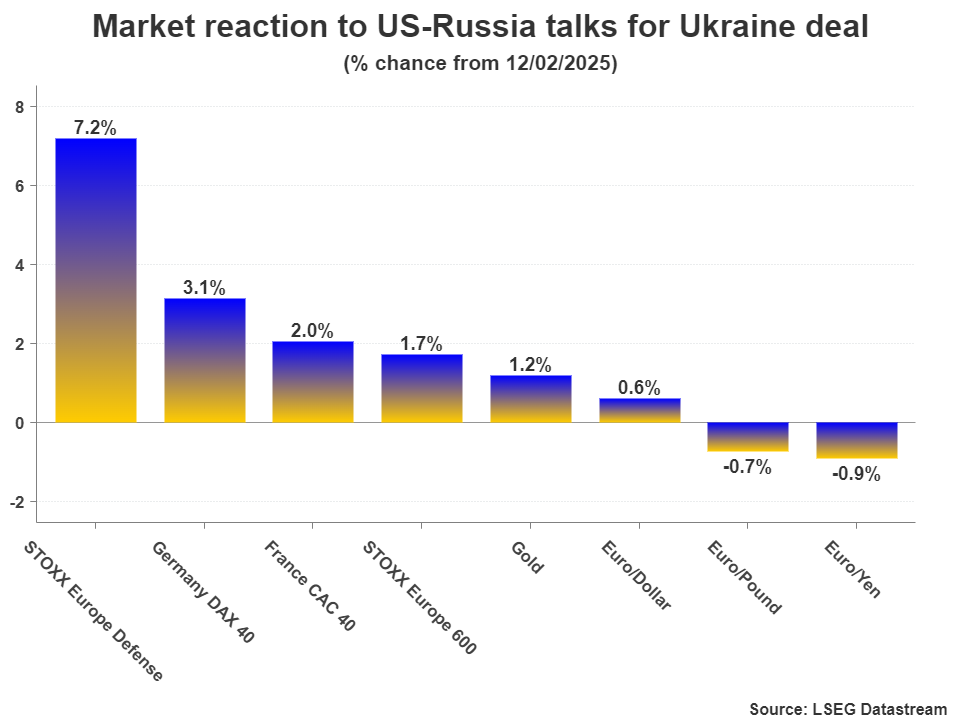
More broadly, a peace agreement would bring about lower energy prices via a return of Russian oil and gas into European markets, while ending the uncertainties associated with war. The German economy is likely to see the biggest boost from any viable deal as its manufacturing sector has been tarnished by the loss of cheap Russian gas.
A stronger German economy equals a stronger single currency, hence, further progress in the US-Russia talks could spur more gains for the euro, even if at this stage, European and Ukrainian leaders insist that they will not sign up for the concessions being demanded by Russia and which US officials appear to have no problem with.
NATO red lines
Russia’s biggest demand is that Ukraine should not become a NATO member. This may be a hard concession to swallow but Moscow has gone a step further and is insisting that any peacekeeping force should not include NATO troops. This is probably something that the Trump administration would not agree to. Nevertheless, the bigger question mark is what kind of security guarantees is the US willing to provide?
Any deal forged hastily that does not address the security of Europe’s borders with Russia is likely to give investors another reason to flock to gold. The safe-haven metal is already basking in all the geopolitical uncertainty generated by Trump’s tariff policies and his wild plan for the Middle East.
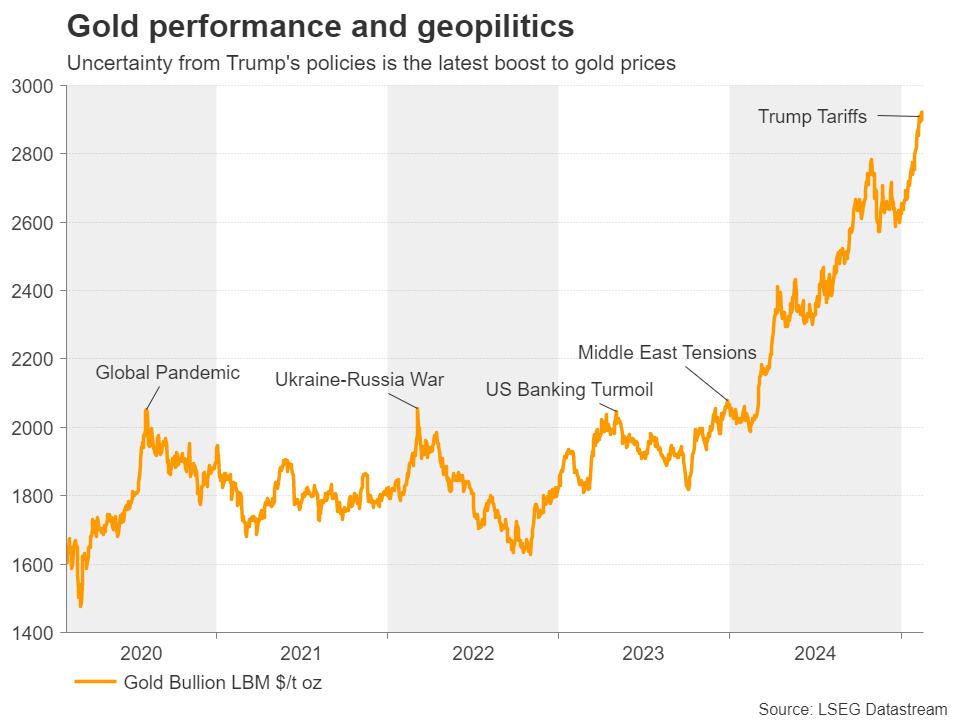
Gold tracks long-term peace hopes
Thus, while the euro might benefit from the medium-term prospect of peace on the continent and the lifting of at least some of the sanctions against Russia, a simultaneous rally in gold would reflect unease among some investors about Trump’s abandonment of America’s NATO friends in favour of a more isolationist stance, but one that includes better ties with Russia.
For now, although markets will be watching the developments very carefully, any moves are likely to be limited until the gap between Ukraine/EU and Russia/US has narrowed.
Author
Mr Boyadjian graduated from the London School of Economics in 1999 with a BSc in Business Mathematics and Statistics. Following graduation, he joined PricewaterhouseCoopers in the Business Recoveries team, where he was responsibl