The quarter ended bright green, but the market changed horses several times
- The rally remains intact, but it has become a rotation market. Index strength is masking a much more selective battle beneath the surface.
- AI infrastructure remains the cleaner winner, while hyperscaler capex is becoming the key vulnerability in the broader technology complex.
- Oil has priced out much of the conflict risk despite unresolved Hormuz and supply risks, but depleted inventories leave little room for another geopolitical surprise.
The quarter ended bright green
Lower oil may support demand more than it lowers inflation, which keeps the Fed, front-end yields and the $ firmly in the driver’s seat.
The S&P 500 has just delivered its best quarter in six years, the Nasdaq has found its stride again, and semiconductors have posted their strongest quarter on record. Roughly $8 trillion has been added to the value of the S&P in three months, which looks like a clean risk-on victory when viewed from 30,000 feet. In reality, it felt more like trading through a washing machine.
The path here ran through an Iran war, an oil spike, a violent reversal in crude, a sharp repricing of Fed expectations, a stronger $, a heavy hit to gold and another ugly quarter for Bitcoin. Long-end yields have barely moved, while the front end has repriced from a market expecting a pile of cuts to one now increasingly open to the possibility that the next meaningful move could be higher. Yet stocks have kept climbing through it all.
And despite meaningful equity-selling expectations from global pension funds into month- and quarter-end rebalancing, markets did not flinch. In fact, none of the usual rebalancing pressure appeared to hit, with equities pushing higher straight through the last few days.
Yet the most important point is that this was not a one-trick AI rally. Leadership shifted several times through the first half, with small caps, transports, emerging markets and cyclicals all getting a turn at the wheel as the rally broadened beyond the familiar mega-cap names. But once the oil shock eased and the ceasefire narrative took hold, technology took back the reins. The last leg of the quarter once again belonged to semiconductors, even as the hyperscalers themselves came under greater scrutiny.
That distinction matters because the AI trade is starting to split in two.
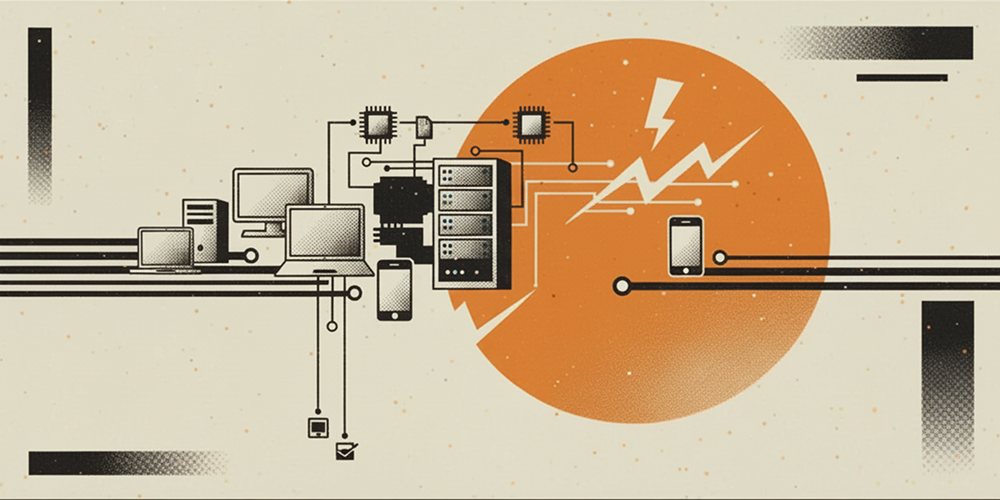
The market still likes the companies selling the picks and shovels: GPUs, memory, power equipment, data-centre capacity and grid infrastructure. Those businesses are sitting at the bottleneck, and bottlenecks tend to get paid when the whole street is trying to build the same factory at the same time. The hyperscalers, by contrast, are writing the cheques, taking on the capex burden and beginning to face more serious questions about free cash flow, debt issuance and the eventual returns on all this investment.
For the moment, that spending remains almost price-insensitive. Nobody wants to be the executive who decided to save money just before a genuine platform shift took off. But markets are starting to reward the firms cashing the cheques more than those writing them, and that is a message management teams eventually tend to hear. The AI trade is not broken, but the market is moving beyond the simple assumption that every additional dollar of capex is automatically bullish for every company involved.
Oil tells a similar story about the market’s willingness to assume the best. Crude surged during the conflict, then gave back much of the war premium as traders treated a temporary ceasefire as something closer to a permanent settlement. Dated Brent has unwound much of the earlier shock and the curve has slipped back into contango, leaving very little geopolitical insurance priced into a market where Hormuz remains a live risk and inventory cushions are not exactly generous.
The larger macro problem sits in rates. Lower oil prices used to fit neatly into the old playbook: lower inflation, lower yields and a friendlier Fed. This time, lower oil prices may simply hand back more spending power to a consumer who has already proved more resilient than expected. If jobs remain firm and spending continues to hold up, cheaper energy could support demand just as the market is trying to convince itself that inflation is safely retreating.
That is why the rate shock tail remains more important than the fading energy shock. The front end of the Treasury curve has already priced in the message, while the long end has been steadier, resulting in a sharp flattening of the curve. At the same time, the funding demands of the AI boom are arriving alongside still-heavy government borrowing needs, leaving more borrowers competing for the same pool of capital. When everybody needs money at once, money rarely gets cheaper.
The $ has understood that better than most. The “Sell America” trade has come badly unstuck as the US economy remains more resilient than expected, front-end yields have reset higher, and investors are beginning to question where all the capital for the AI build-out will ultimately come from. Gold has been caught on the wrong side of that stronger $ and firmer real-rate backdrop, while Bitcoin has once again shown that it is not immune when markets rediscover the cost of money.
Heading into July, the broad message is that the bull market remains alive, but the easy version of the trade is becoming harder. The index can keep going higher, particularly as July 1 brings the usual reset in retirement contributions, target-date fund rebalancing, fresh mutual fund flows, and renewed passive allocations, provided that seasonal support and strong earnings expectations hold up. But the internals are more complicated than the headline numbers suggest. Semiconductors are hot, hyperscaler spending is under scrutiny, oil is priced for an optimistic geopolitical outcome, and the Fed is no longer the market’s friendly bartender and remains the most obvious market Achilles’ heel.
Author

Stephen Innes
SPI Asset Management
With more than 25 years of experience, Stephen has a deep-seated knowledge of G10 and Asian currency markets as well as precious metal and oil markets.