The FOMC: Rates left on hold; dollar falls as Warsh fails to vote for hike
The Fed kept interest rates on hold today, defying a 30% chance in the Fed Funds Futures market that rates would rise. The Committee voted 9-3 to keep rates on hold, with governors Kashkari, Hammack and Logan all voting to hike rates due to concerns about inflation.
The immediate market reaction has been a sharp drop in the USD on a broad basis. The dollar index is below 101.00, and is down 0.5% on the day, even though chairman Warsh sounded tough on inflation and maintains the Fed’s commitment to the 2% inflation target.
So, why is the forex market ignoring Warsh’s hawkish messaging? Firstly, he did not vote for a rate hike. While he has noted that inflation is above target, and this is unacceptable, the Fed’s statement was left unchanged. This suggests that the Fed does not see a material change in the outlook between June and July. If the new chair along with the majority of the FOMC did not think that the economic outlook warranted a rate hike then it will take a serious deterioration in the inflation outlook before the committee raises rates, in our view.
For now, it looks like the FOMC is on hold for the foreseeable future, which is driving the reaction in asset prices Tonight’s decision has also weighed on Treasury yields, the 2-year yield retreated from the highs of the day above 4.34%, before falling to 4.24%. This has eroded support for the dollar and has triggered a mini recovery in the Nasdaq, which fell into correction territory earlier this week.
While the Fed was careful not to give the market any forward guidance, there were some useful nuggets included in the statement and in chairman Warsh’s press conference. These include:
· The Federal Reserve is watching the market reaction to monetary policy. Warsh said that in the last 2 months, US Treasury yields are higher across the curve and the increase in market-based rates between the June and July meetings have risen by a significant amount. Warsh welcomed this and said that it was the market reacting to real economic data rather than Federal Reserve forward guidance. However, it also suggests that the market is doing the hard work for the Federal Reserve and tightening financial conditions without the need for a Fed rate hike. If the chair of the Fed is pointing this out, then this could mark a high point for US Treasury yields, which may only move higher if the inflation picture dramatically worsens.
· Warsh also pointed out during his press conference that the fact rates were not increased at this meeting does not signal that the Fed is on pause. This has not halted the slide in the dollar, although the dollar index has found support around 100.80.
· Warsh also cited the high rate of business investment that is propping up US economic growth. Business investment has been driven by the surge in AI capex spending in the US economy. This has been growing at a 20% rate for the last four quarters. This poses two threats to the Fed: 1, if business investment slows or makes a 180-degree turn, then the US economy is at risk, and 2, Warsh has spoken in the past about how AI capabilities should have a deflationary impact on the US economy. Thus, the direction of future policy decisions could depend on AI investment levels in the US economy.
· Although there are ‘family fights’ going on at the FOMC, Warsh was clear that the Committee is united and determined in bringing the US inflation rate back to 2%.
· Looking ahead, the only giveaway from chairman Warsh was that he will report on the five task forces that he has created when he gives his keynote speech at the Jackson Hole central bankers conference next month. This has traditionally been a time when Fed governors lay out their vision for monetary policy, but chairman Warsh pushed back on this and said that his Jackson Hole speech is a ‘blank piece of paper’, for now.
As mentioned, the biggest market reaction has been in the US dollar and short-term Treasury yields, much to the chagrin of the new chair who would rather traders reacted to economic data than to his press conferences. The Nasdaq is staging a recovery, however, the longer-term direction for the Nasdaq will be dependent on tonight’s big tech earnings from Microsoft, Meta and Amazon. Added to this, the selloff in US chip stocks has continued, and the Philadelphia Semiconductor Index is still down 1.6% on Wednesday after the FOMC press conference.
Chart 1: The USD index falls after the Fed rate decision
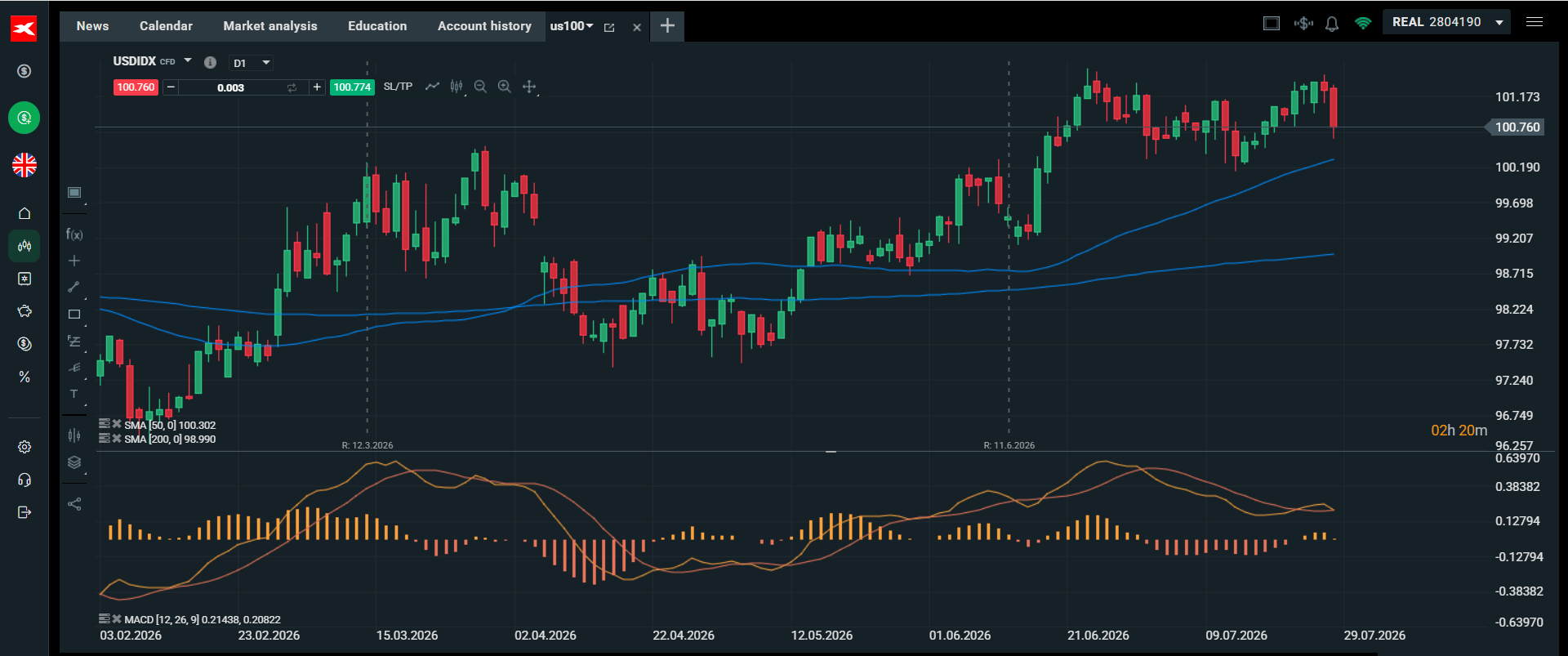
Source: XTB
Author

Kathleen Brooks
XTB UK
Kathleen has nearly 15 years’ experience working with some of the leading retail trading and investment companies in the City of London.