The Bank of England: To hike, or not to hike?
The Bank of England is expected to hold rates steady when it meets later today. The base rate is expected to remain at 3.75%, and the BOE is expected to be the only major central bank not to hike interest rates this month.
So, why is the BoE likely to keep rates on hold, when other central banks are hiking?
Firstly, UK yields are higher to start with, the ECB hiked last week and the main rate in the currency bloc is still only 2.5%. Secondly, the cost of money has surged ahead of this meeting, 2-year Gilt yields are higher by 24 bps, and the 10-year yield is higher by 7bps in the past month.
Mortgage rates are also rising, there has been a new wave of mortgage rate increases. Santander, one of the UK’s big five mortgage providers, has pulled the last of its sub 5% mortgage deals, while Barclays’ 2-year fixed deal will rise to 4.75% from 4.55%.
Why a hike could be futile
You could argue that if the Bank of England wants to do a one-off peremptory hike, then they may as well do it because the market has already priced higher rates. However, the big problem for the Bank of England is that a rate hike won’t stem inflation or inflation expectations, which are caused by an energy price spike. The Bank cannot control global oil supplies, so a hike could be futile.
Remaining on hold gets harder to justify
We expect the Committee to vote 6-3 to keep rates unchanged, however, the MPC’s dovish majority still faces a key test from surging oil and retail fuel prices and an expected rise in food costs. The BOE’s only job is to control inflation, and inflation is rising rapidly. The August CPI report was in line with expectations at 3.1%, but inflation is expected to rise further and could peak above 4% later this year.
Hawkish hold expected
While we had a dovish hike from the Federal Reserve last night, we could get a hawkish hold from the BOE today. We expect Andrew Bailey will shift his rhetoric in today’s press conference. After the July meeting, the governor tried to steer markets away from the prospect of a near term rate hike. We do not think that he can do this today.
Interest rate futures markets are pricing in 4 rate hikes by the end of next year, with a 25bp hike in November looking increasingly likely. Bailey told UK MPs last week that the threats to inflation are stacking up. For example, fuel prices are likely to remain elevated for as long as supply is constrained in the Middle East. He also said that rising energy costs and drought conditions will put upward pressure on food prices. This could be viewed as Bailey laying the groundwork for a future hike and we expect him to repeat a similar sentiment later today.
A tough call for the BoE
The problem for Bailey and co. Is that they have an inflation mandate, yet there are signs that the consumer is struggling. The labour market is weak, payrolled employment is falling, wage growth is negative in real terms and job vacancies are also at a multi-year low. July growth was stronger than expected, however, this was driven by AI Capex spend, and construction and manufacturing contracted last month.
The market view
In our view, the MPC will signal that a rate hike is coming, but they will tread cautiously. Four rate hikes in the next 12 months sounds too steep for us, and Bailey could push back on this aggressive pricing. A hawkish hold, while trying to temper expectations for a prolonged hiking cycle could cause volatility for the pound later today.
The bond market is also in focus ahead of this meeting. Although bond yields stabilised on Wednesday after the August CPI report and Andy Burnham refuting the claim that he is a socialist prime minister, yields are still elevated.
The bond market is also looking out for the BOE’s balance sheet reduction plan for the year ahead. The BOE is expected to reduce the pace it is unwinding its portfolio of Gilts, due to the volatility in the bond market in recent months. The pace could be slowed to £50bn annually from £70bn previously. While this won’t dramatically decrease bond yields, it could reduce the upward pressure, although it’s worth noting that the BOE is expected to stick with its £20bn of active Gilt sales in the coming year.
Why a rate hike is more likely after the Budget
Overall, if there is no ceasefire or peace deal in the Middle East in the coming weeks, then we see a November rate hike from the BOE as extremely likely. By then, the budget will also be out of the way. Andy Burnham has called the upcoming budget ‘challenging’ and said that it will include difficult decisions on tax and spending. Fiscal tightening at the same time as monetary policy tightening could be a double blow for the UK economy that some members of the MPC may want to avoid.
The BoE buys itself time
This meeting is a good way for the BOE to buy itself some time before it makes the crucial decision on whether to tighten monetary policy and hike rates. In our view, a ceasefire or a peace deal between the US and Iran is the only avenue to avoid higher rates in the UK in the coming months.
The GBP view
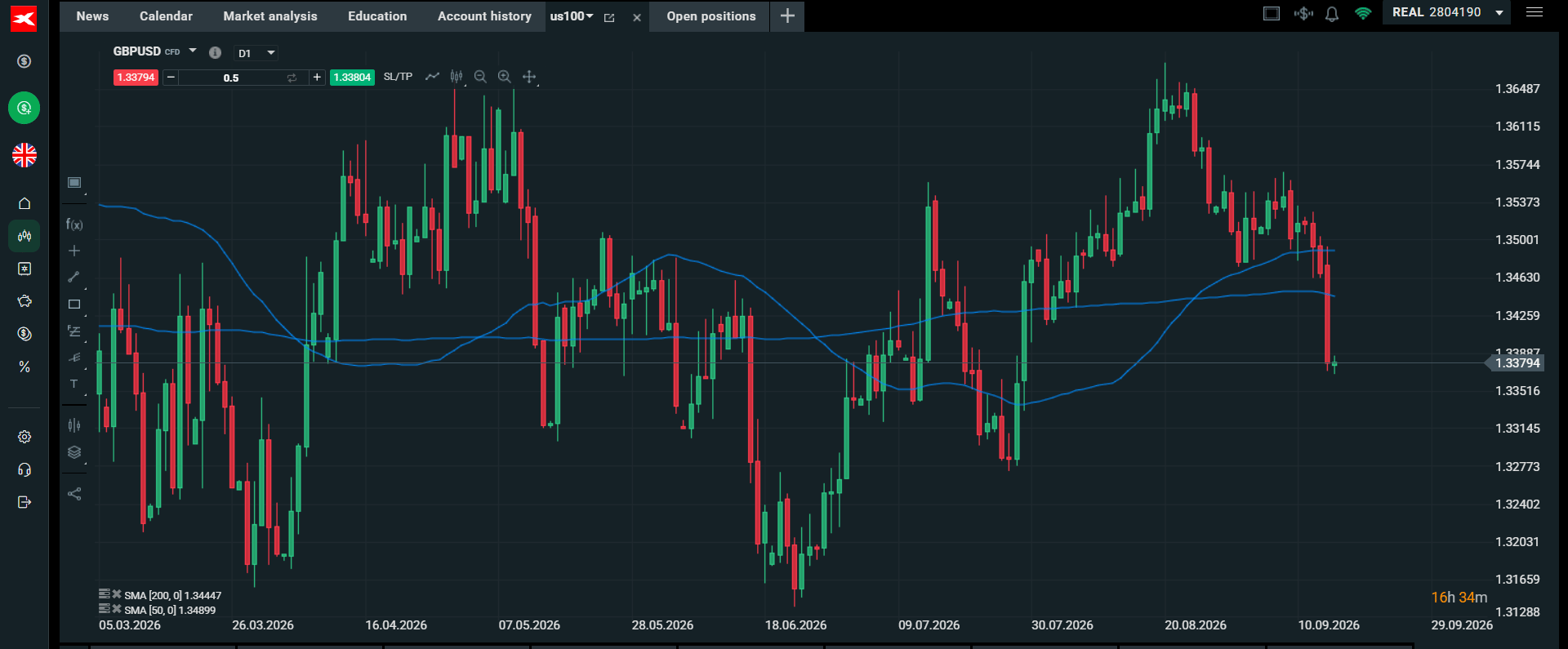
The pound has fallen into this meeting, as you can see below. It has dropped below the 200-day and the 50-day sma, which suggests that the bias is to the downside. The BOE will have to be extremely bullish to boost the pound, as the dollar makes a comeback. GBP/USD lost the $1.34 handle in the aftermath of the Fed meeting, but has stabilised around $1.3380. The next key support level to watch is 1.3360- a key fibonacci retracement level, and then the prior cycle low at $1.3140, from June.
Chart 1: GBP/USD
Author

Kathleen Brooks
XTB UK
Kathleen has nearly 15 years’ experience working with some of the leading retail trading and investment companies in the City of London.