Strength for the Pound as the political situation calms down for now
Lower inflation and a mixed job report this week brought some volatility for the pound but the worst political turmoil seems priced out.
The pound has recovered against most other major currencies since around 18 May as the path for Andy Burnham to take over smoothly as Prime Minister seems clearer while the government continues to function. Traders have also noticed 14 May’s significantly stronger than expected GDP. This article summarises recent news and data affecting the pound then looks briefly at the charts of GBP/USD and GBP/JPY.
On the whole, the British job report for March-April released on 19 May was somewhat negative. Average earnings were better than expected but claimant count change continued to rise:
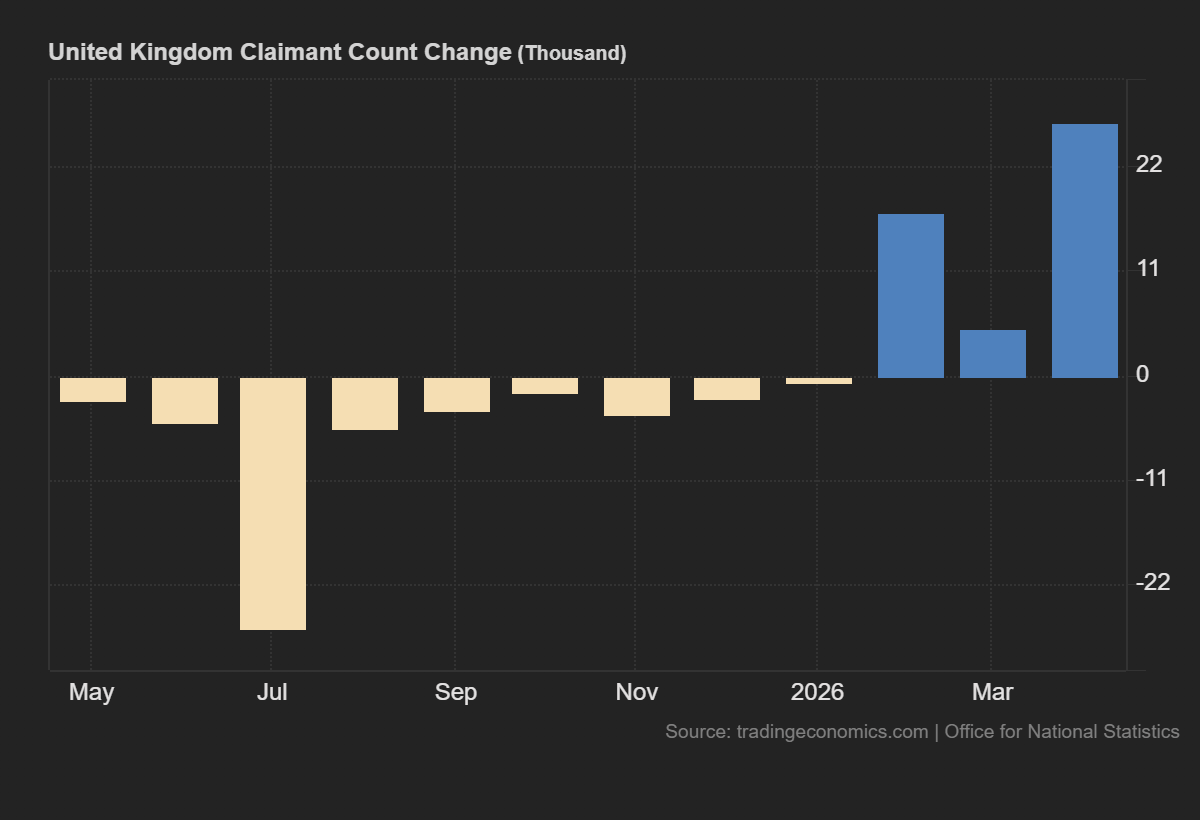
For now, a weakening job market in Britain seems to be a trend, fuelling worries about stagflation and making it harder for the Bank of England (BoE) to hike rates. However, March’s figure was revised sharply downward to only 4,900 against about 26,800 initially reported, so it’d be possible to see the latest figure also revised next month.
Unemployment in March unexpectedly rose to 5% although last month’s claimant count change was slightly lower than the consensus. However, analysis in the media about stagflation might be overblown, at least for now, since 20 May’s British inflation showed a larger drop than predicted:
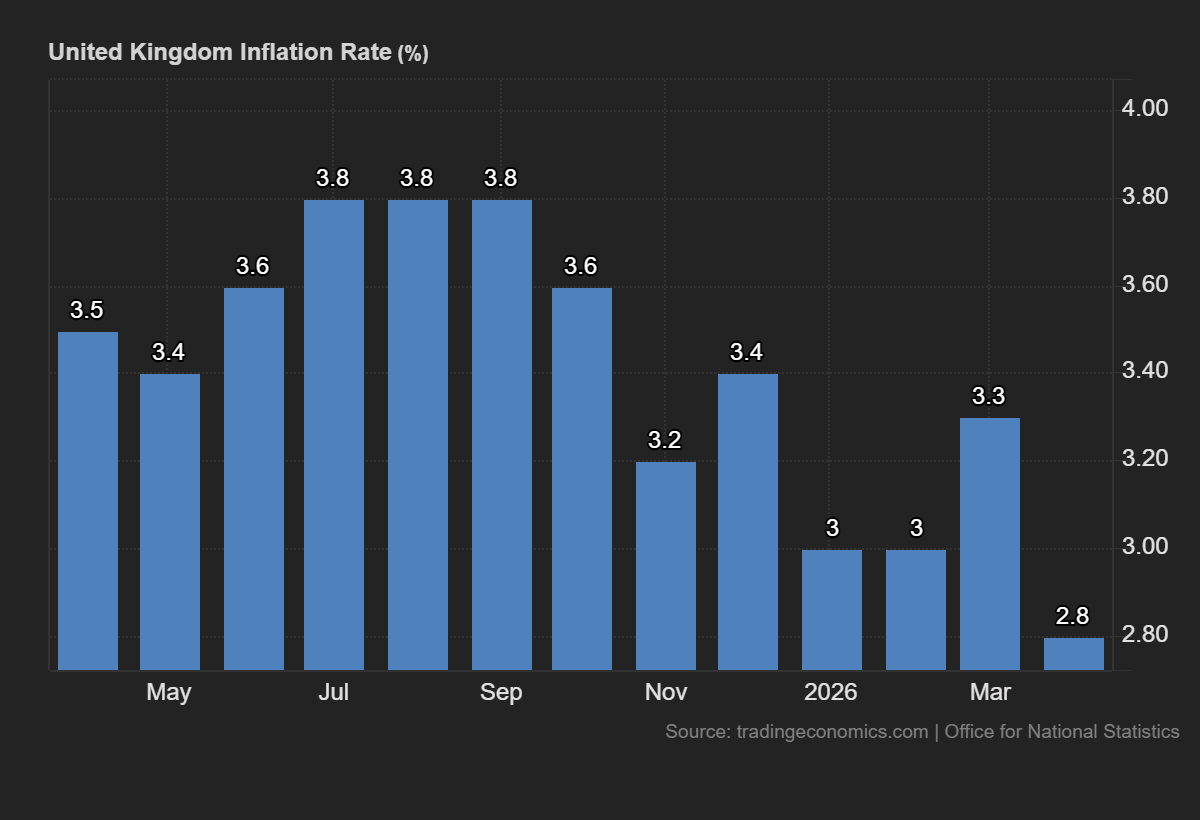
The consensus for annual headline inflation in April had been 3%, so a larger decline in the rate to 2.8% seems broadly positive for the economic outlook: there’s less pressure on the BoE to hike rates while growth in the first quarter was significantly better than expected. The introduction of a cap on prices of energy on 1 April certainly plays a significant role in the latest data on inflation.
Compared to some other central banks, the BoE seems to be less between a rock and a hard place since the sum of recent data doesn’t suggest that strong action is needed urgently. Inflation is still above the target and unlikely to drop sustainably much lower given the effect of the Gulf conflict on the price of fuel, but participants are now expecting only two hikes by the BoE before the end of 2026. That would take the rate back to 4.25% as it was around this time last year. A hike next month seems very unlikely at the time of writing; only one member of the Monetary Policy Committee (MPC) favoured a hike on 30 April.
The Labour MP for Makerfield near Wigan stood down to allow Andy Burnham, the Mayor of Greater Manchester, to be reelected as a Member of Parliament and so challenge Keir Starmer for leadership of the Labour party. This, essentially a primary for leadership in one constituency, is a very unusual situation in British politics, but markets seem to be much calmer since around 18 May. Yields from decade guilts retreated sharply back below 5% on 19 and 20 May.
For now, there is no other serious challenger for Prime Minister with large support among Labour’s members; both Angela Rayner and Wes Streeting are on single or low double digits. Even if Mr Burnham becomes an MP again, Keir Starmer might be able to mobilise support and remain PM. However, there’s a very real possibility that Reform might win Makerfield even though markets don’t seem to be taking this seriously yet. It’s likely that volatility for the pound will increase again around the byelection on 18 June.
Cable bounces from $1.33
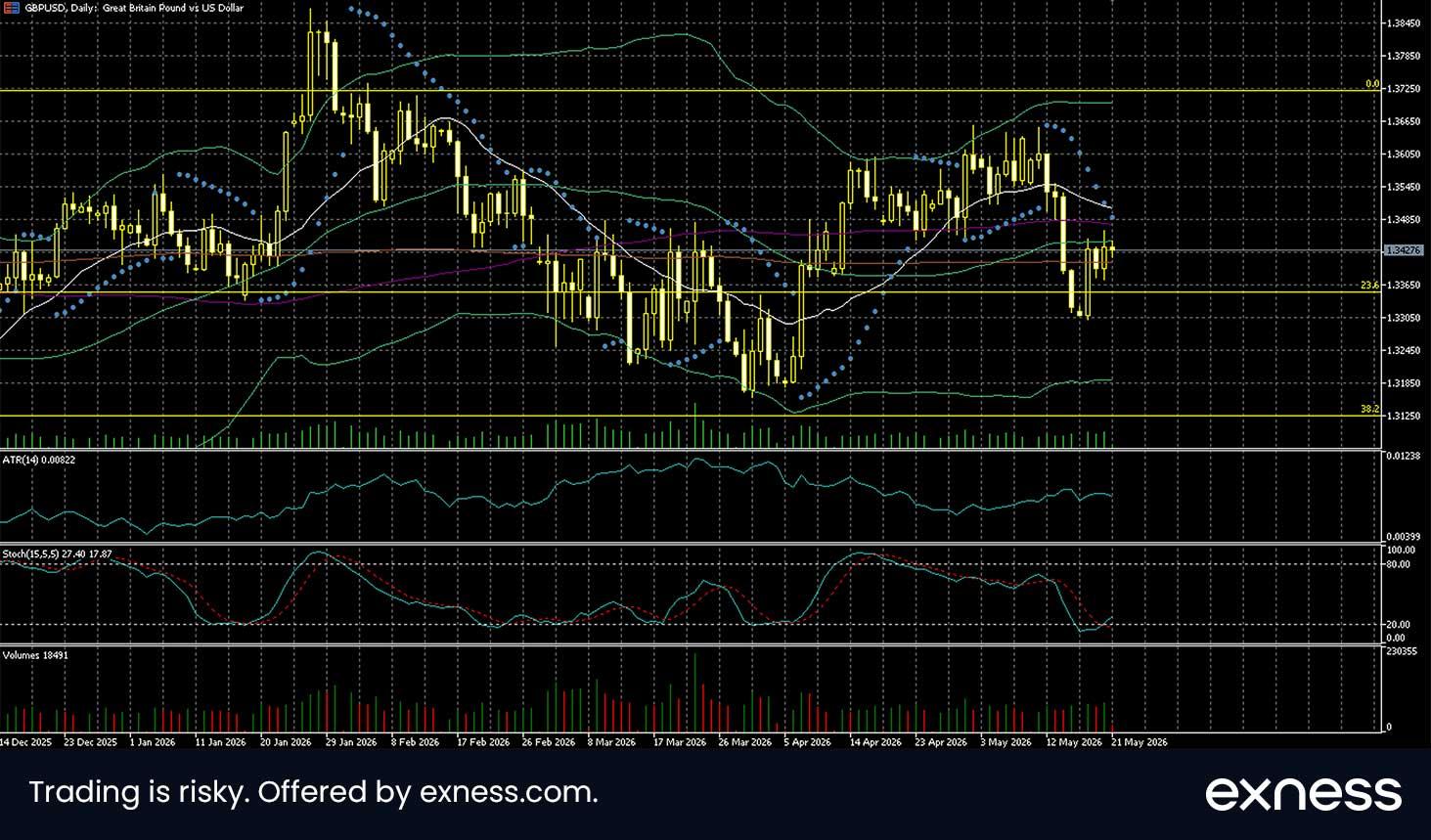
As the government soldiered on, yields from bonds declined overall and the most serious political turmoil around the upcoming byelection seemed to be priced out, the cable recovered from a possible psychological area against the backdrop of a generally strong dollar. There’s some hope of a resolution to the Gulf conflict and at least there hasn’t been any major reescalation in recent days while monetary policy doesn’t clearly favour either currency here. This might change in the next few months though because at the time of writing the BoE is very likely to hike before the Fed.
The price held around the 50 SMA from Bands within the value area between the 100 and 200 SMAs for most of Thursday, 21 June. An immediate continuation upward seems unfavourable given relatively low volume and the number of dynamic areas nearby while the area around $1.343 was a confirmed resistance in March. $1.364 might be a longer-term resistance if there’s a break above the 100 SMA.
$1.33 remains in view as a potential support being near the 23.6% weekly Fibonacci retracement. The stochastic has completed an upward crossover in oversold but remains close to the trigger zone for selling saturation. Sideways movement for cable ahead of American GDP on 28 May is a possible scenario unless there are significant developments in US-Iranian negotiations or British politics.
Pound-Yen recovers from monthly lows
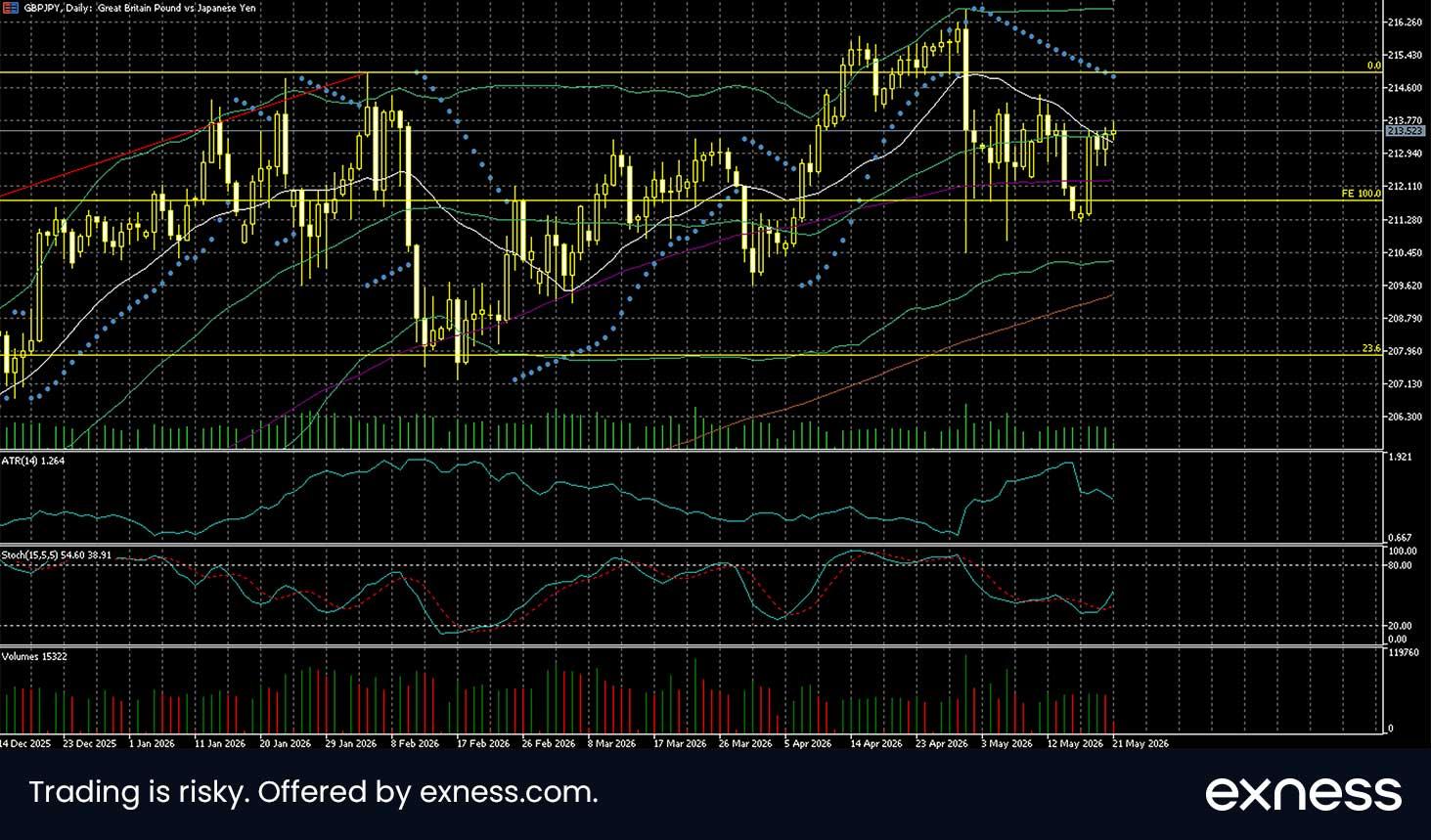
Similar to cable, pound-yen bounced on 18 May as the political situation in Britain stabilised and appeared mostly to discount subsequent negative British data, primarily 19 May’s job report. Participants seem to be taking moderately seriously Donald Trump’s recent remarks about negotiations for a peace with Iran being in the ‘final stages’. The yen might continue to face challenges against most major currencies as central banks’ diverging policies continue.
¥214 is a possible resistance which might cap the current round of gains, but if it’s broken the price could retest 18-year highs around ¥216. In the context, the death cross of the 20 and 50 SMAs can probably be ignored, but this depends on closing prices in the next few days. There’s no obvious signal from volume and the stochastic is close to neutral.
Japanese inflation late GMT on 21 May is unlikely to drive a strong movement on the chart unless the release is particularly surprising. Assuming there’s no major, unexpected news in the next few days, the price might consolidate below ¥114 before attempting to push higher again.
Author

Michael Stark
Exness
Michael has been investing since 2007 and trading CFDs since 2013. He favors considering both fundamental and technical analysis where possible, with a focus on swing and position trading.