SpaceX makes its debut on the Nasdaq 100, as the Pound shines
- GBP benefits from lower oil prices, and reduced political risk premium.
- Strait of Hormuz attacks could put floor in oil price.
- Kospi sell off highlights continued concerns with AI trade.
- SK Hynix listing on the Nasdaq, another test for the AI trade.
- SpaceX debuts on the Nasdaq 100, can it bolster enthusiasm for the stock?
- Europe is everyone’s favourite anti-AI trade.

Markets are brushing off the rise in the oil price today and AI jitters in Asia, and European risk sentiment remains supported. European indices are mostly higher, and the pound has reached its highest level vs, the USD since 17th June. US equity futures are mixed, but Nasdaq futures are pointing lower ahead of SpaceX’s debut on the Nasdaq 100.
GBP benefits from lower Oil prices, and reduced political risk premium
The bounce in the pound has seen GBP/USD rise by 0.8% in the last 5 days, and GBP/USD is trading just below $1.34, as last week’s payrolls report takes the edge of the stronger dollar. The pound is benefitting from a decline in UK Gilt yields. This may sound counter intuitive, however, the 21bp drop in the 2-year yield over the past month, boosts both the economic and fiscal outlook for the UK. A falling oil price and a decline in the political risk premium ahead of Andy Burnham’s likely coronation as the next UK prime minister, are a winning combination for sterling.
If Andy Burnham takes power and does not make an anticipated lurch to the left, which looks increasingly unlikely, then we could see further gains for the pound. Right now, sterling is steady and bond yields are lower at the short end of the curve.
Strait of Hormuz attacks could put floor in Oil price
The oil price is back in focus, after renewed attacks on ships on the Strait of Hormuz on Tuesday morning. Prior to the attacks, daily traffic through the Strait had picked up to 30-60 vessels per day, which had helped the oil price to decline in recent weeks. On the back of today’s reports, the price of oil is higher, Brent crude is trading just below $72.90 per barrel and is higher by 1.25% so far. This is not a major jump; however, it is a reminder that the threat of more attacks is never far away, and it may limit further losses for the oil price, with $70 per barrel acting as a floor for Brent crude for now.
Kospi sell off highlights continued concerns with AI trade
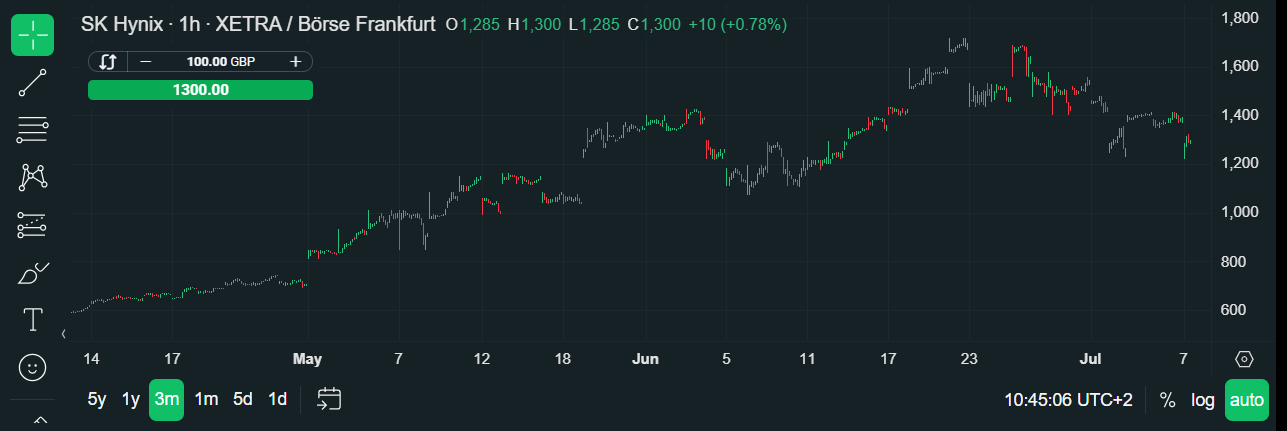
The positive tone to US stocks, which started the week on a high, has not been replicated in Asia. There was a sharp sell off in the South Korean Kospi and the in the Nikkei overnight. The Kospi closed down nearly 5%, led by a 6.9% decline in Samsung and a 6% fall in SK Hynix, even though Samsung reported a 19-fold rise in profits for Q2. This is a record for Samsung, but rather than placate the markets, these strong results have led to fears that the AI chip sales boom cannot be sustained.
The fundamentals remain strong for the chip sector, but the bias towards profit taking is slowing momentum and triggering bouts of volatility in Asian indices and in the US. Retail investors hold large, sometimes leveraged positions in the Kospi, so we will need to see if they buy the dip in Asian tech over the coming days. There has been a small decline to 29.8 trillion won in retail traders borrowed Kospi positions, which suggests that demand is not falling at a fast pace. Thus, it may be a case of the retail trading army to the rescue once more.
SK Hynix listing on the Nasdaq, another test for the AI trade
Elsewhere, SK Hynix launched its Nasdaq listing this week, it should price on Thursday and start trading on Friday. The company is hoping to raise $28bn, which is one of the largest ever listings, but this will also be the next stress test for the AI trade. The stock price has fallen sharply in the past week, and is down 15%, as investors question what SK Hynix needs the money for. On the surface the US listing looks like it is designed to boost its valuation in line with larger US rivals like Micron. The question is what happens after this IPO, can SK Hynix sustain gains if enthusiasm for the AI trade starts to falter?
SpaceX debuts on the Nasdaq 100, can it bolster enthusiasm for the stock?
SK Hynix is not the only stock that is making its Nasdaq debut this week. SpaceX will launch once more on the Nasdaq 100 later today. After last month’s IPO, the company has a market cap of $2.11 trillion and is the 8th most valuable company in the world. The stock price has been jittery since last month’s IPO and is below the level that it closed at on the first day of its IPO. Passive investors will have to buy SpaceX shares to balance their Nasdaq 100 positions, however, that upside impulse will start to fade later this month, and that is when the stock price could come under further pressure.
Europe is everyone’s favourite anti-AI trade
Elsewhere, European stocks are continuing to extend gains as they become the world’s favourite anti-AI trade. As the AI trade faces tough questions about future profit levels, there has been a global rotation towards less tech-heavy global stock markets. This helps European indices to shine. The Eurostoxx banking index is the top performing global market index in the past month and is higher by 12%. There have also been decent gains for the Italian market, the Dax, the FTSE 100 and the Cac, which have all outperformed the Nasdaq in the past month. They have also outperformed the Dow Jones, which made a fresh record high on Monday.
Whether this rotation continues could depend on earnings season. However, it is worth noting that Samsung delivered a monster earnings report for Q2, but its stock price sold off on Tuesday. This could be a sign of what’s to come for US semiconductor companies, and it suggests that the rotation out of the tech sector may have further to run.
The Kospi took another fall on Tuesday
Source: XTB
Author

Kathleen Brooks
XTB UK
Kathleen has nearly 15 years’ experience working with some of the leading retail trading and investment companies in the City of London.