Social Insecurity: Affording the Retirement Boom


The wave of Baby Boomers entering retirement will put significant strain on the government's finances. Higher taxes or lower spending to compensate are likely to influence economic growth in the years ahead.
Federal Finances: A Boomer Bust?
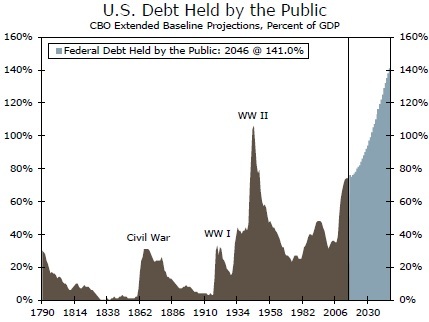
Many federal retirement programs, such as Social Security, were designed as pay-as-you-go programs. Workers pay payroll taxes that are used to fund today's retirees; when these workers retire later in life, the next generation picks up the tab. The unprecedented size of the Boomer generation has led to a ‘kink' in the system that creates fiscal sustainability challenges. As illustrated in the top chart, federal debt as a share of the economy is projected to skyrocket in the coming decades, with spending on retirementrelated entitlement programs a key driver of this growth. At the heart of the problem is a declining worker-to-beneficiary ratio. In 2000 when the Boomers were in their prime working years, there were 3.4 workers per Social Security beneficiary. Today, that ratio is about 2.8:1 and is expected to decline to 2:1 in the years ahead as the Boomers retire.
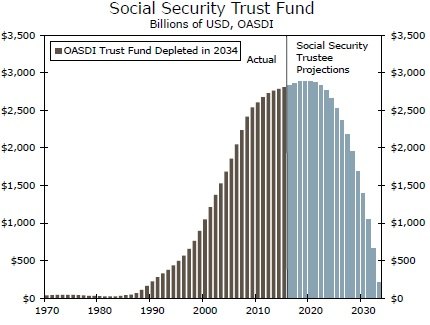
One bit of good news amid the doom and gloom: Contrary to some popular belief, the Social Security Trust Fund remains intact and ended FY 2016 with about $2.8 trillion in assets (middle chart). However, the cash flow for the program (defined here as tax revenues coming in minus outlays going out) has been negative since 2010. As the aging of the population continues, the Trust Fund will dwindle as reserves are utilized to meet promised benefits. Even when the Trust Fund is gone, however, Social Security does not simply disappear: there is still a dedicated revenue stream via payroll taxes to keep some benefits flowing. Without any congressional action, the Social Security Trustees project that the Trust Fund will run dry in 2034, at which point a 21 percent cut in benefits would occur to bring spending in line with dedicated revenues.
Not Just a Social Security Story
Medicare, which provides health insurance for the elderly, faces a dualchallenge on sustainability. Like Social Security, an aging population will lead to a rapidly growing number of Medicare beneficiaries. Rising medical care costs, however, will likely exacerbate the problem. The CBO projects that spending per enrollee in Medicare will increase at an average annual rate of 4.3 percent over the next decade, a bit faster than the anticipated 3.9 percent average annual growth in nominal GDP.
Higher taxes would help ensure the promises made to the Boomer generation are met, but this route threatens to reduce disposable income for prime-age adults who are the engine of the domestic economy and face their own financial challenges, such as rising student debt and shelter costs. Alternatively, spending for these programs could be reduced, but this presents its own set of problems. Sixty-one percent of aged beneficiaries received at least half of their income from Social Security in 2014, highlighting the importance of these programs to many Boomers. For policymakers, the longer action is delayed, the more draconian action will have to be to address these sustainability challenges.
Author
Wells Fargo Research Team
Wells Fargo

















