|

So far, so calm

Given the ugly weekend news regarding the US and Iran's mutual attacks, I was expecting the week to start on a sour note. But not at all. The two countries announced that they would stop fighting, and the sun is shining again.

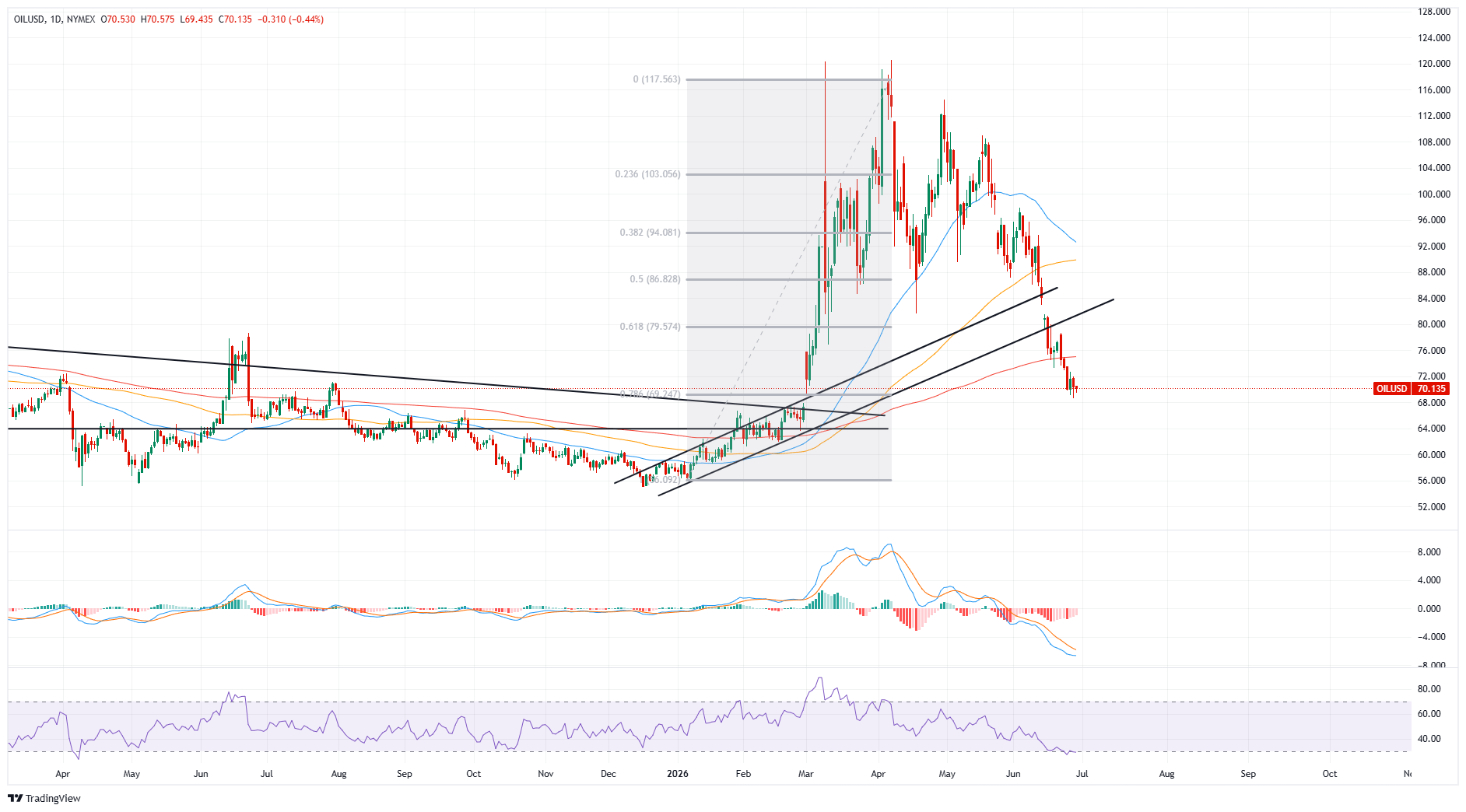
Although traffic through the Strait of Hormuz has been affected since the attacks began last week, the impact on oil prices remains relatively contained. Last week's news that some key markets have even turned oversupplied thanks to the release of strategic reserves and oil tankers quietly making their way out of Hormuz has certainly helped investors react more moderately to the latest escalation than they would have just a few weeks ago. As such, US crude didn’t surpass $70.60pb during the initial bout of unease in Asia and is consolidating around the $70pb mark at the time of writing. Brent crude is also trading in a tight range around $73pb.
Chart

Bond yields are slightly higher on Middle East uncertainty, while the Japanese 10-year yield is pushing toward the 2.65% mark as stronger-than-expected retail sales data fuel expectations of a more hawkish Bank of Japan (BoJ). The strong data is partly the result of fiscal stimulus, which the BoJ must balance against the need to tame inflationary pressures. Alas, yen traders are not convinced that the BoJ will normalize policy quickly enough to relieve pressure on the Japanese currency. The USDJPY is gently pushing above 161.80 this morning. If it isn't rising faster, it's because yen shorts expect the Japanese authorities to step in at some point. But they have been much more patient this time than in previous months.


Read the full article here.

Author

Ipek Ozkardeskaya

Ipek Ozkardeskaya began her financial career in 2010 in the structured products desk of the Swiss Banque Cantonale Vaudoise. She worked in HSBC Private Bank in Geneva in relation to high and ultra-high-net-worth clients.


More from Ipek Ozkardeskaya
Share:

Editor's Picks

GBP/USD edges lower due to safe-haven demand

GBP/USD inches lower after opening at a bullish gap, trading around 1.3200 during the Asian hours on Monday. The pair loses ground as the Pound Sterling declines against the US Dollar amid emerging safe-haven demand, which could be attributed to the United States-Iran talks uncertainty.

EUR/USD steadies below 1.1400; Lagarde speech in spotlight

The EUR/USD pair holds steady near 1.1385 during the early European trading hours. Traders continue to assess the developments surrounding talks to end the US war with Iran. The European Central Bank's annual forum and the US June employment data will be the highlights later this week.

Gold holds losses near $4,050 as US-Iran clash triggers inflation fears

Gold price pares daily losses, remaining in the negative territory and trading around $4,070 during the Asian hours. The price of the yellow metal struggles as military clashes between the United States and Iran in the strategic Strait of Hormuz have pushed oil prices higher and reignited fears of inflation.

BTC rebounds; ETH and XRP defend key support following recent correction

Bitcoin, Ethereum and Ripple are showing early signs of stabilization after a correction of nearly 6%, 8% and 7% respectively, over the previous week. BTC reclaims $60,000, ETH is holding firmly above the critical $1,500 support level, while XRP is also attempting to stabilize around the key $1.00 psychological level.

How Kevin Warsh upended the game plan for Gold
Something is breaking inside the Federal Reserve's new strategy, signaling a massive regime change for macro markets. Under the leadership of newly appointed Fed Chair Kevin Warsh, the traditional framework of forward guidance and predictable rate paths could be dismantled soon.
Regime change: Inside Kevin Warsh's first move to make the Fed unreadable on purpose

The rate did not move. That was the least interesting thing about Kevin Warsh's first meeting in charge of the Fed. The FOMC held its benchmark at 3.50%-3.75% for the fourth straight meeting, exactly as priced, and then the new chair used his first press conference to dismantle the machinery the market has leaned on for a decade.