Singapore: Red hot inflation to keep central bank on alert

March inflation sizzled at 5.4%
Singapore’s March headline inflation rate quickened further to 5.4% with global commodity prices surging after the invasion of Ukraine. The pickup in price pressures also forced core inflation higher with the March reading showing a 2.9% rise from the same month last year. On a month-on-month basis, prices gained a whopping 1.2% in March.
The uptrend in inflation was driven by higher food, utilities and recreation costs but it does appear evident that current supply chain disruptions will be enough to drive both the headline and core inflation readings higher. Given tightening supply chains and still elevated global commodity costs, we believe price pressures will remain evident in the coming months. The Monetary Authority of Singapore (MAS) recently hiked its core inflation projection for the year to 2.5-3.5% (from 2.0-3.0%), expecting price pressures to cool later in the year.
It's getting (really) hot in here
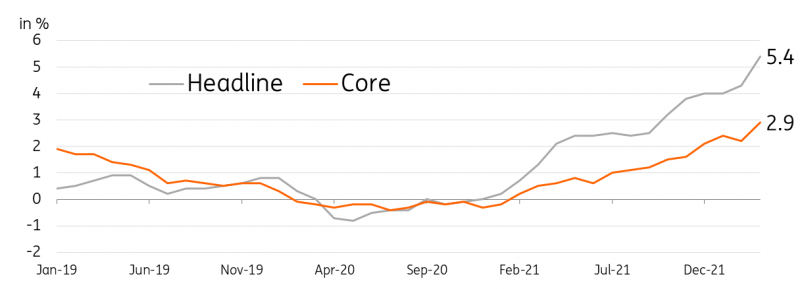
Source: Singapore Department of Statistics
Red hot inflation to keep MAS in hawkish mood
With price pressures expected to persist in the near term, we believe MAS will retain its hawkish bias even after the string of rate increases carried out over the past few months. Surging core inflation will likely keep MAS on its toes but a slowing global economy complicates the decision-making process in 2022.
We believe MAS could resort to additional off-cycle adjustments should core inflation threaten to breach the top-end of its most recent forecast of 3.5%.
Read the original analysis: Singapore: Red hot inflation to keep central bank on alert
Author

ING Global Economics Team
ING Economic and Financial Analysis
From Trump to trade, FX to Brexit, ING’s global economists have it covered. Go to ING.com/THINK to stay a step ahead.

















