Silver price surged last year despite modest drop in demand
Given the surging silver price, you might think demand was up significantly last year.
It wasn’t.
Silver was up as much as 147 percent intra-year in 2025, starting the year at 28.84 and surging to over $100. This happened despite a 2 percent drop in silver demand.
This underscores the significance of the physical silver shortage.
According to the final data compiled by Metals Focus, silver demand came in at 1.13 billion ounces. An increase in investment demand helped to offset a 3 percent decline in industrial offtake.
Demand for silver in electronics fell by 2 percent, driving overall industrial offtake lower. According to the Silver Institute, AI helped boost silver demand, while higher prices led to a decline in the amount of silver used in the solar energy sector.
“Demand continued to benefit from structural growth in artificial intelligence (AI) infrastructure, strong automotive end-use, and healthy power grid investment. However, these gains were offset by weakness in photovoltaic (PV) demand, as intense competition and rising silver raw material costs prompted PV manufacturers to accelerate thrifting and substitution.”
Higher prices also put a drag on jewelry sales. Silver jewelry demand dropped by 8 percent in 2025, driven by a 20 percent decline in Indian sales. China was a bright spot, reporting a 5 percent increase in silver jewelry demand sparked by gold substitution.
Silverware demand also felt the squeeze of higher prices, falling 24 percent to a 4-year low.
Surging investment demand helped offset some of these price-driven declines. Silver coins and bar demand surged by 14 percent in 2025. According to the Silver Institute, the U.S. was the only region that didn’t record significant increases in silver investment demand.
“India led with a 33 percent increase, while Europe posted its first rise in three years. The Middle East and China recorded multi-fold gains, driven by rising investor interest amid higher prices and a low base in prior years. By contrast, the U.S. posted a third consecutive year of losses, as President Trump's election dampened safe-haven buying. Profit-taking during the price rally, particularly in the first nine months of the year, also weighed on U.S. demand.”
Silver mining supply rose modestly by 3 percent to 846.6 million ounces. Coupled with a 2 percent rise in recycling, which hit a 12-year high, total supply came in at 1.09 billion ounces.
Not enough Silver
Even with the uptick in supply, it was not enough to meet demand, driving a fifth consecutive market deficit.
Demand outstripped supply by 40.2 million ounces (1,252 tonnes). That drove the 5-year market deficit to 716 million ounces. To put that into perspective, total silver mining output last year was 846 million ounces.
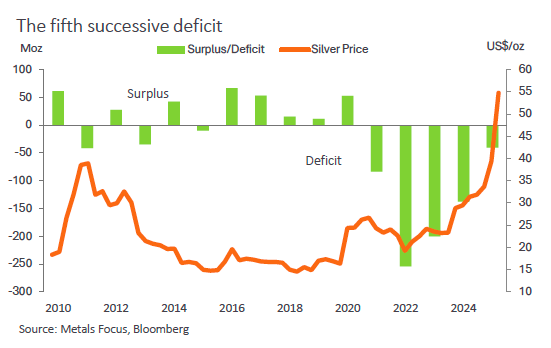
Metals Focus forecasts a 46.3-million-ounce supply deficit this year.
This explains why silver prices surged despite declining overall demand.
When demand outstrips supply, silver users must tap into existing above-ground stocks. This typically requires rising prices to incentivize those holding silver to release it into the market.
This shortage of physical silver has already led to two significant squeezes that drove last year's price increases.
The Silver Institute projects that market dynamics in 2026 will look similar to those of last year, with declines in industrial and jewelry demand largely offset by surging investment demand.
To receive free commentary and analysis on the gold and silver markets, click here to be added to the Money Metals news service.
Author

Mike Maharrey
Money Metals Exchange
Mike Maharrey is a journalist and market analyst for MoneyMetals.com with over a decade of experience in precious metals. He holds a BS in accounting from the University of Kentucky and a BA in journalism from the University of South Florida.