|

Silver: A correction May be complete as price tests key channel resistance

Silver has made a very nice move to the upside, and we can clearly count five waves higher from the July lows, confirming that support was in place at least temporarily. In a basic Elliott Wave bullish setup, a five-wave impulsive advance is normally followed by a three-wave correction. If that correction remains corrective, it can represent a temporary pullback before the larger bullish structure resumes.

However, notice that silver came close to the 71.50 resistance level that we discussed previously, from where we saw a pretty strong reversal lower. Price also broke below the lower trendline support of the impulsive channel, which caused a deeper and complex WXY correction. We are now wondering if this correction has already completed, as the market is attempting to break above the upper channel resistance near 66.60.
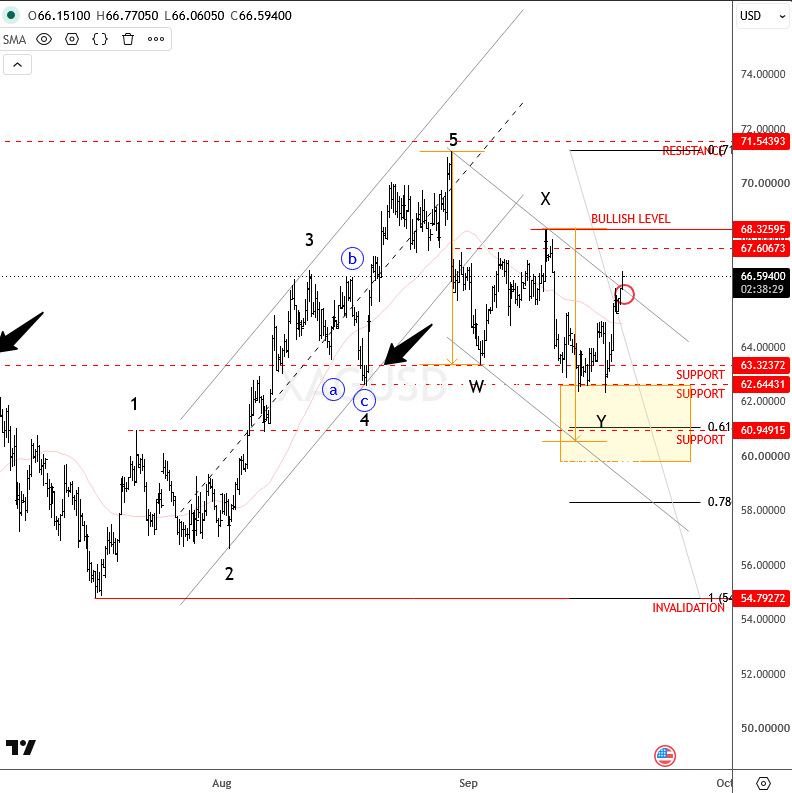
silver4h
XAGUSD(silver) 4H Chart

A daily and weekly close above 66.60 would provide a stronger bullish confirmation and suggest that the ABC correction is complete. In that case, the next important resistance and upside target would again be the 71.50 area.

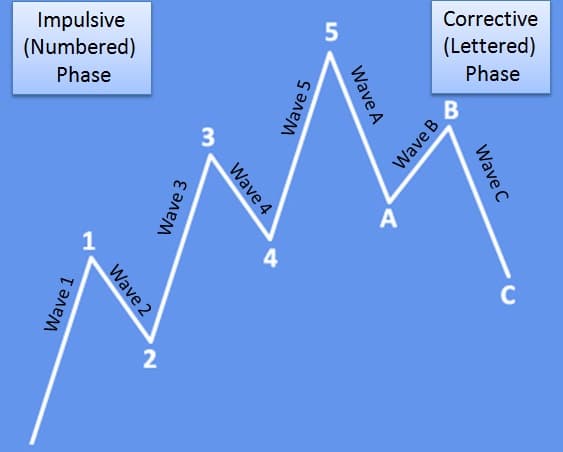
Basic Elliott Wave bullish setup formation

The basic Elliott Wave guidelines are that wave 2 should not retrace beyond the start of wave 1, wave 4 should not overlap wave 1 in a standard impulse, and wave 3 cannot be the shortest of waves 1, 3, and 5. Once five waves are completed, an ABC correction can retrace part of the entire advance before the larger bullish trend resumes. In the current silver setup, the key question is whether the recent complex WXY correction has already found its low and whether the break above 66.60 can confirm the next bullish phase.
basicbullish
Basic Elliott Wave Bullish Setup Formation

Get Full Access To Our Premium Elliott Wave Analysis For 14 Days. Click here.

Author

Gregor Horvat

Gregor Horvat

Wavetraders

Experience Grega is based in Slovenia and has been in the Forex market since 2003.

More from Gregor Horvat
Share:

Editor's Picks

AUD/USD sticks to positive bias above 0.7100; lacks bullish conviction

AUD/USD trades with a positive bias for the second straight day, holding above 0.7100 in the Asian session on Friday as softer US bond yields keep US Dollar bulls on the back foot. Furthermore, hawkish RBA Governor Bullock's comments boost rate hike bets and support the Aussie. However, the Fed's hawkish outlook, along with geopolitical uncertainties, limits USD losses and caps the pair.

USD/JPY approaches 158.00 as Japanese Yen resumes decline

USD/JPY is resuming its upside in the European session on Friday, refreshing two-week highs and nearing 158.00. The Japanese Yen extends losses, despite the Bank of Japan's (BoJ) expected rate hike to 1.25% and hawkish Governor Ueda's comments, as two surprise dissents against the rate hike weigh on it.

Gold tests $$4,400 as softer US bond yields cap USD gains

Gold scales higher for the second straight day and continues to hit new weekly highs through the first half of the European session on Friday, with bulls now awaiting a sustained move beyond the $4,400 mark before positioning for further gains. Retreating US Treasury bond yields keep the US Dollar (USD) uptrend capped ahead of Fedspeak and mid-tier US data.

Bitcoin extends recovery, Ethereum eyes $2,500, XRP holds $1.30
Bitcoin (BTC), Ethereum (ETH) and Ripple (XRP) extend their recovery, trading above $76,700, $2,400 and $1.300, respectively, on Friday. These top three cryptocurrencies now face key technical levels that could determine whether their recoveries extend further or pull back.
Why Bitcoin's over 30% rebound doesn't mean the bear market cycle is done

BTC has staged a strong recovery after falling to a yearly low of $57,800 in July, gaining nearly 33% and recording two consecutive months of gains in July and August. However, despite that rebound, Bitcoin remains around 40% below its all-time high, leaving one key question for traders: is this the start of a new bullish phase, or simply another recovery within a broader bear-market cycle?

How Japan became the World's Banker and why that era may be ending

Japan's ultra-low interest rates helped finance trillions of dollars in global investments for more than a decade, making the Japanese Yen one of the world’s cheapest sources of funding. With the Bank of Japan expected to tighten policy again this week, that advantage may be entering a new phase. While most major economies raised interest rates, Japan remained the world's outlier.