Producer prices jump another 1.4 percent in March, up 23 consecutive months

Producer prices for final demand have risen for 23 consecutive months with an average increase of 0.7 percent per month.
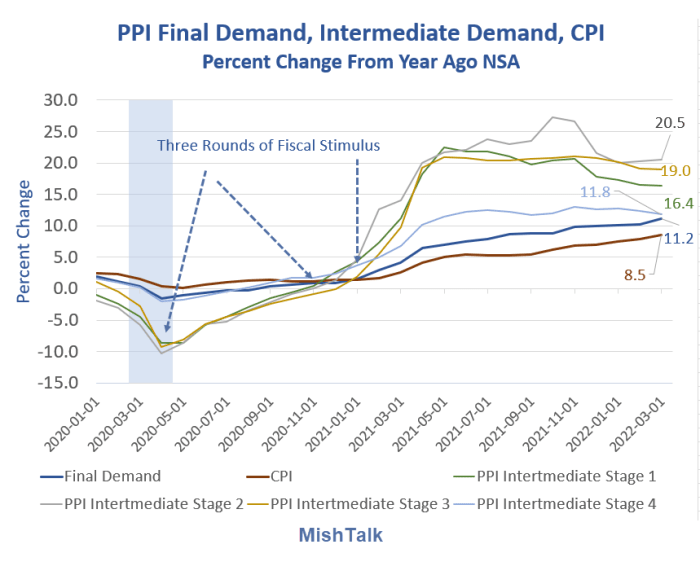
PPI and CPI data from the BLS, chart by Mish
PPI synopsis
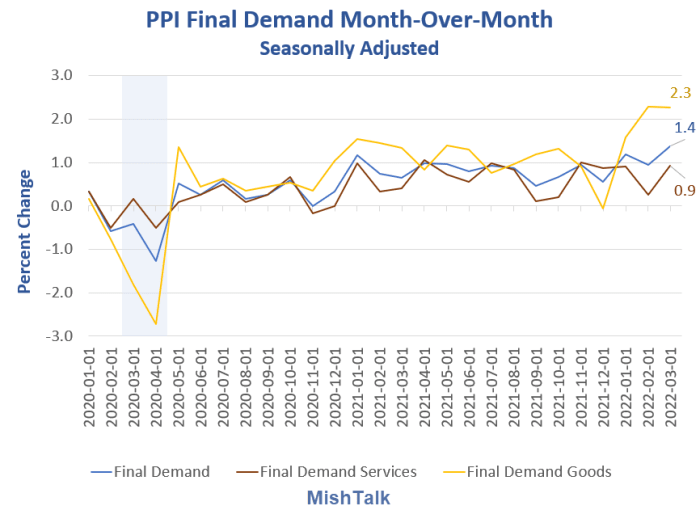
- The Producer Price Index for final demand increased 1.4 percent in March, seasonally adjusted, the U.S. Bureau of Labor Statistics reported today.
- This rise followed advances of 0.9 percent in February and 1.2 percent in January.
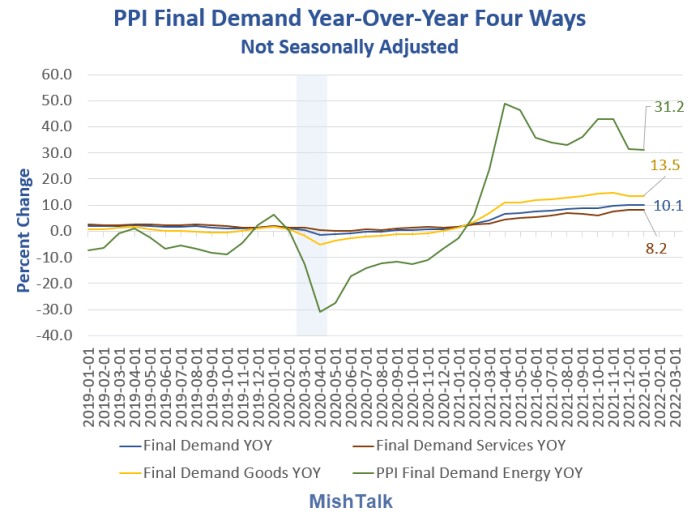
- On an unadjusted basis, final demand prices moved up 11.2 percent for the 12 months ended in March, the largest increase since 12-month data were first calculated in November 2010.
- In March, the rise in the index for final demand was led by a 2.3-percent advance in prices for final demand goods.
- The index for final demand services increased 0.9 percent.
- Prices for final demand less foods, energy, and trade services moved up 0.9 percent in March, the largest advance since rising 1.0 percent in January 2021.
- For the 12 months ended in March, the index for final demand less foods, energy, and trade services increased 7.0 percent.
PPI month over month
PPI data from the BLS, chart by Mish
The last time PPI for final demand declined on a month-over-month basis was April of 2020 in the midst of the pandemic recession.
PPI final demand year-over-year four ways
PPI data from the BLS, chart by Mish
Final demand goods
- The index for final demand goods rose 2.3 percent in March, the same as in February.
- Over half of the broad-based advance in March can be traced to a 5.7-percent jump in prices for final demand energy.
- The indexes for final demand goods less foods and energy and for final demand foods also moved higher, 1.1 percent and 2.4 percent, respectively.
- Leading the March increase in the index for final demand goods, diesel fuel prices jumped 20.4 percent. The indexes for gasoline, fresh and dry vegetables, jet fuel, iron and steel scrap, and electric power also moved higher.
- In contrast, prices for beef and veal fell 7.3 percent. The indexes for natural gas and for cold rolled steel sheet and strip also declined.
Final demand services
- Prices for final demand services moved up 0.9 percent in March following a 0.3- percent increase in February.
- Over 40 percent of the March advance can be traced to a 1.2-percent rise in margins for final demand trade services. (Trade indexes measure changes in margins received by wholesalers and retailers.)
- Prices for final demand transportation and warehousing services and for final demand services less trade, transportation, and warehousing also moved higher, climbing 5.5 percent and 0.3 percent, respectively.
- A 22.7-percent jump in margins for fuels and lubricants retailing was a major factor in the March advance in prices for final demand services.
- The indexes for truck transportation of freight; traveler accommodation services; airline passenger services; inpatient care; and hardware, building materials, and supplies retailing also increased.
- Prices for securities brokerage, dealing, and investment advice decreased 5.4 percent. The indexes for portfolio management and for automobile retailing (partial) also moved lower.
CPI rips higher to 8.5 percent from a year ago, the most since 1981
For discussion of the CPI, please see CPI Rips Higher to 8.5 Percent From a Year Ago, the Most Since 1981
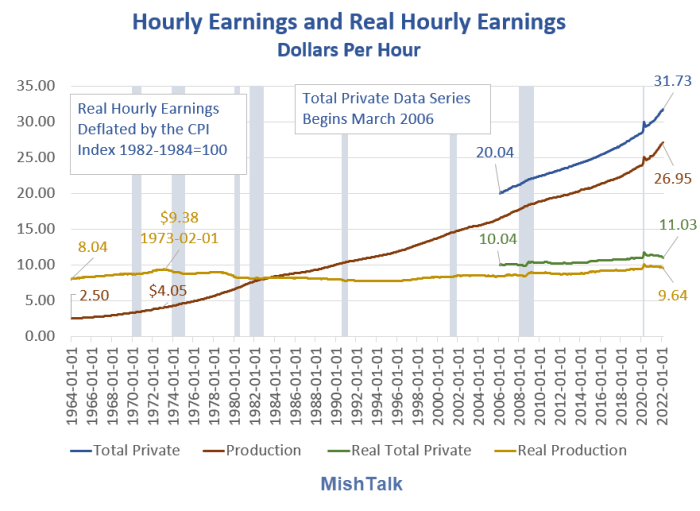
As a result of surging inflation, Real Hourly Wages Dive Again in March, Negative for 13 of Last 15 Months
But why stop at 13 months?
Hourly earnings data from BLS, chart and inflation calculation by Mish
Please note Inflation Has Eaten Up Nearly 100 Percent of Hourly Wage Gains Since 1973
Author

Mike “Mish” Shedlock's
Sitka Pacific Capital Management,Llc
Mike “Mish” Shedlock is a registered investment advisor for SitkaPacific Capital Management.

















