Powell’s call to action: What it means for jobs and growth
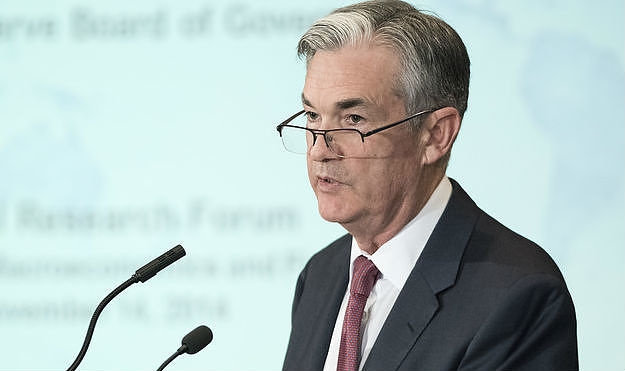

Federal Reserve Chairman Jerome Powell stated that "the time has come" for the US Federal Reserve to act. He acknowledged that while price growth is on a "sustainable" path, there are downside risks in the labour market.
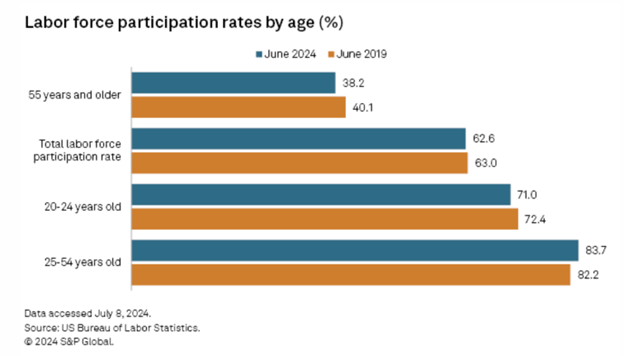
To assess if the unemployment rate will continue to rise and if the US economy is heading toward a recession, we need to examine the current employment situation in more detail. In June, the labour force participation rate for prime-age workers (25-54) reached 83.7%, matching the highest level since February 2002. However, the overall labour force participation rate remains below pre-pandemic levels, indicating that workers beyond prime age are not returning to the workforce. With the unemployment rate at 4.3%, it suggests these individuals are not actively seeking employment. (Source: S&P Global, BLS)
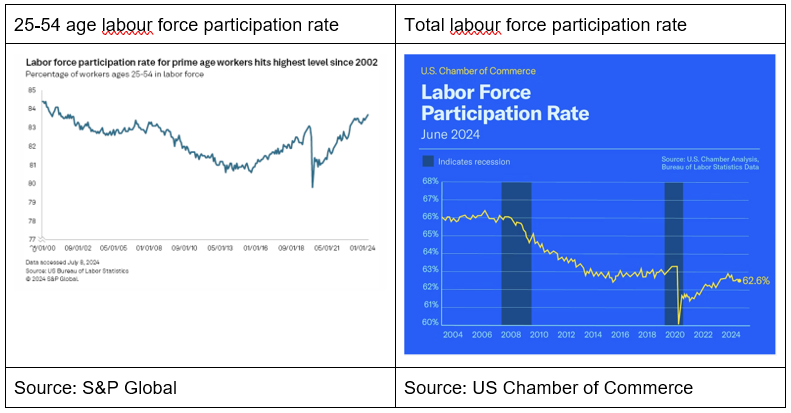
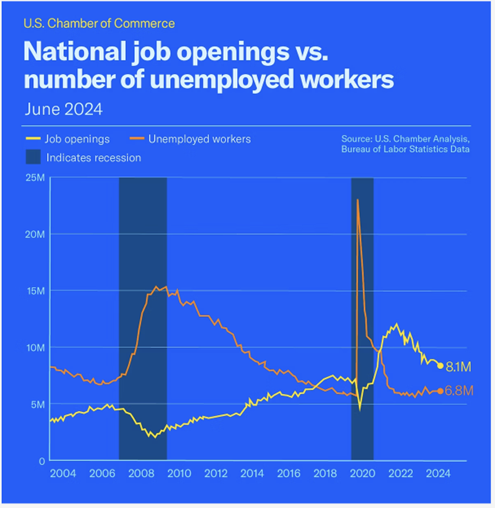
Where did the workers go? The COVID-19 pandemic led to a worker shortage due to early retirements and reduced immigration. Additionally, increased unemployment benefits, stimulus payments, and child tax credits improved the financial situation for some, enabling them to leave the workforce or adjust to living on a single income. Furthermore, immigration also slowed during the pandemic. (Source: US Chamber of Commerce)
Source: S&P Global
Following inflation and interest rate hikes, the economy has slowed but not entered a recession. Daniel Zhao, lead economist at Glassdoor, notes a weakening labour market, with 1.33 million jobs added in the first half of 2024, averaging 222,000 per month. This is down from 1.74 million jobs in the same period of 2023, which averaged 289,000 per month.
Source: US Chamber of Commerce
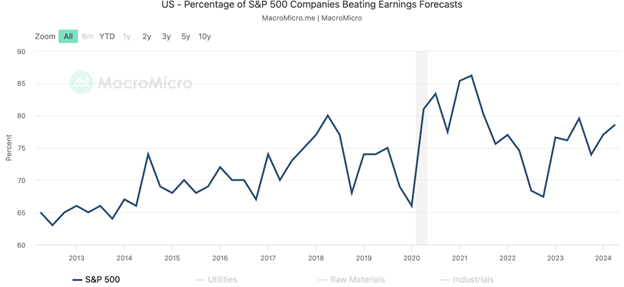
S&P 500 companies beat estimate
78.59% of S&P 500 companies beat earnings estimates. This resilience in corporate earnings suggests that while economic growth has slowed, underlying business fundamentals remain strong, providing some cushion against broader economic downturns. With a relatively high P/E ratio of 29.44 for the S&P 500, investors appear optimistic about future earnings growth and anticipate that economic conditions will improve or remain stable, indicating no immediate threat of a recession.(Source: multpl)
Source: MacroMicro
Technical analysis
Source: Deriv MT5
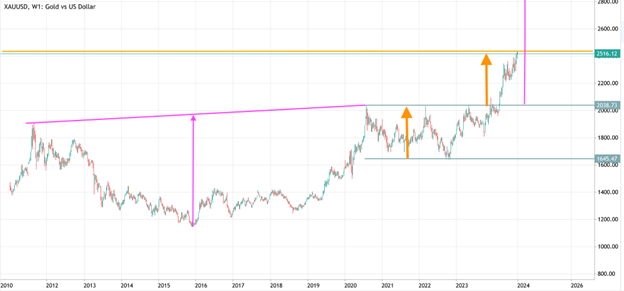
The weekly gold chart shows it has reached the first price target of $2,550/oz (orange arrow), with the stochastic indicator in the overbought zone. Some consolidation is expected before aiming for the next target of $3,000/oz (purple arrow).
Source: Deriv MT5
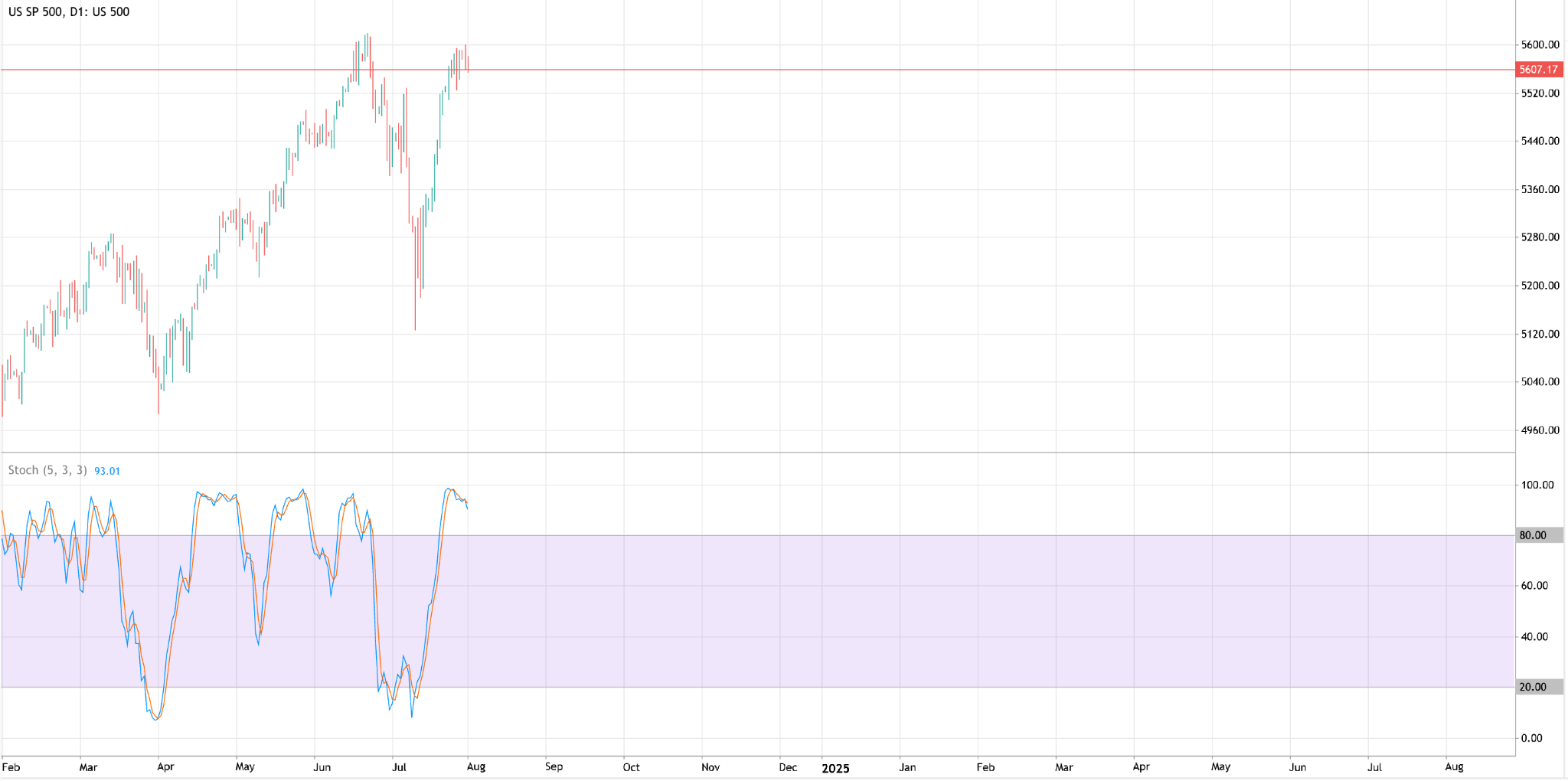
The daily S&P 500 stochastic indicator is in the overbought zone, suggesting a short-term consolidation unless the index drops below 5123 and forms a lower low. The market awaits Q3 earnings from S&P 500 companies.
Conclusion
While the S&P 500 outperforms earnings expectations, the labour market shows signs of strain with reduced job growth. The Fed is expected to begin cutting interest rates in September to support a soft landing while reducing its balance sheet. Since a recession is likely not imminent, aggressive rate cuts are unlikely. Increased liquidity should benefit equities and precious metals.
Author
Prakash Bhudia
Deriv
Prakash Bhudia, HOD – Product & Growth at Deriv, provides strategic leadership across crucial trading functions, including operations, risk management, and main marketing channels.