Pound vs Dollar: Who wins amid the energy shock?
UK annual CPI rose to 3.5% in September from 3.1% in August, exceeding the 3.4% forecast. Core inflation accelerated to 2.8%, while services inflation reached 3.7%. This increases the possibility of tighter monetary policy.
The interest rate remains at 3.75%, with markets expecting it to rise to 4.00% at the 5 November meeting. Committee member Megan Greene also warned that inflation risks from the energy shock could be higher than previously thought.
Rising oil and fuel prices are increasing inflationary pressure in the UK while also enhancing the US dollar’s appeal amid geopolitical uncertainty.
The unexpected rise in UK inflation is supporting the pound by increasing expectations of a Bank of England rate hike. At the same time, demand for the US dollar as a safe-haven asset and Middle East tensions may limit GBP/USD’s upside. The pair’s next moves will depend on changes in interest rate expectations in both countries and developments in the geopolitical situation.
Technical analysis
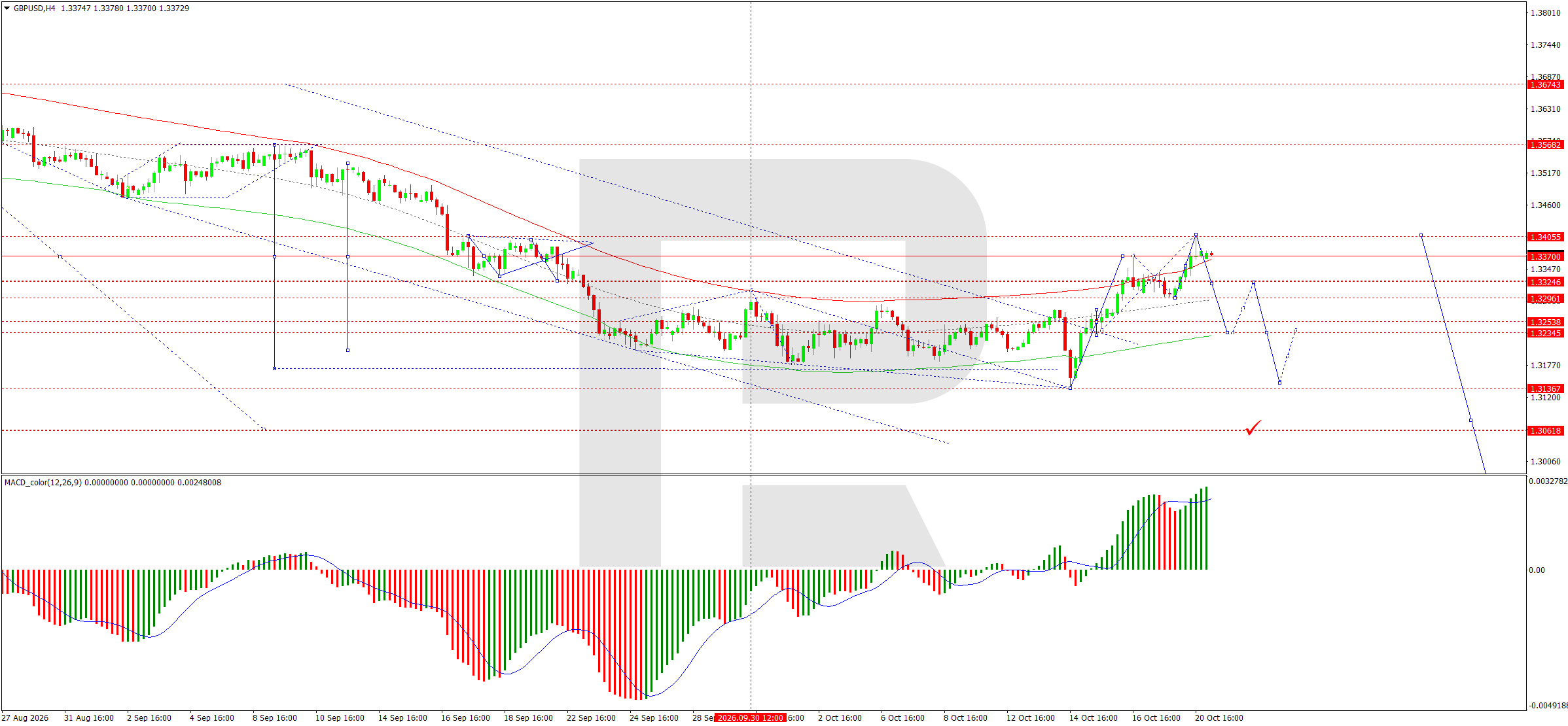
On the H4 chart, GBP/USD completed its upward correction at 1.3405, creating the conditions for a resumption of the downward move. The main scenario for today is a decline towards 1.3326. After reaching this level, a local correction towards 1.3355 is possible, followed by a continuation of the decline towards 1.3255. A break below this support would open the way for a downward wave towards 1.3137 and then 1.3062.
The MACD histogram remains in positive territory near local highs, indicating that upward momentum persists. However, with resistance at 1.3405 nearby, the likelihood of a reversal and a downward correction increases. A weakening of the indicator’s positive momentum is needed to confirm this scenario.
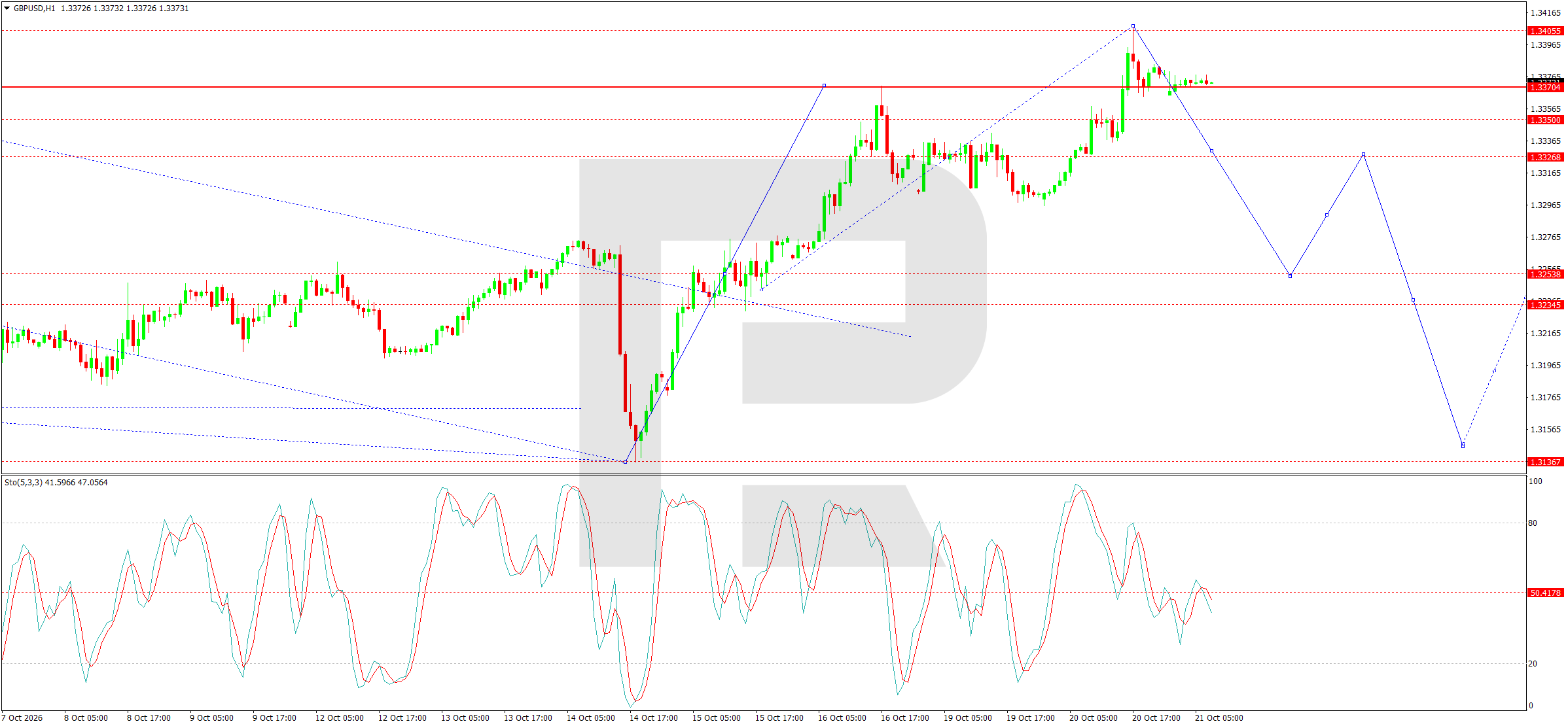
On the H1 chart, GBP/USD moved up from 1.3137 to 1.3405 and is now consolidating around 1.3370. A break below the range is expected today, with the first target at 1.3326. This would be followed by a decline towards 1.3253 and 1.3235. A break below these levels would strengthen sellers’ positions and create the conditions for the downward move to continue.
The Stochastic oscillator is in neutral territory near 50, indicating weakening upward momentum. A downward turn in the signal lines would confirm the correction, with scope for the indicator to move into oversold territory. An alternative scenario envisages consolidation above 1.3405, which would temporarily invalidate the priority downward scenario and open the way for a further recovery.
Conclusion
The pound has found support from stronger-than-expected UK inflation, which has increased expectations of a Bank of England rate hike at the 5 November meeting. However, the US dollar’s safe-haven appeal amid Middle East tensions and elevated oil prices continues to limit GBP/USD’s upside. Technically, the pair has completed its upward correction at 1.3405, with the main scenario pointing to a decline towards 1.3326, 1.3255 and potentially 1.3137. A break below support would increase the potential for further declines, while consolidation above 1.3405 would temporarily invalidate the priority downward scenario and open the way for a further recovery. The upcoming BoE meeting and geopolitical developments will be the key drivers of the pair’s next move.
Author

RoboForex Analysis Department
RoboForex
RoboForex Analysis Department provides timely market insights, expert technical analysis, and actionable forecasts across forex, commodities, indices, and equities.