Oil prices surge towards $100, as the Yen rises, but Japan needs to tread carefully
- Fears grow about a prolonged conflict in the Middle East.
- $100 oil back in the picture.
- Where has the TACO trade gone?
- Bank of England may need to revise up inflation forecasts, adding to pressure to hike rates.
- Sovereign yields move higher with oil prices.
- Yen surge surprises markets.
- Authorities get serious about anchoring yen strength.
- Nikkei suffers from a rising yen.

There are two big moves that are driving markets this morning, the first is the jump higher in the oil price. Brent crude oil surpassed a 6-week high and is up by 2% on Tuesday, and is trading above $99, its highest level since July. The WTI price is higher by more than 2% and is above $94.
Fears grow about a prolonged conflict in the Middle East
The oil price has risen for three straight sessions, and there are growing fears about a prolonged conflict in the Middle East. Iran has threatened the US with economic warfare and used missiles to strike US warships, while Iran-backed Houthis also hit 73 Saudi sites with missiles that injured civilians and impacted some oil production facilities. This is adding to supply fears as we move into the crucial winter months in the Northern hemisphere.
$100 oil back in the picture
The momentum in the oil price, triggered by geopolitical tensions, could build as we approach the $100 per barrel mark. The Brent crude price was last above $100 in July The risk is that we breach this level if the attacks continue.
Where has the TACO trade gone?
In the past, the TACO trade has seen President Trump reverse course and diffuse tensions with Iran. However, in recent days and weeks, the President has seemed to accept that this conflict will not be resolved before the Mid-Term elections in early November. This is adding to fears that the conflict could be prolonged, and oil prices could end up being elevated into 2027.
Bank of England may need to revise up inflation forecasts, adding to pressure to hike rates
Commodity analysts are revising up their forecasts for oil prices, with some expecting oil to stay above $80 into 2027. This is higher than the Bank of England’s baseline scenario for 2027, which was for oil to maintain its downward trajectory and settle around $70 per barrel next year. If the war doesn’t end soon, then the BOE may have to revise up its central scenario for the oil price when it releases its next Monetary Policy Report in November. For now, price action will add to odds that the BOE will hike rates before the end of the year, although we believe that the BOE will hold off from hiking rates in September.
Sovereign yields move higher with Oil prices
The oil price is pushing up bond yields in Europe and the UK. The UK’s 10-year yield is higher by 6.3bps today, the 2-year yield is higher by 6.5 bps and is testing the 4.5% level. The UK’s 30-year yield is back at multi decade highs, and the 10-year Gilt yield is mere basis points away from a fresh 18-year high.
Yen surge surprises markets
The yen is also in focus today. It has surged in the last 24 hours, and is higher by 3% vs. the USD, and USD/JPY is currently trading below 154. This is the lowest level for this pair since February. If it falls further, then lows from October come into view, below 150.
Intervention risk is strong, but how long can the move last?
The yen has been rising in recent weeks due to a mixture of intervention and US official pressure to strengthen the Japanese currency. This move has the signs of hidden intervention because this move is not supported by a move higher in bond yields. Japanese yields have been falling this week, and the 10-year JGB yield has fallen below the 3% level. We will have to see if Japanese officials sold Treasuries to boost the yen. In recent weeks the MOF in Japan has sold $90bn in Treasuries to fund yen intervention.
Authorities get serious about anchoring yen strength
Without a move higher in JGB yields, it is hard to see how the yen can organically maintain its recent bout of strength. This means that intervention is now a major source of volatility for the yen. It would appear that official sources are unwilling to allow the USD/JPY to rise above 160, so this week’s move could be designed to anchor this pair well below this key level. This suggests two things: 1, the US and Japanese authorities are serious about building yen strength, and 2, the chance of a move below 150 could be higher than a move back above 160.
Nikkei suffers from a rising Yen
The rise in the oil price has spooked markets, and European equities are lower, along with US equity futures. Japan’s Nikkei is the worst performing global index on Tuesday, and is down 1.7%, as a rising yen is bad news for Japanese exporters. There were sharp declines today for Mitsubishi, Panasonic, Yamaha, Nissan and Toyota, which fell more than 4%. Authorities will need to be wary going forward. While it is necessary to build yen strength, they will need to do so in an orderly fashion to stop unintended consequences from wreaking havoc on financial markets.
Ahead today, the focus will be on sovereign borrowing costs, the yen, and monitoring the Middle East for any developments in the conflict that could impact the oil price.
USD/JPY
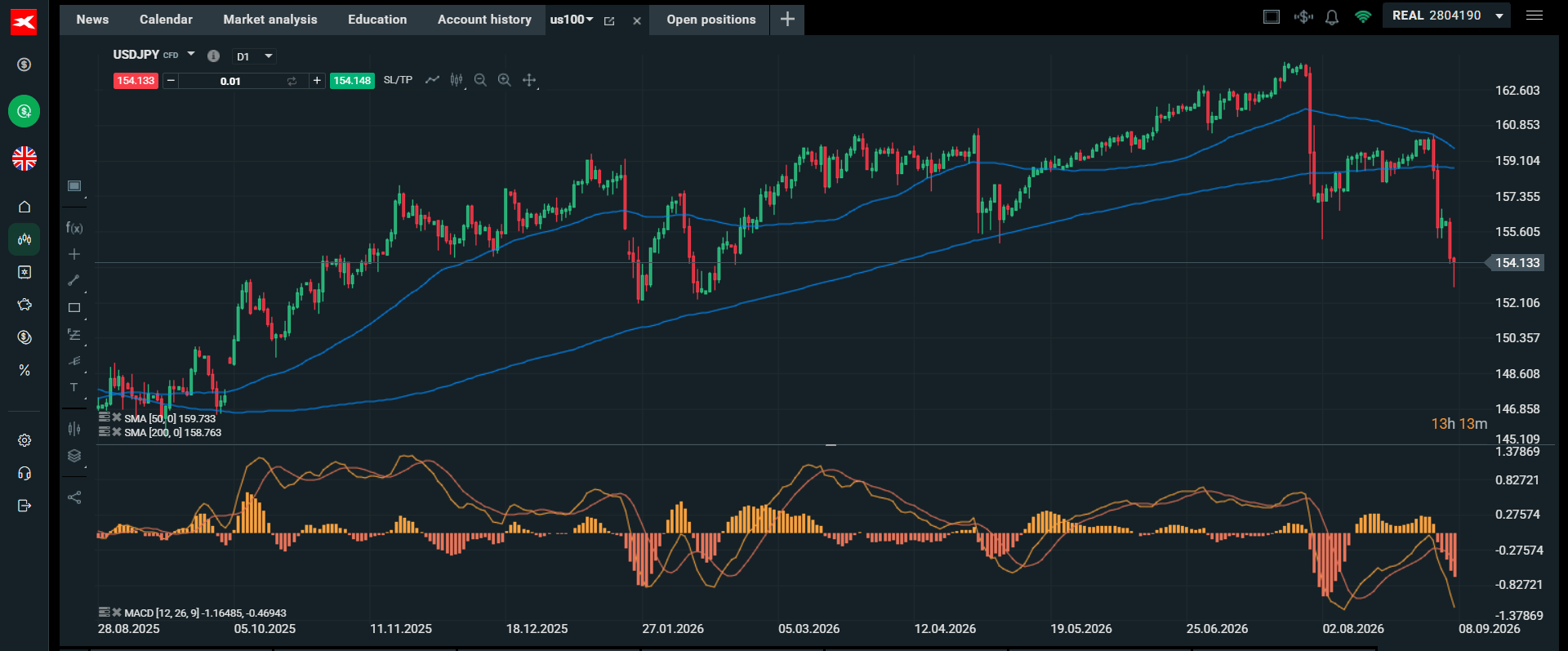
Source: XTB
Author

Kathleen Brooks
XTB UK
Kathleen has nearly 15 years’ experience working with some of the leading retail trading and investment companies in the City of London.

















