Oil prices find support from Gulf storm outages and Strait of Hormuz tensions

Oil prices (USOIL) have found support from renewed supply concerns. Storm-related production shutdowns in the US Gulf of Mexico and military tensions around the Strait of Hormuz are keeping markets on alert. The disruptions have heightened uncertainty over near-term crude availability, although recovering exports from the Middle East have helped ease some pressure on global supplies.
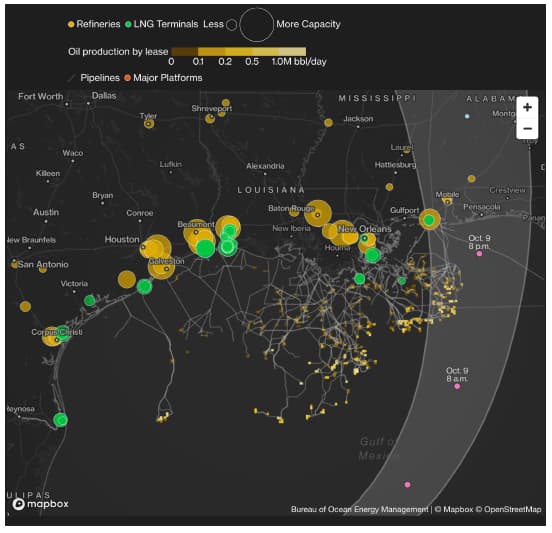
Storm Isaias has become an immediate concern for US oil production. Approximately 511,000 barrels per day of offshore crude output, representing 25.08% of production in the Gulf of Mexico, was shut down as operators took precautions against severe weather. The disruption has temporarily reduced available supply, adding to concerns about how quickly production can return to normal.
The duration of the shutdowns is critical for oil prices. Production could recover quickly if offshore facilities avoid significant damage and weather conditions improve. However, prolonged outages or damage to infrastructure could extend the disruption, keeping supply concerns in focus.
US Oil and Gas infrastructure in the Gulf
Strait of Hormuz tensions add to supply uncertainty
Renewed military activity around the Strait of Hormuz adds another layer of uncertainty to the oil market. The waterway is a major transit route for Middle Eastern crude exports, making disruptions to shipping particularly important for global supply expectations.
While geopolitical tensions have provided some support to prices, recovering regional exports have helped offset the immediate risks. Saudi Arabia's Energy Minister confirmed that operational capacity through the East-West pipeline had reached 5.8 million barrels per day. The pipeline provides an alternative route for Saudi crude exports, allowing shipments to reach the Red Sea without passing through the Strait of Hormuz.
This additional capacity could help limit the impact of shipping disruptions, although it does not eliminate the risks associated with further military activity. Diplomatic developments between Washington and Tehran are also attracting attention, as any progress toward easing tensions could improve expectations for regional oil exports.
For now, the market is balancing the possibility of further disruptions against signs that alternative export routes are helping maintain supply. That balance could shift quickly depending on developments in the region.
US inventory draw reinforces concerns over crude supply
The latest US inventory figures have added to signs of tighter crude availability. According to the Energy Information Administration (EIA), US crude inventories fell by 3.2 million barrels, marking the largest weekly draw in five weeks.
The decline suggests that crude supplies have tightened at a time when offshore production is already facing weather-related disruptions. However, the broader petroleum inventory picture remains mixed. Gasoline stocks unexpectedly increased, showing that the decline in crude inventories was not matched by falling inventories across all major petroleum products.
The EIA has also revised its oil price outlook higher amid expectations of declining global inventories. The prospect of tighter global balances could provide some support to prices, particularly if supply disruptions persist. However, the outlook remains sensitive to changes in global demand, production levels and the pace at which disrupted exports recover.
"Oil prices are receiving support from a combination of immediate supply disruptions and geopolitical uncertainty. The shutdown of a significant share of US Gulf production has tightened near-term availability, while military tensions around the Strait of Hormuz continue to raise concerns about Middle Eastern exports. At the same time, recovering regional shipments and alternative export routes could help limit the impact. The key question is how long these disruptions last and whether supply can recover before they have a more sustained effect on the market," says Krisada Yoonaisil, Financial Markets Strategist at Exness.
For traders, developments in the Gulf of Mexico and the Strait of Hormuz could remain important drivers of oil price volatility in the near term. Updates on offshore production, US crude inventories and diplomatic efforts between Washington and Tehran will help shape expectations for global supply. While prolonged disruptions could support prices, recovering exports and changes in fuel demand may create pressure in the opposite direction, leaving oil exposed to further fluctuations.
Author

Krisada Yoonaisil
Exness
BSc in Mechanical Engineering – Chulalongkorn University MSc in Financial Management – University of Exeter CMT Level III candidate Former analyst and portfolio manager in multi-asset environments