NZD/USD rebound runs into resistance ahead of US CPI

The New Zealand Dollar is recovering against the US Dollar as the market prepares for the long-awaited US Consumer Price Index report later today.
NZD/USD dropped sharply following the US PPI release yesterday, breaking below the support around 0.5830 and reaching a low around 0.5790 before buyers stepped in to stall the decline. The pair is up by more than 0.50% this morning and has retested the former support around 0.5830, which has now turned into resistance.
Initial reactions suggest that the level is holding for now, with price trading back around 0.5822 at the time of writing.
The New Zealand Dollar is one of the strongest currencies in the market this morning, although there has been no major domestic catalyst behind the move. This suggests that the recovery may be driven more by positioning and profit-taking ahead of the US CPI report than by a meaningful change in the outlook for the NZD.
The negative market sentiment that has weighed on the currency recently has not disappeared. The US-Iran conflict continues to threaten global energy supplies, while oil prices remain above $100 per barrel. However, reports of possible diplomatic discussions have helped sentiment stabilize slightly this morning.
The Reserve Bank of New Zealand raised its Official Cash Rate by 25 basis points to 2.75% but the decision has provided limited support for the currency because the Bank continues to favor the gradual removal of monetary stimulus.
At the same time, the US Dollar continues to receive support from expectations that the Federal Reserve will raise interest rates on September 16. Market pricing places the probability of a 25-basis-point increase close to 70% following yesterday’s US PPI report.
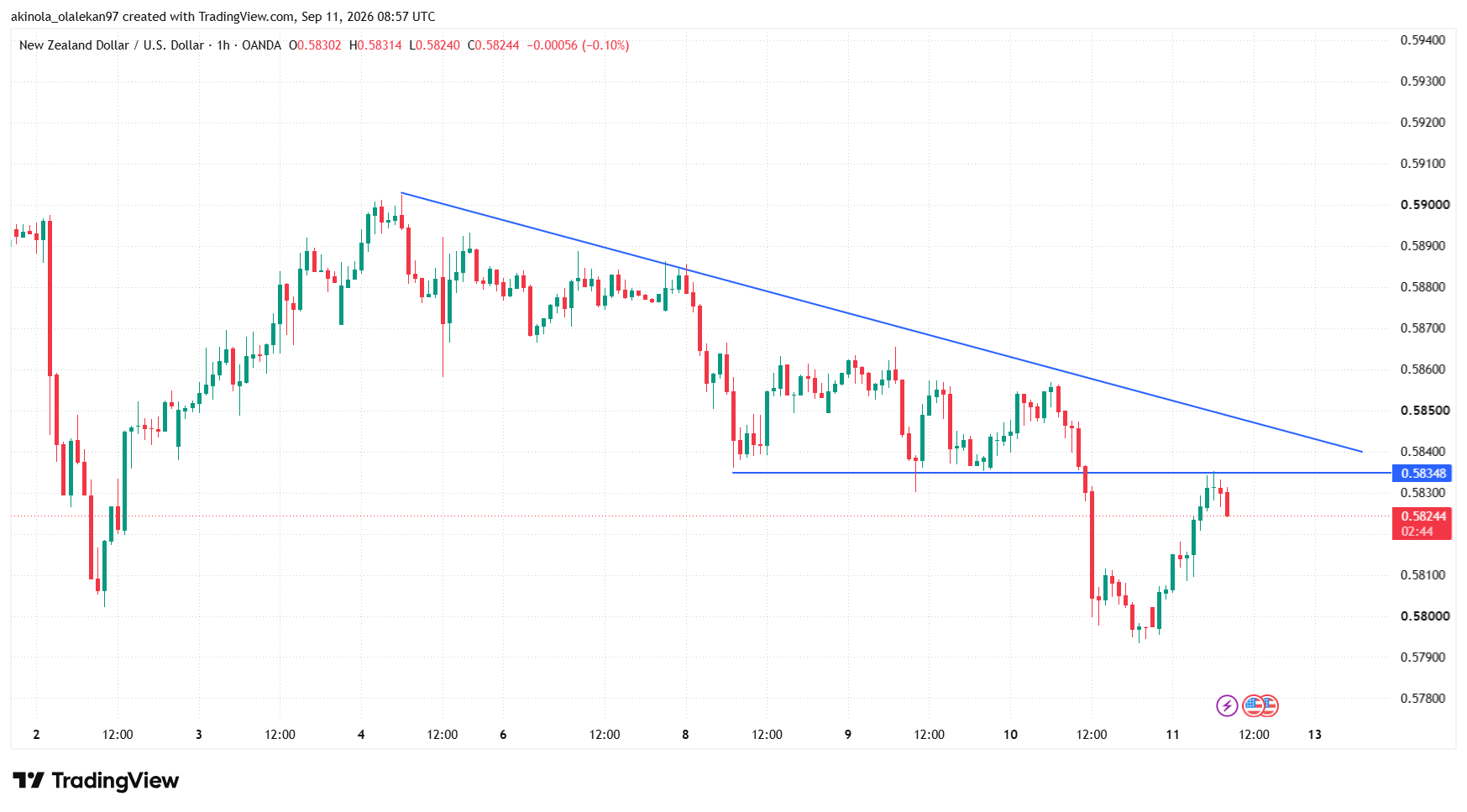
The current move in the NZD appears to carry an element of positioning ahead of the US CPI release. Sellers could look for another move lower from the resistance around 0.5830 or the bearish trendline around 0.5845, particularly if the current recovery extends towards that level.
The base case for NZD/USD remains a move lower. Negative market sentiment continues to weigh on the NZD as a high-beta currency, while the cautious guidance from the RBNZ has limited the support provided by its latest rate increase. On the other side of the pair, expectations of a September Federal Reserve hike continue to support the US Dollar.
Headline US CPI is expected to rise by 0.4% m/m, while core inflation is expected at 0.2%.
An upside surprise would reinforce the case for a September rate hike and could return sellers to the market. A rejection from 0.5830 or 0.5845 after the release would keep the bearish structure intact and expose the previous low around 0.5790.
The upside case would require a significant miss in the CPI figures—enough to convince the market that the Federal Reserve could look beyond the inflationary pressure caused by rising oil prices and leave interest rates unchanged.
If that happens and the market reduces the probability of a September hike, NZD/USD could break above the bearish trendline around 0.5845 in the short term. However, geopolitical tensions could still limit the recovery because the New Zealand Dollar tends to come under pressure when global risk sentiment deteriorates.
If the CPI figures come in broadly in line with expectations, NZD/USD should remain within its existing bearish structure. Heightened geopolitical tensions, cautious RBNZ guidance and unchanged expectations for a September Federal Reserve hike would leave sellers in control.
The first resistance level to watch is 0.5830, followed by the bearish trendline around 0.5845. On the downside, a return below 0.5790 would confirm that sellers have regained control and open the door to a deeper decline.
Author

Olalekan Akinola
Independent Analyst
Olalekan Akinola is a financial-markets analyst and writer with five years of experience covering forex, commodities, and global macroeconomic developments.