NOK/SEK: Is the Nordic divergence only getting started?

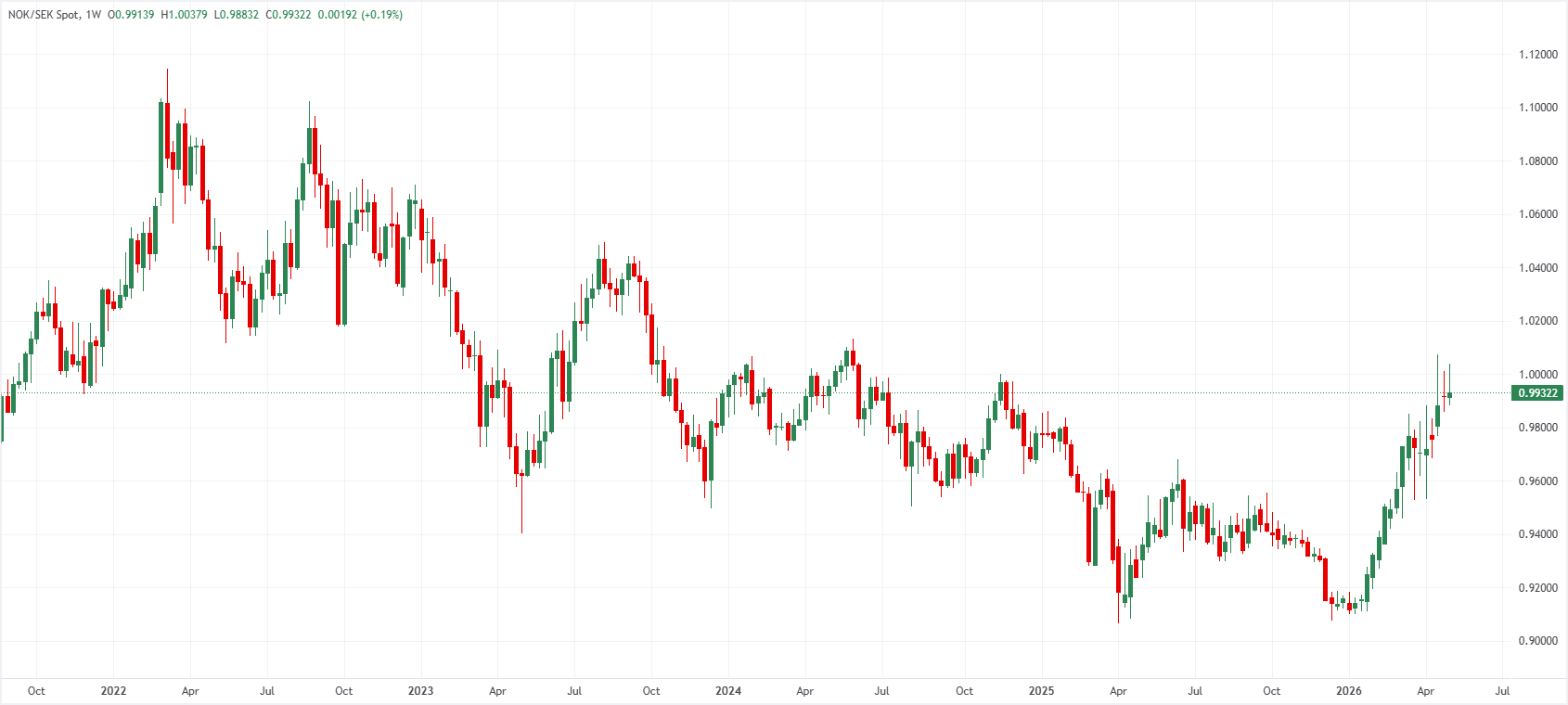
The NOK/SEK pair highlights an increasingly clear divergence between two neighboring economies that are often seen as similar, but are exposed to very different drivers. The current context favors the Norwegian Krone (NOK) over its Swedish counterpart, but for how long?
The pair draws attention on Thursday as the Norwegian Krone benefits from the more restrictive tone of Norges Bank, while the Swedish Krona (SEK) remains pressured by the cautious stance of the Sveriges Riksbank (Riksbank).
Norway remains an economy strongly linked to hydrocarbons. When energy prices rise, Norway’s terms of trade improve, export revenues increase and the NOK tends to show greater resilience. Sweden, by contrast, depends more on its export industry, European demand and the global manufacturing cycle. This difference makes NOK/SEK particularly interesting in an environment where Oil prices, geopolitical tensions and monetary policies are pulling Nordic currencies in different directions.
Norges Bank surprises with a rate hike
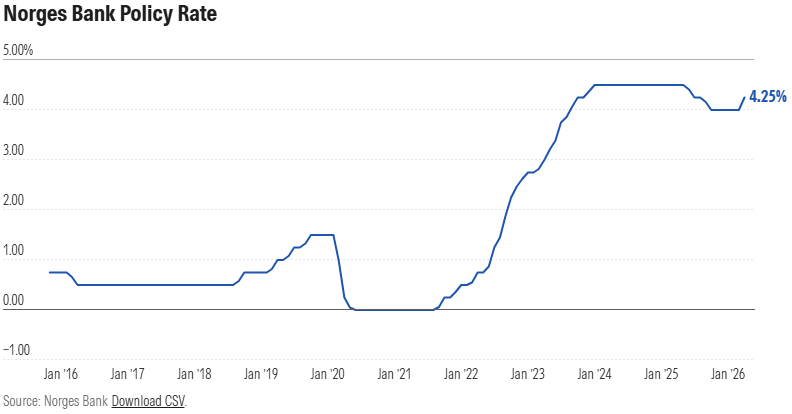
Norges Bank raised its policy rate to 4.25% from 4% on Thursday, a more restrictive decision than part of the market had expected. The central bank justifies the move with still-high inflation, with a core Consumer Price Index (CPI) excluding energy prices at 3% YoY in March, persistent wage pressures and increased uncertainty linked to the war in the Middle East.
Governor Ida Wolden Bache said that “inflation is too high and has run above target for several years,” according to Morningstar. The central bank also stressed that higher Oil and gas prices could further fuel inflation, even though the recent appreciation of the NOK helps limit imported price pressures.
This decision strengthens the relative appeal of the NOK against the SEK, as the rate differential between Norway and Sweden widens further. Norges Bank also suggested that its March scenario, which pointed to a policy rate between 4.25% and 4.5% by the end of the year, remains relevant.
The Riksbank chooses to wait
The Riksbank, meanwhile, kept its policy rate unchanged at 1.75% on Thursday, in line with expectations. Sweden’s central bank acknowledged that the war in the Middle East increases inflation risks, especially through energy prices, but said it has room to wait and assess the effects of these shocks.
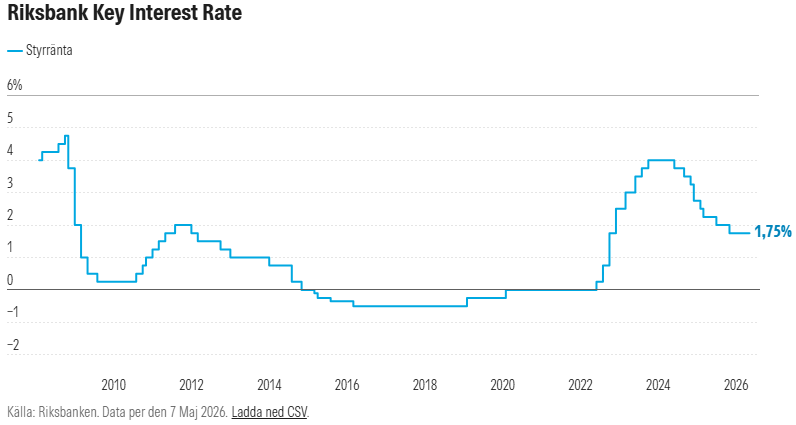
The contrast with Norway is clear. In Sweden, inflation excluding energy prices is slowing sharply, with the core CPI slowing to 1.1% YoY in March, while growth remained weak at 1.6% YoY in the first quarter and wage agreements are still moderate. This limits the urgency for tighter monetary policy, even though the Riksbank keeps the door open to a rate hike if inflationary shocks prove more persistent.
For NOK/SEK, this creates a clear asymmetry. The NOK benefits from a central bank that is already acting, while the SEK depends more on a scenario in which global inflation rises enough to force the Riksbank to move.
Energy remains the real referee
Beyond Thursday’s decisions, the main driver of NOK/SEK is probably still the energy divide. Norway directly benefits from high Oil and Gas prices, while Sweden is more exposed to import costs, industrial competitiveness and external demand.
This difference is especially important in the current context. A prolonged conflict in the Middle East or further disruption in the Strait of Hormuz would likely support the NOK, both through Oil revenues and through a more vigilant Norges Bank. By contrast, a sustained decline in energy prices could reduce this advantage and allow the SEK to regain ground, especially if Swedish growth stabilizes.
BNY argues that divergence between the two Nordic currencies is likely to become more visible in the coming cycles, even though part of Norges Bank’s restrictive bias is already priced in by markets.
A Nordic pair trade to watch
NOK/SEK therefore offers a relative-value reading rather than a simple directional bet. Buying the NOK against the SEK currently means favoring an economy supported by energy, more persistent inflation and a more restrictive central bank. Selling the pair, by contrast, means betting on lower energy prices, a stabilization of the Swedish economy or excessive market positioning in favor of the NOK.
The pair remains a useful barometer of the Nordic cycle. As long as energy prices stay elevated and Norges Bank keeps a restrictive bias, the NOK retains a fundamental advantage over the SEK. But this advantage depends heavily on Oil, making NOK/SEK more sensitive to geopolitical shocks than a simple rate differential would suggest.
Author

Ghiles Guezout
FXStreet
Ghiles Guezout is a Market Analyst with a strong background in stock market investments, trading, and cryptocurrencies. He combines fundamental and technical analysis skills to identify market opportunities.