New Home Sales jump in March


Sales shoot up in March
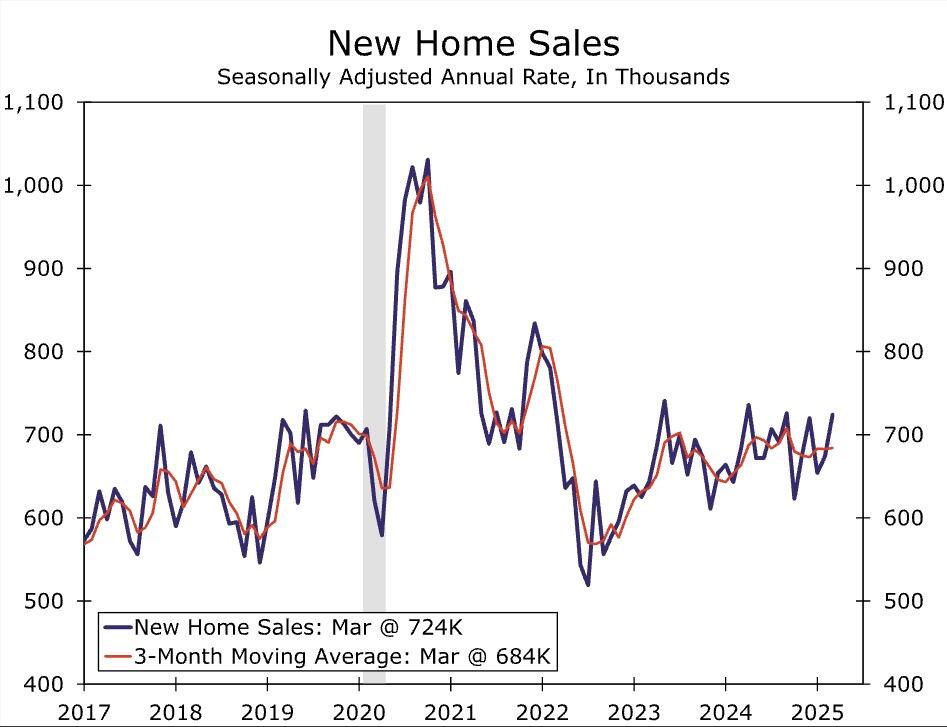
The spring selling season for home builders is off to a better than expected start. New home sales rose 7.4% in March, while February sales were revised slightly higher. The jump looks owed to slightly lower mortgages, which temporarily dipped in March before climbing higher following the Liberation Day tariff announcement in early April.
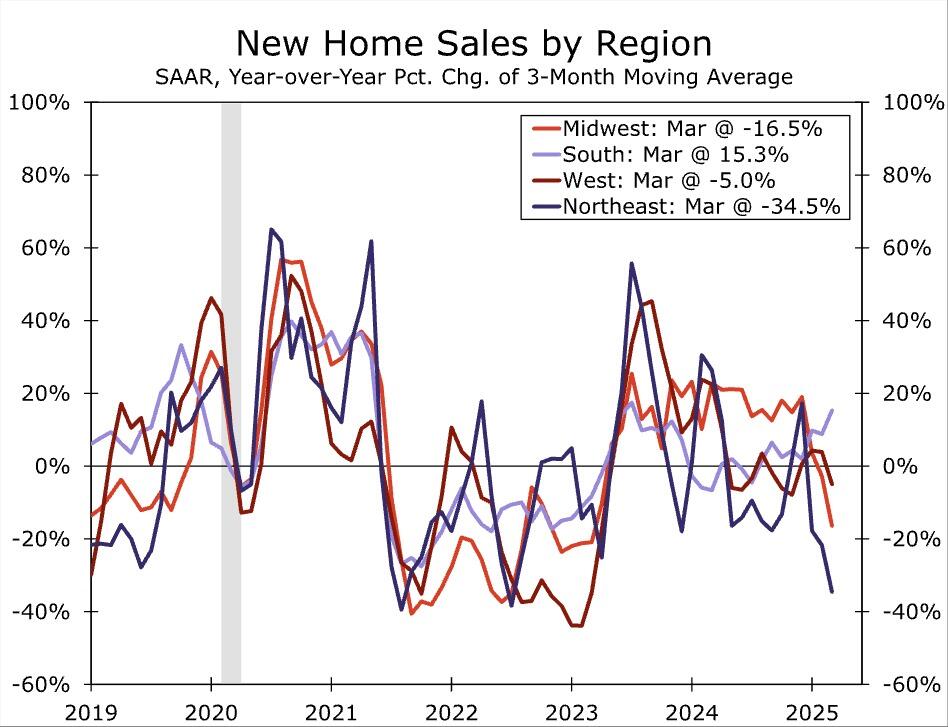
On a year-to-date basis, sales were up 1.3% compared to the first three months of last year, which suggests sales are still trending positive. That said, the modest growth this year largely is attributable to the South region, and sales in every other region are down sharply. What's more, a drop in the median new home price suggests builders are increasingly leaning on price incentives in order to support demand.
All told, the stronger pace of sales registered in March is encouraging sign that the new home market was not falling apart ahead of the new tariffs and associated market volatility. Moving forward, however, significantly reduced policy certainty, the recent bounce in mortgage rates and dimming economic growth prospects stand as formidable headwinds.
Source: U.S. Department of Commerce and Wells Fargo Economics
Dim builder outlooks cast shadow over March's jump in new home sales
- New home sales jumped 7.4% in March to a 724K unit pace, the highest level in six months. This marked the second straight improvement following a particularly sharp decline in January.
- Although transactions are up 6.0% year-over-year nationally, the South is the only region to register an annual improvement in new home sales. The pace of activity moved lower over the year across the Northeast, Midwest and West.
- A temporary lull in financing costs likely aided home buying over the month. The average Freddie Mac 30-year fixed mortgage rate softened to the 6.6%-6.7% range in March, hitting its lowest point of the year so far. According to Mortgage News Daily, mortgage rates have popped back up to 7% as of April 22, foretelling increased hurdles to buyer demand.
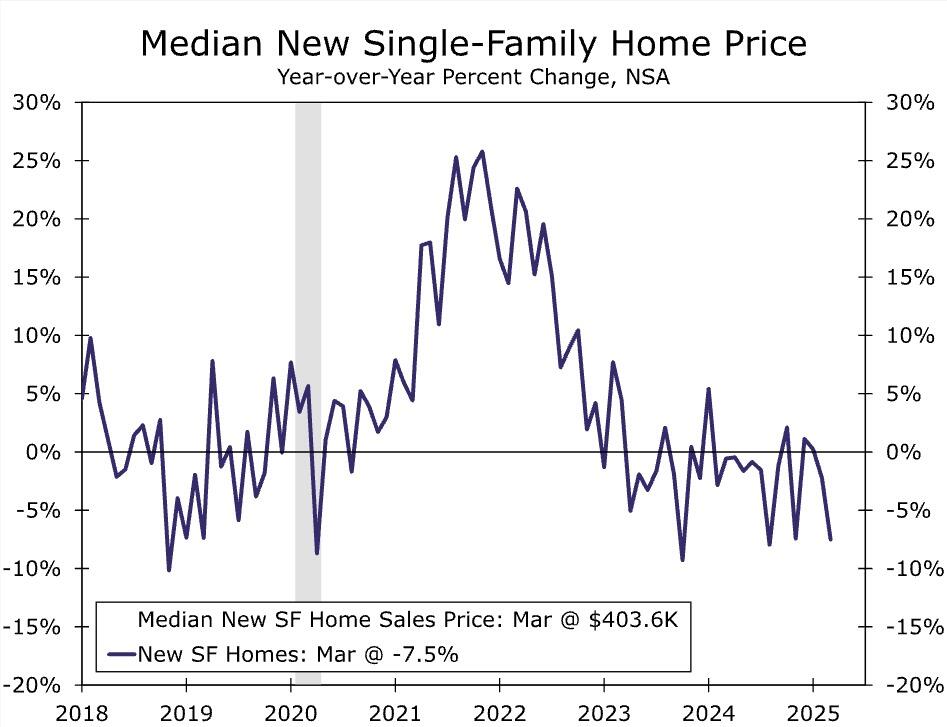
- Price cuts are one tool used by builders to offset affordability challenges. As the not-seasonally-adjusted median sales price softened for the third straight month in March, new home prices dipped 7.5% below their year-ago level.
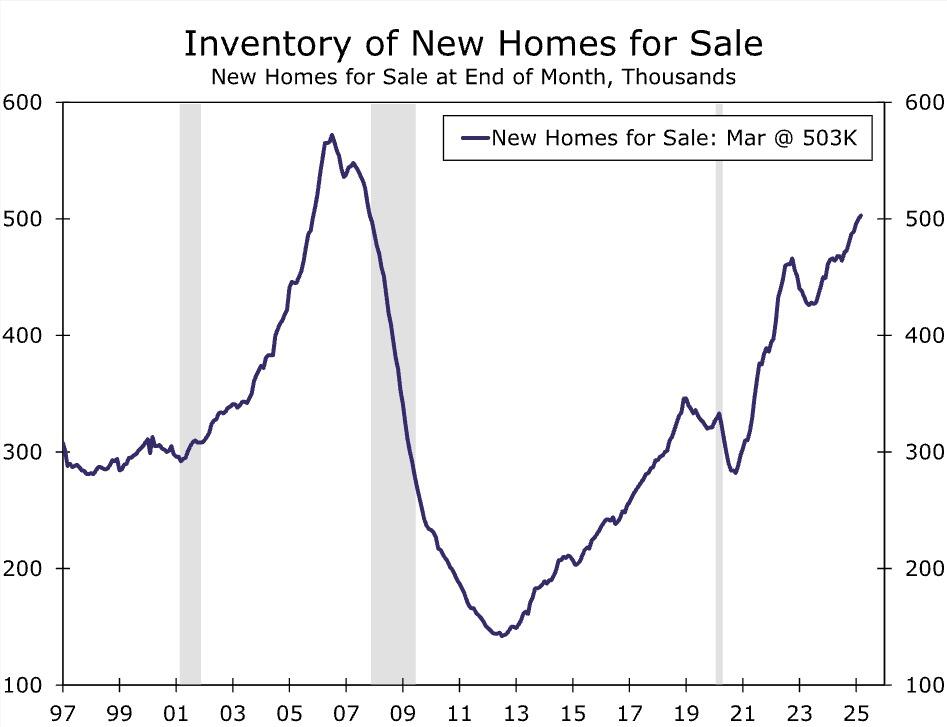
- Elevated inventory levels have been another support factor. For-sale inventory ticked up to 503K in March, its highest level since November 2007. That said, an acceleration in purchases brought months' supply down to 8.3 in March from 8.9 in February.
- Builders are fairly pessimistic about the outlook for new home sales moving forward. Despite a one-point uptick in the NAHB/Wells Fargo Housing Market Index in April, home builder sentiment remained at its second lowest reading over the past two years. Within the broader index, expectations for single-family sales over the next six months dove five points amid pervasive economic uncertainty.
- The outlook for home affordability is unlikely to improve in the near term. According to NAHB, 60% of builders are reportedly experiencing tariff-driven hikes in materials costs, increasing the typical construction costs by $10,900 per home. Lower margins may test builders' abilities to offer price cuts or other incentives to shore up demand.
Source: U.S. Department of Commerce and Wells Fargo Economics
Source: U.S. Department of Commerce and Wells Fargo Economics
Source: U.S. Department of Commerce and Wells Fargo Economics
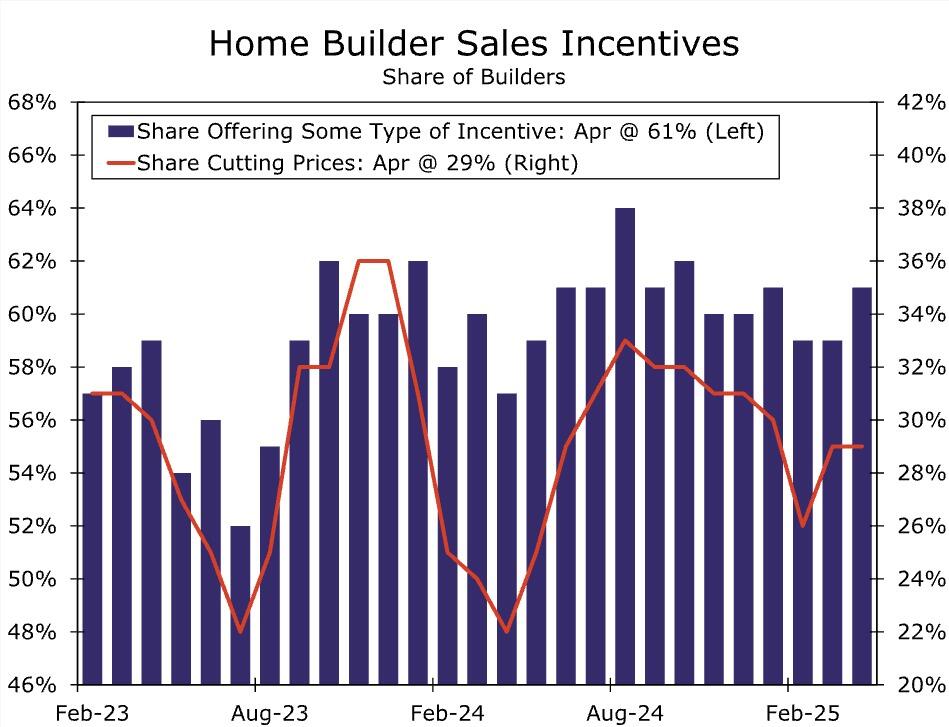
Source: NAHB and Wells Fargo Economics
Author
Wells Fargo Research Team
Wells Fargo