Many countries turning to a “stateless currency”: Gold
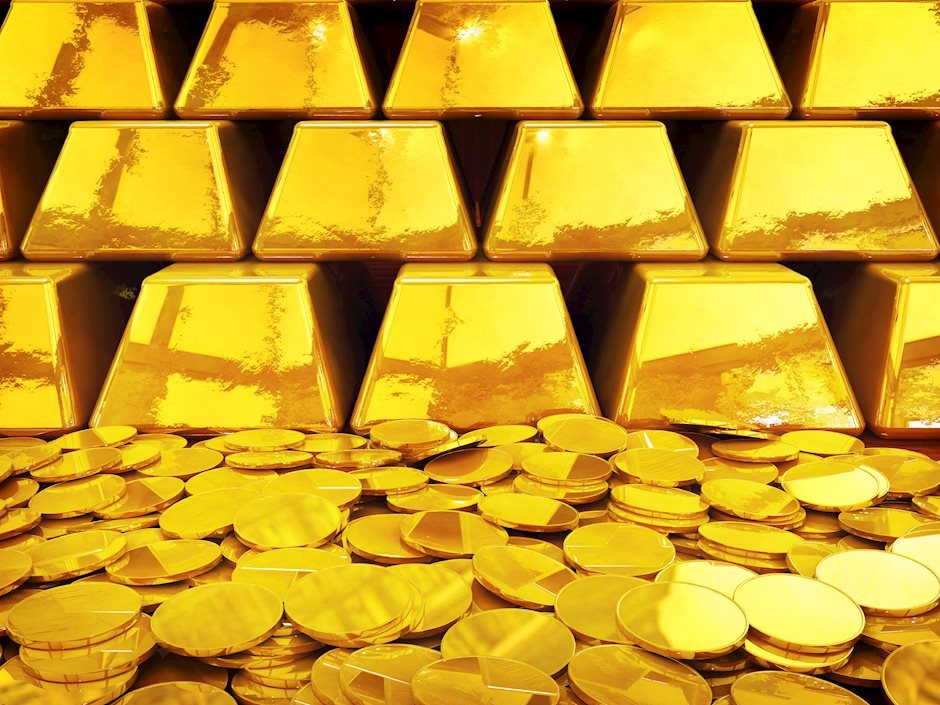

Many central banks are opting for a “stateless currency” – gold.
That’s how a recent article published by Nikkei Asia put it, noting that “central banks are diversifying away from the dollar and yuan.”
The article notes that the proportion of greenbacks in foreign reserves has dropped significantly from over 70 percent in the early 2000s to a historic low of around 58 percent today.
Meanwhile, central banks are loading up on gold. Central banks globally added a net 483 tons of gold through the first six months of this year, 5 percent above the record of 460 tons in H1 2023.
Last year, central bank gold buying fell a mere 45 tons short of 2022’s multi-decade record.
Last year, central banks' net gold purchases totaled 1,037 tons. It was the second straight year central banks added more than 1,000 tons to their total reserves.
Central bank gold buying in 2023 built on the prior record year. Total central bank gold buying in 2022 came in at 1,136 tons. It was the highest level of net purchases on record dating back to 1950, including since the suspension of dollar convertibility into gold in 1971.
A stateless currency
Why are so many countries turning to gold?
Because it is a stateless currency. In other words, gold isn’t controlled by any government. That means countries holding gold maintain a higher level of independence than those holding dollars or other government fiat currencies.
The U.S. has hastened de-dollarization by aggressively using the greenback as a foreign policy tool.
The United States projects power around the world with its mighty military, but that’s not America’s only source of strength. It also uses the dollar to achieve foreign policy goals.
The U.S. government utilizes a “carrot-stick” approach. It showers billions of dollars of foreign aid on its friends. But enemies can have access to their dollars cut off, as Russia recently learned.
As the Nikkei Asia article pointed out, the U.S. and other Western countries aggressively sanctioned Russia in the wake of its invasion of Ukraine. America and her allies locked Russia out of the SWIFT financial system and froze around $300 billion in Russian central bank assets. The U.S. even threatened to sell frozen Russian assets and give the money to Ukraine.
Other countries were paying attention. Nikkei Asia said U.S. policy persuaded emerging economies to “accumulate gold, and “the shift from currency holdings reflects global fragmentation.”
This is a classic example of people responding to incentives.
Think about it; if you recognize something makes you vulnerable, what do you do?
You take steps to eliminate or at least minimize the vulnerability.
So, if you’re worried that the U.S. and its allies might cut off your access to dollars, what would you do?
Minimize your dependence on dollars.
In other words, if you are concerned that the U.S. could pull the "dollar rug" out from under you, why not pull out from the dollar system first?
As a stateless currency, gold is the perfect reserve asset. Its value is recognized around the world, it’s liquid, and most importantly, it exposes the owner to very little counterparty risk.
What exactly is counterparty risk?
In simple terms, it is the possibility that the party on the other side of a transaction might not fulfill its obligation or will change the terms of the deal.
For instance, if I loan you $200, there is always a chance that you won’t pay me back. That possibility represents the counterparty risk that I’m taking on.
When you own physical gold and store it safely at home, there isn’t another party involved. Nobody can default on gold. Its value will never go to zero. It remains liquid under virtually any market conditions. And gold will likely increase in value if there is a significant economic collapse because it is real money.
This is precisely why so many countries are turning to this stateless currency and bringing their gold home.
To receive free commentary and analysis on the gold and silver markets, click here to be added to the Money Metals news service.
Author
Mike Maharrey
Money Metals Exchange
Mike Maharrey is a journalist and market analyst for MoneyMetals.com with over a decade of experience in precious metals. He holds a BS in accounting from the University of Kentucky and a BA in journalism from the University of South Florida.